Wall Street Is Screaming SELL

In March 2020, the world was coming to an end.
At least, that’s what Wall Street wanted you to believe.
COVID-19 was spreading across the globe. Businesses were shuttered. Airlines were grounded. Restaurants were empty. Millions of Americans were suddenly trapped inside their homes.
And the stock market?
It was collapsing faster than at almost any point in modern financial history.
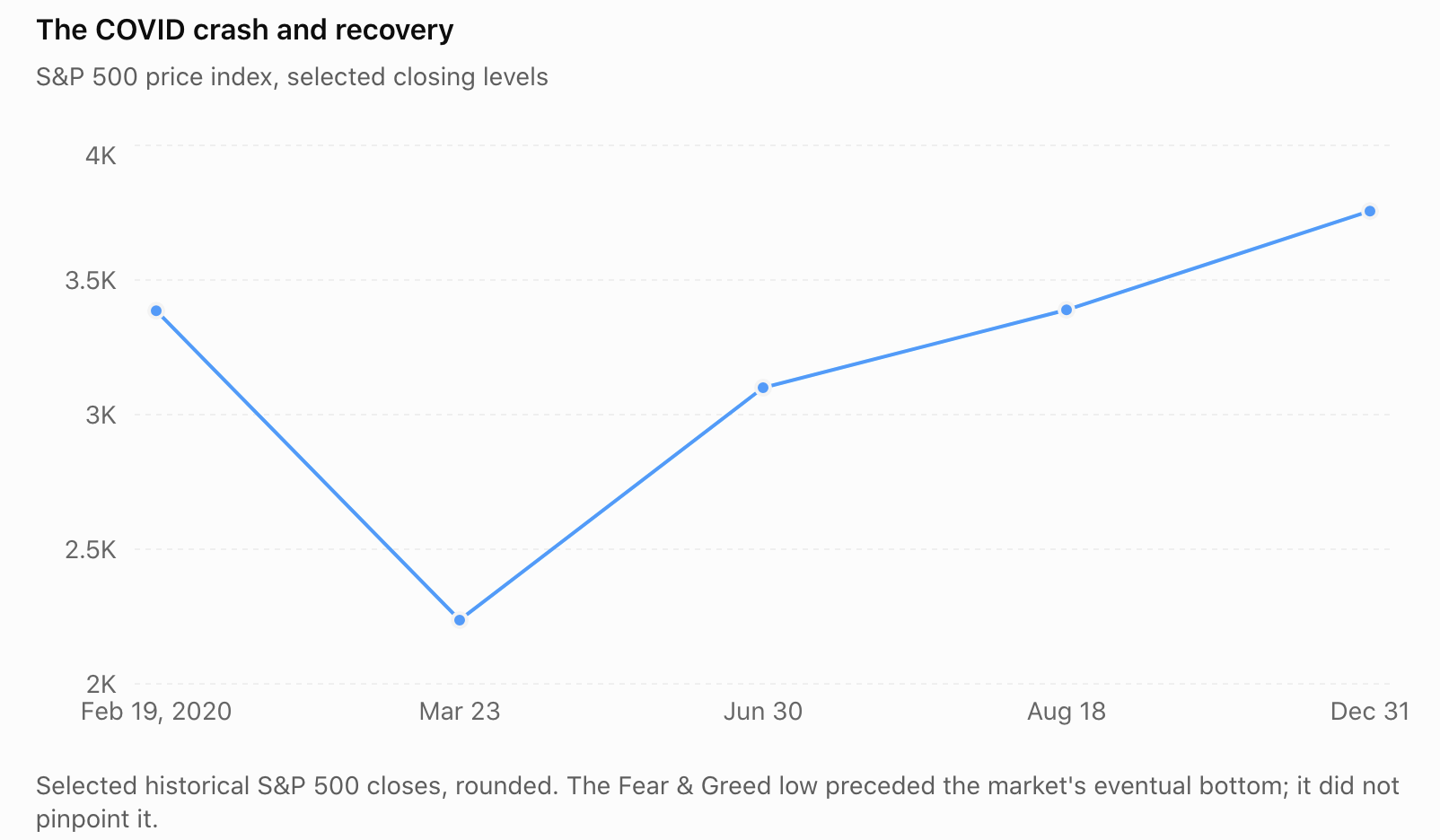
The S&P 500 plunged approximately 34% in just 33 calendar days.
And CNN’s famous Fear & Greed Index — a measurement of investor psychology ranging from zero (maximum fear) to 100 (maximum greed) — collapsed to an almost unimaginable reading of 2 on March 12, 2020.
TWO!
Not 20. Not 12.
TWO.
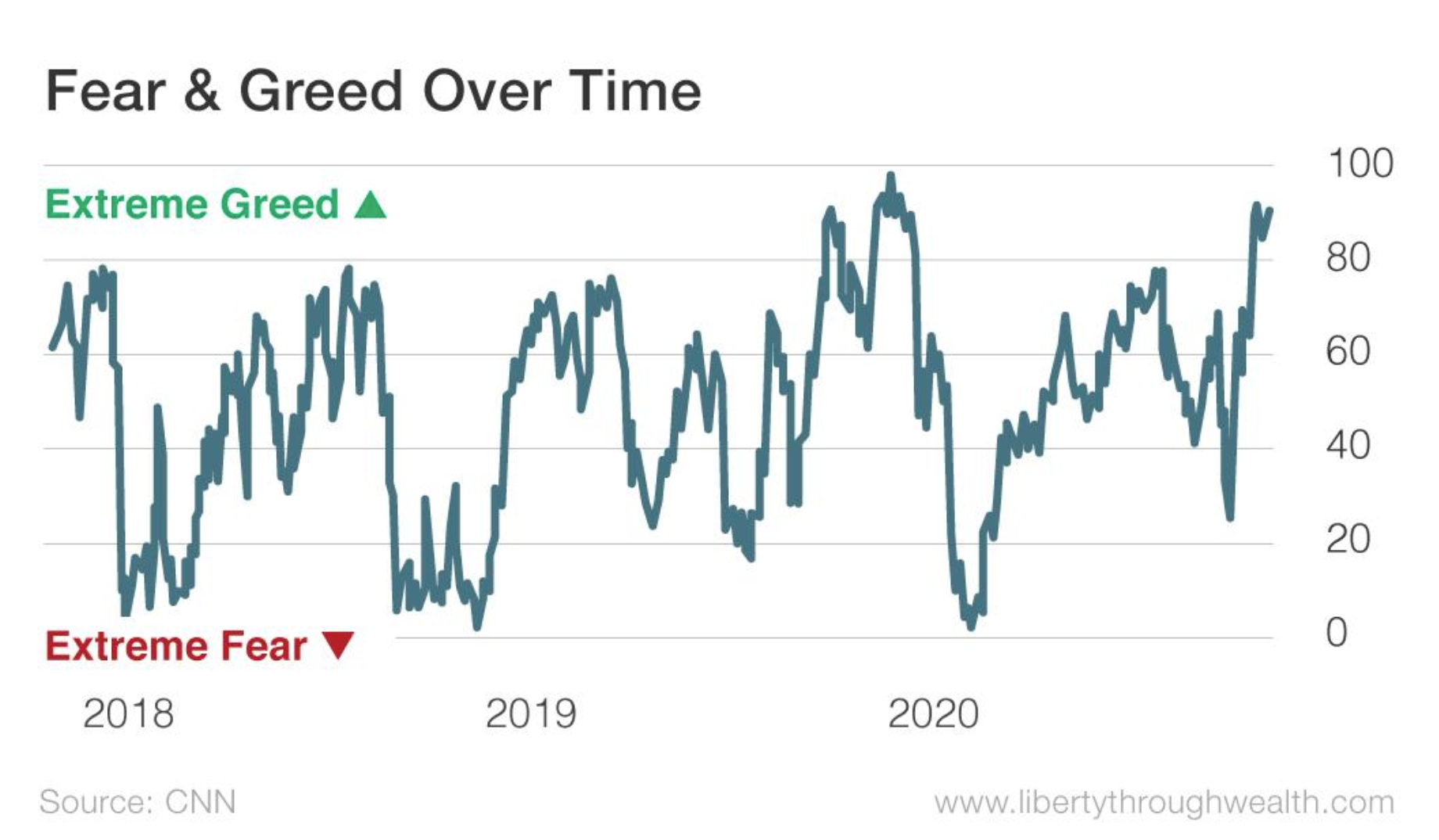
The financial world was gripped by absolute terror. I was buying the extreme fear the entire time. I was telling you too to do the same.
But something remarkable happened next.
The S&P 500 bottomed on March 23, 2020, at 2,237.40.
And then came one of the greatest stock market recoveries in American history.
By August, the S&P 500 had recovered its entire COVID collapse.
Investors who sold into that panic missed an extraordinary recovery.
The COVID Crash and Recovery
(In my next Wealth Daily, I’ll give you a real life example of how buying the fear can lead to life-changing profits. And it comes from a trade I personally made during covid that has been one of the greatest-returning trades I’ve ever made.)
2022: When Inflation Became the New Boogeyman
Fast-forward two years.
COVID was fading, but a new monster had emerged.
Inflation.
The Federal Reserve was aggressively raising interest rates. Mortgage rates were soaring. Technology stocks were being crushed.
By May 12, 2022, CNN’s Fear & Greed Index had fallen to approximately 3.
Once again, investors were convinced the financial system was headed for disaster.
And once again, the story didn’t end there.
The S&P 500 ultimately bottomed in October 2022, around 3,577.
By the end of 2023, it had climbed to approximately 4,770.
That’s a gain of more than 33% from the bear-market low.
The important lesson?
Extreme fear didn’t identify the precise bottom. Stocks continued falling after May.
But investors who recognized the opportunity and had the patience to survive the volatility were eventually rewarded.
The Best Free Investment You’ll Ever Make
Join Wealth Daily today for FREE. We’ll keep you on top of all the hottest investment ideas before they
hit Wall Street. Become a member today, and get our latest free report: “The $10 Trillion AI Infrastructure Boom.”
It contains full details on why money managers are overpaid and provides you with
tools for growing your wealth.On your own terms. No fees, no commission.
April 2025: The Tariff Tantrum
Then came April 2025.
President Trump’s sweeping tariff announcements sent shock waves through global financial markets.
Economists warned about recession.
Wall Street warned about collapsing corporate profits.
And investors?
They panicked.
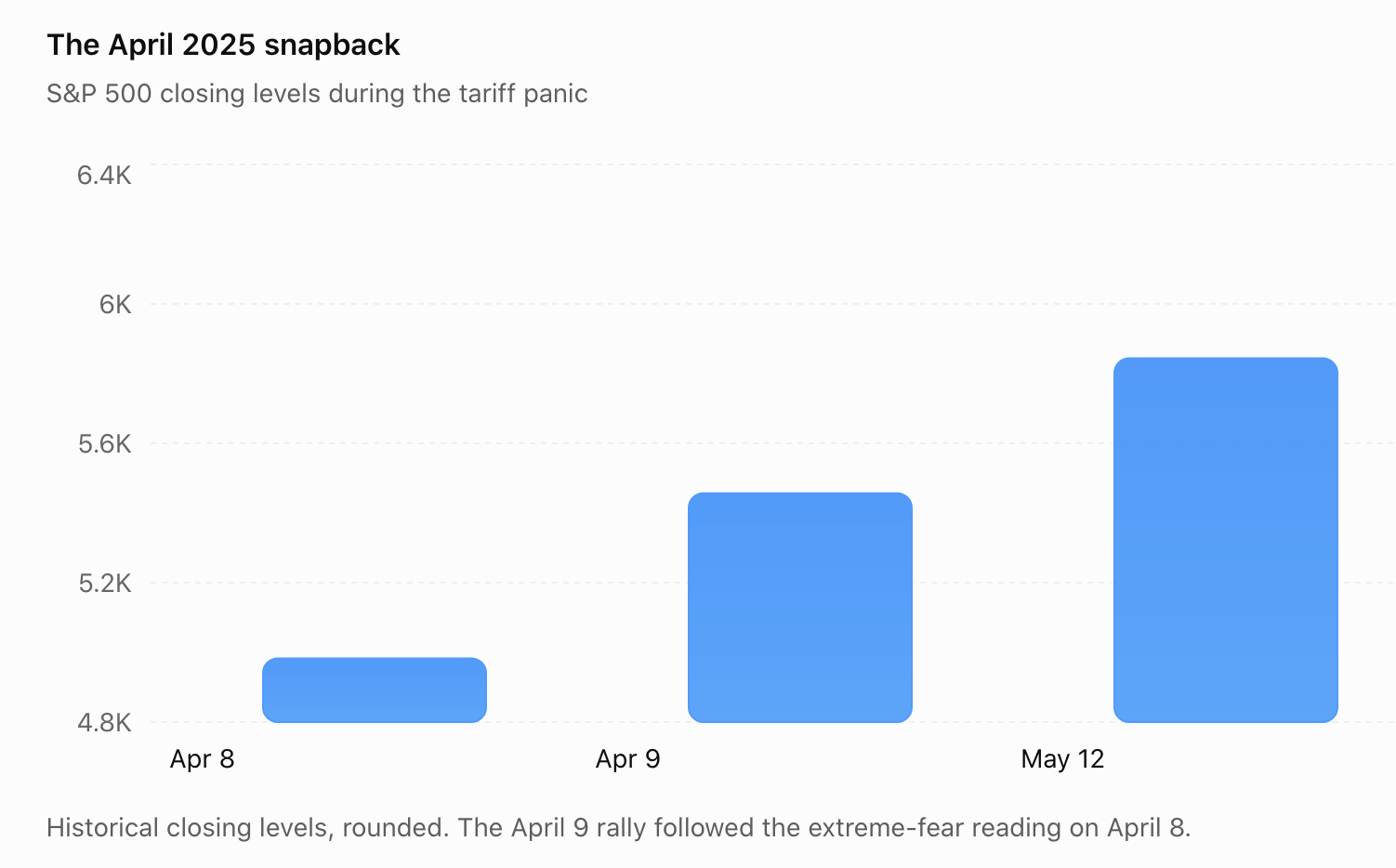
On April 8, CNN’s Fear & Greed Index plunged below 3.
One of the lowest readings of the modern era.
The S&P 500 had already suffered a punishing selloff.
Then, on April 9, something extraordinary happened.
The S&P 500 exploded 9.52% higher in a single trading session.
Nearly 10%!
One of the largest one-day percentage rallies in decades.
It was another reminder that when virtually everyone is positioned for catastrophe, even a modest improvement in the outlook can ignite an enormous rally.
November 2026: Welcome to the AI Panic
And now, here we are again.
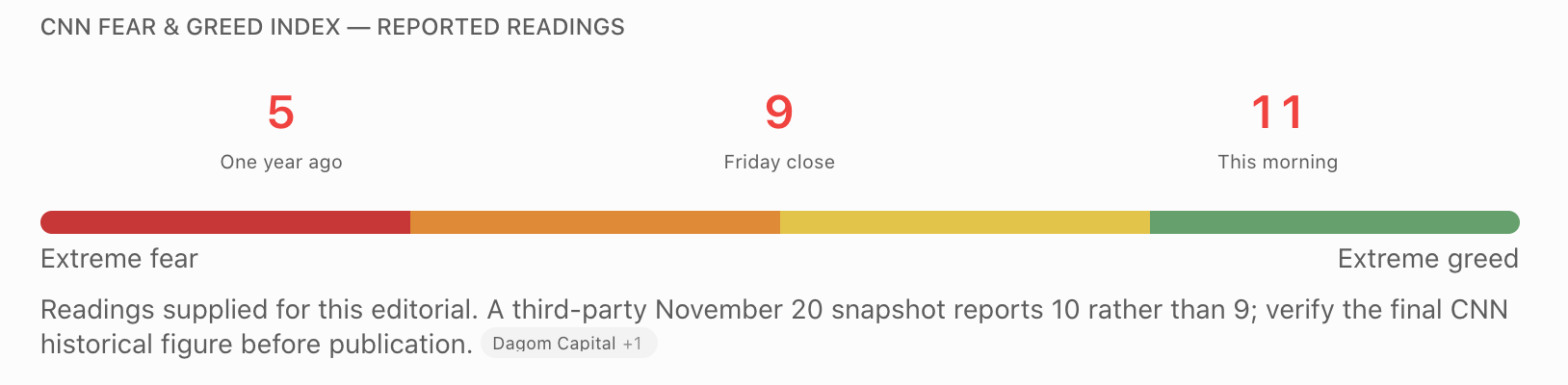
Last November, CNN’s Fear & Greed Index plunged to approximately 5.
On Friday, November 20, 2026, it was back in single digits, with a reading of 9 reported at the close.
And this morning?
And what’s frightening Wall Street this time?
Artificial intelligence.
More specifically, the massive construction boom in AI data centers sweeping across America.
The approaching 2026 midterm elections have injected another layer of uncertainty into the markets.
Will politicians restrict new data centers? Will local communities fight new construction? Will electricity shortages derail the AI revolution?
Will the enormous capital expenditures by America’s technology giants ever generate adequate returns?
These are legitimate questions.
But there’s an enormous difference between questioning the pace of a revolution and declaring that revolution dead.
And that’s precisely what I believe Wall Street is getting wrong.
The Markets Have Spoken
Here’s what investors need to understand.
AI data centers aren’t some speculative technology waiting for consumers to discover them.
They’re becoming the physical backbone of the next American industrial revolution.
We’re talking about billions of dollars in electrical infrastructure.
And enormous buildings filled with the most advanced computing equipment ever manufactured.
The companies financing this expansion aren’t spending billions because they enjoy writing checks.
They’re competing to control the infrastructure that could power the global economy for decades.
And here’s the political reality…
Communities need jobs. States need tax revenue. America needs additional electricity generation and modern infrastructure.
And Washington wants America to maintain its technological advantage.
The market’s message is becoming unmistakable: We want AI data centers. And we want them NOW.
That doesn’t mean every proposed project will get approved, or every AI stock will justify its valuation.
But political uncertainty doesn’t automatically erase the underlying demand.
When Fear Becomes Opportunity
Consider what the historical evidence actually tells us.
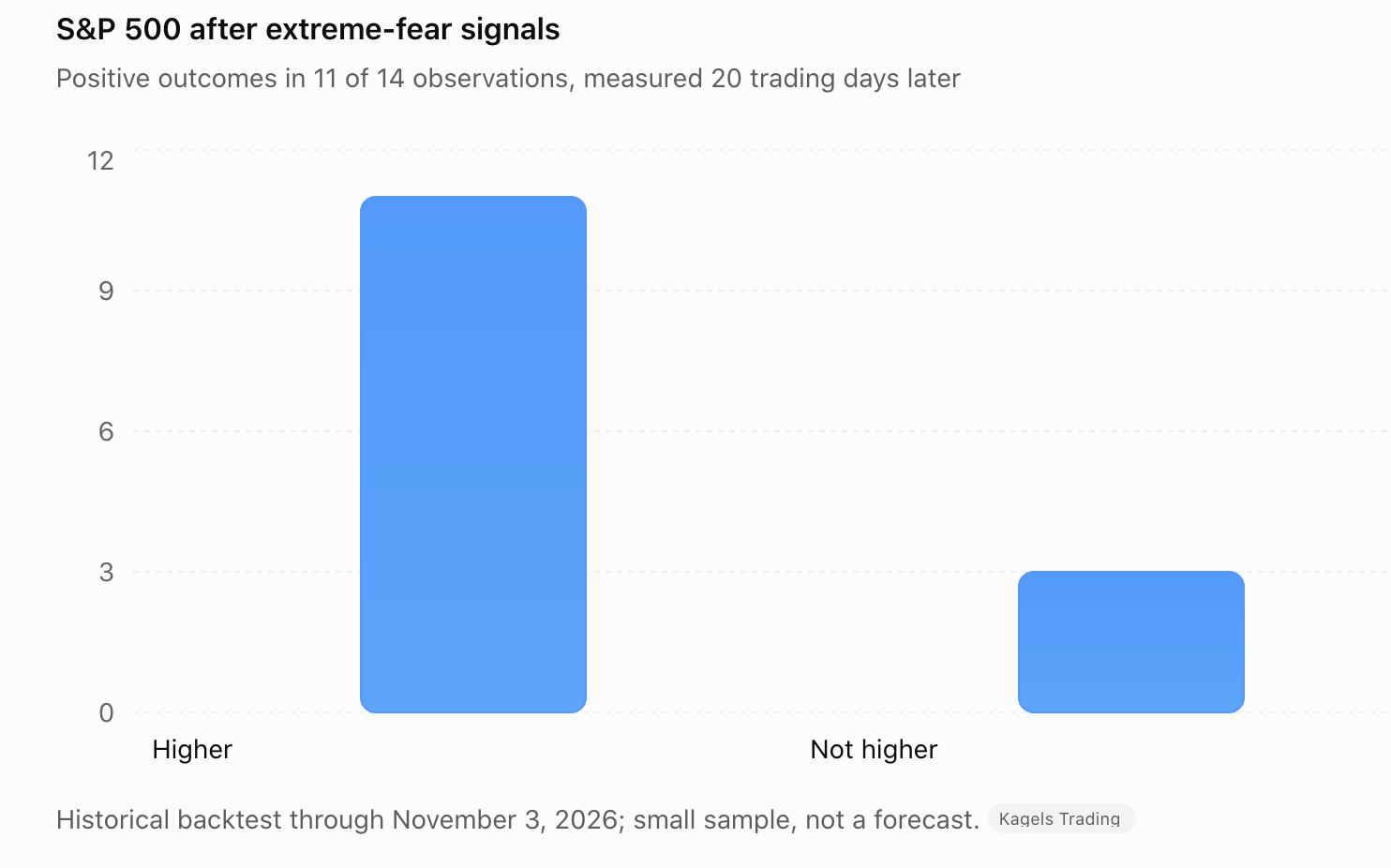
One analysis of CNN’s Fear & Greed data identified 14 qualifying extreme-fear signals with 20-trading-day follow-up results.
The S&P 500 was higher after 11 of them.
That’s approximately 79% of the time. The average 20-day gain was 1.9%.
Not a guarantee. Not a perfect timing indicator.
But a compelling reminder that markets often rebound when pessimism becomes excessive.
S&P 500 After Extreme-Fear Signals
Positive outcomes in 11 of 14 observations, measured 20 trading days later
The greatest fortunes aren’t necessarily made when everyone agrees the future looks wonderful.
They’re often made when investors recognize that the future is considerably brighter than today’s headlines suggest.
- In 2020, it was a pandemic.
- In 2022, inflation.
- In 2025, tariffs.
And in November 2026, it’s artificial intelligence and the uncertainty surrounding America’s unprecedented data-center construction boom.
Different crises.
Same human emotion.
Fear.
And when fear reaches levels like 5, 9, or 11, history tells me it’s time to start looking for opportunity — not blindly, but aggressively and selectively.
Because when the MoneyQuake shakes Wall Street, I don’t want to be standing in the crowd running for the exits.
I want to be looking for the assets they’re leaving behind.
Get to the good, green grass first…

Brian Hicks
 Check us out on YouTube!
Brian is a founding member and President of Angel Publishing. He writes about general investment strategies for Wealth Daily and Energy and Capital. Brian is the managing editor and investment director of R.I.C.H Report (Retired Independent Carefree Healthy), New World Assets and Extreme Opportunities. For more on Brian, take a look at his editor’s page.
The Best Free Investment You'll Ever Make
We never spam! View our Privacy Policy
After getting your report, you’ll begin receiving the Wealth Daily e-Letter, delivered to your inbox daily.
Angel Publishing Investor Club Discord - Chat Now
Brian Hicks Premium
Introductory

Advanced


