The Proof Is in the Pudding: AI Isn't a Tech Boom... It's an Energy Boom

Last week, I wrote that SpaceX may prove to be this generation’s Netscape moment.
For younger readers, Netscape wasn’t merely an IPO. It was the starting gun for an entirely new era of wealth creation.
The August 1995 Netscape offering signaled to investors that the internet was real. Not theoretical. Not experimental. Real.
What followed was one of the greatest investment booms in history.
Money flooded into telecommunications.
It flooded into fiber optics. Then it flooded into semiconductor manufacturing. Next, a wave of capital went into server infrastructure.
It flooded into networking equipment connecting millions of computers to the internet.
And yes, it flooded into internet companies.
Today, I believe SpaceX has fired a similar starting gun for the AI era.
But here’s what many investors still don’t understand…
The biggest winners may not be the AI companies themselves.
Don’t get me wrong, they’ll be blockbusters.
But I believe the biggest winners may be the companies providing the electricity, infrastructure, equipment, and natural resources required to power the AI revolution.
And this week we received yet another massive piece of evidence supporting that thesis.
Chevron just signed a 20-year power agreement with Microsoft to support a gigantic AI data center campus in West Texas. The project — known as Project Kilby — is expected to eventually provide as much as 2.67 gigawatts of power and create thousands of construction jobs. Most importantly, it is being built specifically to satisfy Microsoft’s rapidly expanding AI ambitions.
Think about that for a moment.
One of the largest and relatively oldest technology companies on Earth just committed to a 20-year electricity arrangement.
Not for software development. But for electricity.
The AI boom has become so large that hyperscalers are no longer asking utilities for power.
They’re bringing their own power plants. That is not the behavior of a speculative bubble. That is the behavior of a structural transformation.
You see, every technological revolution eventually runs into a physical constraint.
Railroads needed steel. Automobiles needed oil and gasoline.
The internet needed fiber optics and telecommunications networks.
AI needs electricity.
And lots of it.
In fact, the evidence is mounting that electricity — not critical minerals, not semiconductors, not software — is becoming the primary bottleneck for AI expansion. Grid operators, regulators, utilities, and technology companies are all reaching the same conclusion: Without massive increases in power generation and transmission capacity, the AI build-out simply cannot continue at its current pace.
That realization should sound very familiar to you…
The Best Free Investment You’ll Ever Make
Join Wealth Daily today for FREE. We’ll keep you on top of all the hottest investment ideas before they hit Wall Street. When you become a member today, you’ll get our latest free report: “The Nvidia Killer: Unlocking the $100 Trillion AI Boom.”
It contains the most promising AI companies and sectors poised for explosive growth. Our team of expert analysts has conducted thorough market research to uncover a hidden gem currently trading at just $2.
After getting your report, you’ll begin receiving the Wealth Daily e-Letter, delivered to your inbox daily.
Because this is exactly what I’ve been telling readers since the launch of my New World Assets in June 2024.
Back then, most investors viewed artificial intelligence as a software story.
I viewed it differently. For me, it’s also a natural resources story.
A power generation story. An infrastructure story. A grid modernization story. A commodities story.
A MoneyQuake story.
That’s why one of the very first recommendations I made to New World Assets members was GE Vernova (NYSE: GEV).
And it’s been our best performer:
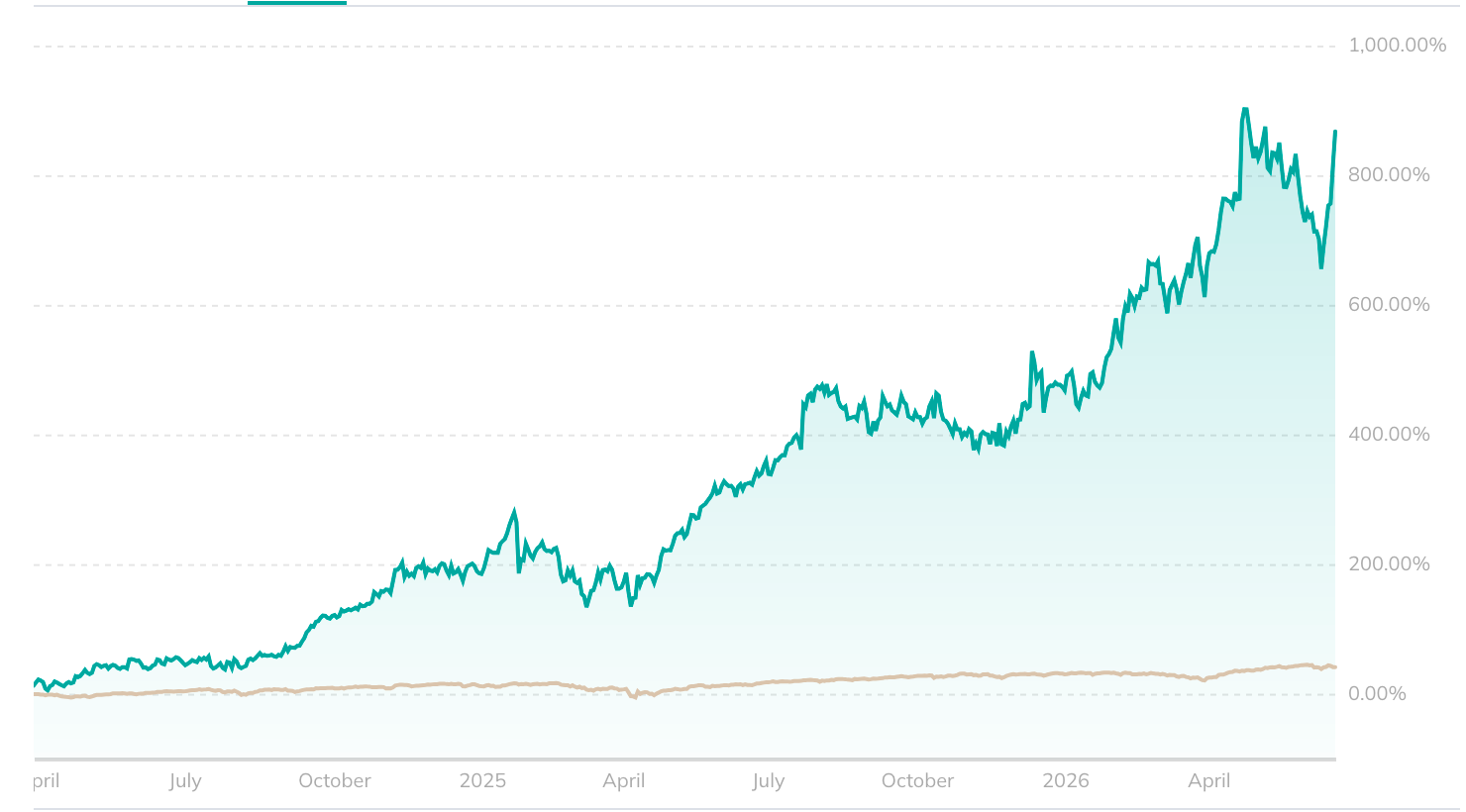
At the time, very few investors appreciated what the company represented.
Today, they do.
GE Vernova has returned more than 547% since our original recommendation.

And I don’t believe the move is over.
Not even close.
Why?
Because GE Vernova sits directly in the center of the greatest electricity expansion cycle America has seen in decades.
The company manufactures gas turbines, grid equipment, transmission technologies, electrification systems, and the infrastructure necessary to move power from where it is generated to where it is consumed. As AI-related electricity demand continues to surge, GE Vernova’s backlog and earnings outlook continue to grow alongside it. Earlier this year the company raised guidance specifically because of rising demand from AI data centers and grid infrastructure projects.
And now look at Project Kilby.
Who’s helping power it?
GE Vernova.
The project relies heavily on GE Vernova turbines as Chevron and Microsoft build what could become one of the largest AI power complexes in America.
This is exactly what the MoneyQuake predicted.
The AI revolution is colliding with America’s aging electrical infrastructure.
When that happens, trillions of dollars must be invested.
New power plants must be built. Transmission lines must be upgraded. Transformers must be installed. Grid equipment must be replaced. Natural gas infrastructure must expand. Energy storage must be deployed.
And companies like GE Vernova become critical suppliers to the entire ecosystem.
That’s why I continue to believe investors are dramatically underestimating the second-order effects of AI.
Most people see ChatGPT and Claude. Or they see AI digital assistants.
But I see power demand. Period. Never-ending power demand.
I see the physical world being rebuilt to support the digital one.
And that’s where fortunes are made.
The comparison to the internet era becomes even clearer when you look beneath the headlines.
The greatest wealth wasn’t created by every dot-com startup.
Most of those disappeared.
The real wealth was created by investors who understood what the internet required.
For example, Cisco supplied the networking equipment. Intel supplied the processors. Corning supplied the fiber. Amazon built the infrastructure that eventually became AWS.
The same pattern is unfolding today. The money — massive amounts of it — is flowing into the infrastructure.
That’s why Chevron is signing 20-year agreements. That’s why utilities are scrambling to expand generation capacity. That’s why regulators are accelerating approvals for data center projects.
That’s why companies are increasingly being told to bring their own power to the table.
The proof is no longer theoretical.
It’s in the pudding.
The MoneyQuake is happening exactly as we expected.
And I suspect we’re still in the very early innings.
Remember, Netscape went public in August 1995.
The biggest gains of the internet era came years later.
Amazon.
Google.
Broadband.
Cloud computing.
Mobile devices.
Social media.
The largest fortunes were created after investors understood the implications of what had already begun.
I believe the same dynamic is unfolding right now.
SpaceX may have been the starting gun.
The AI IPO wave may be next with OpenAI and Anthropic.
And a growing list of companies preparing to tap public markets.
But the real opportunity isn’t simply buying the names everyone recognizes.
It’s identifying the infrastructure required to support them.
That’s exactly what we’ve been doing inside New World Assets.
And today, I’m tracking another opportunity that I believe could become one of the next major beneficiaries of the AI infrastructure build-out.
Like GE Vernova in 2024, this company sits at a critical choke point of the MoneyQuake.
Few investors are paying attention.
Fewer still understand how important it may become.
Yet if I’m right, it could emerge as one of the most important AI infrastructure investments of the next several years.
To learn more about this opportunity, review my latest New World Assets report right here.
Because while Wall Street is still debating whether AI is real…
The biggest companies in the world are signing 20-year power contracts.
And that tells me everything I need to know.
Get to the good, green grass first…
The Prophet of Profit,

Brian Hicks
 Check us out on YouTube!
Brian is a founding member and President of Angel Publishing. He writes about general investment strategies for Wealth Daily and Energy and Capital. Brian is the managing editor and investment director of R.I.C.H Report (Retired Independent Carefree Healthy), New World Assets and Extreme Opportunities. For more on Brian, take a look at his editor’s page.
The Best Free Investment You'll Ever Make
We never spam! View our Privacy Policy
After getting your report, you’ll begin receiving the Wealth Daily e-Letter, delivered to your inbox daily.
Angel Publishing Investor Club Discord - Chat Now
Brian Hicks Premium
Introductory

Advanced


