The Day Artificial Intelligence Turned off the Water

It began, as these things often do, with a gate.
In the spring of 2001, in Klamath Falls, federal officials shut off irrigation water to thousands of farmers. Overnight, fields turned to dust — generations of work, gone in a single administrative decision. Families gathered at the headgates. Some prayed. Some protested. Some forced them open.
It wasn’t just a protest.
It was a warning.
Because in that moment, something fundamental became clear: When water disappears, order follows it out the door.
Twenty-five years later, the Klamath Falls water crisis still lives:

But the Klamath Basin is only one example.
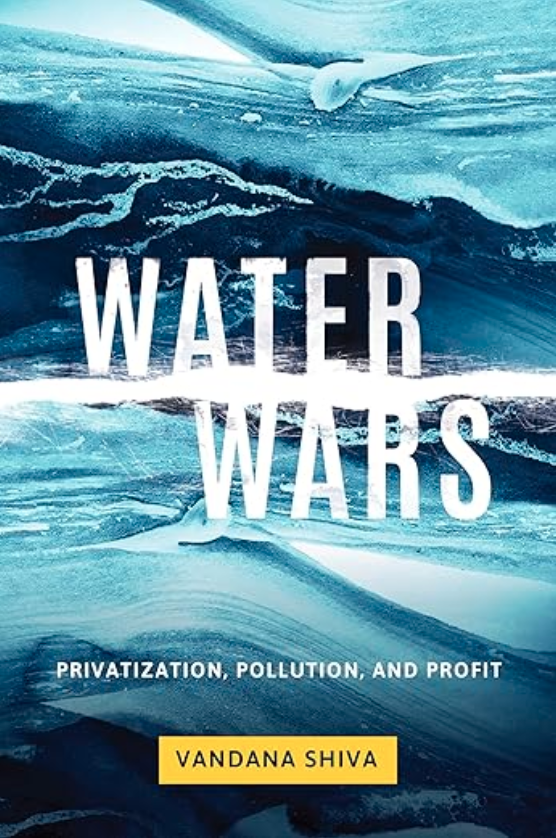
Water wars have echoed across American history. From the Owens Valley battles that helped build Los Angeles to the long-running fights over the Colorado River, water has never been just a resource. It is control. It is survival. It is power. And every time supply tightens — whether from drought, population growth, or policy — the same pattern emerges: tension, conflict, and, eventually, confrontation.
Not always with guns.
But always with consequences.
Crops fail. Prices rise. Communities fracture. And in the worst cases, people get sick — because when clean water becomes scarce, sanitation breaks down and disease follows.
Now imagine adding a new competitor into that equation.
Not farmers, whose very livelihood depends on water.
Not cities.
Not even entire states.
I’m talking about machines.
The Best Free Investment You’ll Ever Make
Join Wealth Daily today for FREE. We’ll keep you on top of all the hottest investment ideas before they
hit Wall Street. Become a member today, and get our latest free report: “Why You Need to Fire Your Money
Manager.”
It contains full details on why money managers are overpaid and provides you with
tools for growing your wealth.On your own terms. No fees, no commission.
The New Water Wars: Not People… Machines
Across the United States — from Northern Virginia to Phoenix to Texas — a new kind of infrastructure is rising.
Massive, warehouse-sized complexes filled with servers. No windows. No lights. No people. Just heat… and the constant need to remove it.
Because artificial intelligence doesn’t just run on electricity.
It runs on water.
“Super-Users of Fresh Water”
According to Reuters, data centers have quietly become “super-users of fresh water.”
At the same time, global freshwater demand is projected to outstrip supply by roughly 40% by the end of this decade.
That means we are adding a massive new source of demand…
At the exact moment the system is already under strain.
The Scale Is Almost Impossible to Grasp
A single large data center can consume up to 5 million gallons of water per day.
That’s enough to supply tens of thousands of people — diverted into a single facility.
Now multiply that by the hundreds… soon thousands… of AI data centers that are being built.
By the end of this decade, U.S. data centers alone could require up to 1.4 billion gallons of water every single day — roughly equivalent to the entire daily water consumption of New York City.
Globally, the numbers become staggering.
Artificial intelligence systems could consume 1.1 trillion–1.7 trillion gallons of water annually — translating to 3 billion–4.5 billion gallons per day.
That’s not just a city’s worth of water.
That’s multiple megacities… combined.
From Cities… to Machines
At scale, this becomes something entirely new.
AI infrastructure could soon consume more water than:
- London
- Paris
- Los Angeles
Combined.
Three global cities. Homes, hospitals, businesses — all of it.
Take all that water and redirect it…
Not to people but to machines.
“Drying Out Our Rivers”
Some researchers are now using language that would have sounded unthinkable just a few years ago:
“The cloud is drying out our rivers, lakes, and oceans.”
Meanwhile, The New York Times acknowledges that data centers require “vast amounts of water.”
The Wall Street Journal calls the surge in demand “unprecedented.”
In February of this year, Reuters reported, “AI-driven growth alone could gulp down as much extra H2O a year by 2030 as Americans currently drink.”
And even Microsoft has acknowledged that AI expansion is increasing water consumption.
This is no longer theoretical.
It is already happening.
The Hidden Multiplier
Most people assume data centers only use water for cooling.
They don’t.
AI’s water footprint is multiplied across the system:
- Water at the data center
- Water at the power plant
- Water in semiconductor manufacturing
AI doesn’t just consume water.
It amplifies demand across the entire system.
Communities Are Already Feeling It
In Northern Virginia — the largest data center hub on Earth — infrastructure is being pushed to its limits.
In Phoenix, water usage from data centers is projected to surge into the billions of gallons annually — in a region already facing long-term drought.
And in Texas, communities are beginning to push back against projects that could consume millions of gallons per day.
We don’t yet fully understand the total impact.
But we are beginning to see the strain.
When Water Disappears… Consequences Follow
History has already shown us what happens next.
Water shortages don’t stay contained.
They spread.
First to agriculture. Then to cities. Then to public health.
Because when water becomes scarce:
- Food production drops.
- Prices rise.
- Sanitation breaks down.
- Disease risk increases.
What begins as an infrastructure issue…
Becomes a human crisis.
The Core Problem
The problem is brutally simple.
AI demand is growing exponentially.
Water supply is not.
We can build data centers in months. We cannot build water systems nearly as fast. And in many regions, the water is already spoken for.
Which means every new gallon demanded…
Is taken from somewhere else.
And of course, here’s where the opportunity happens…
Water: The Other Side of the Same Gold Coin
For decades, investors have turned to gold in times of uncertainty.
Gold protects against monetary instability.
Water protects against physical scarcity.
Both share the same core traits:
- Finite
- Essential
- Irreplaceable
Historically, water has behaved like a quiet version of gold.
Not explosive.
But steady. Defensive. Reliable.
Water assets have delivered consistent returns over time because demand is inelastic. People don’t stop using water in a downturn. Infrastructure tied to water continues generating revenue regardless of economic cycles.
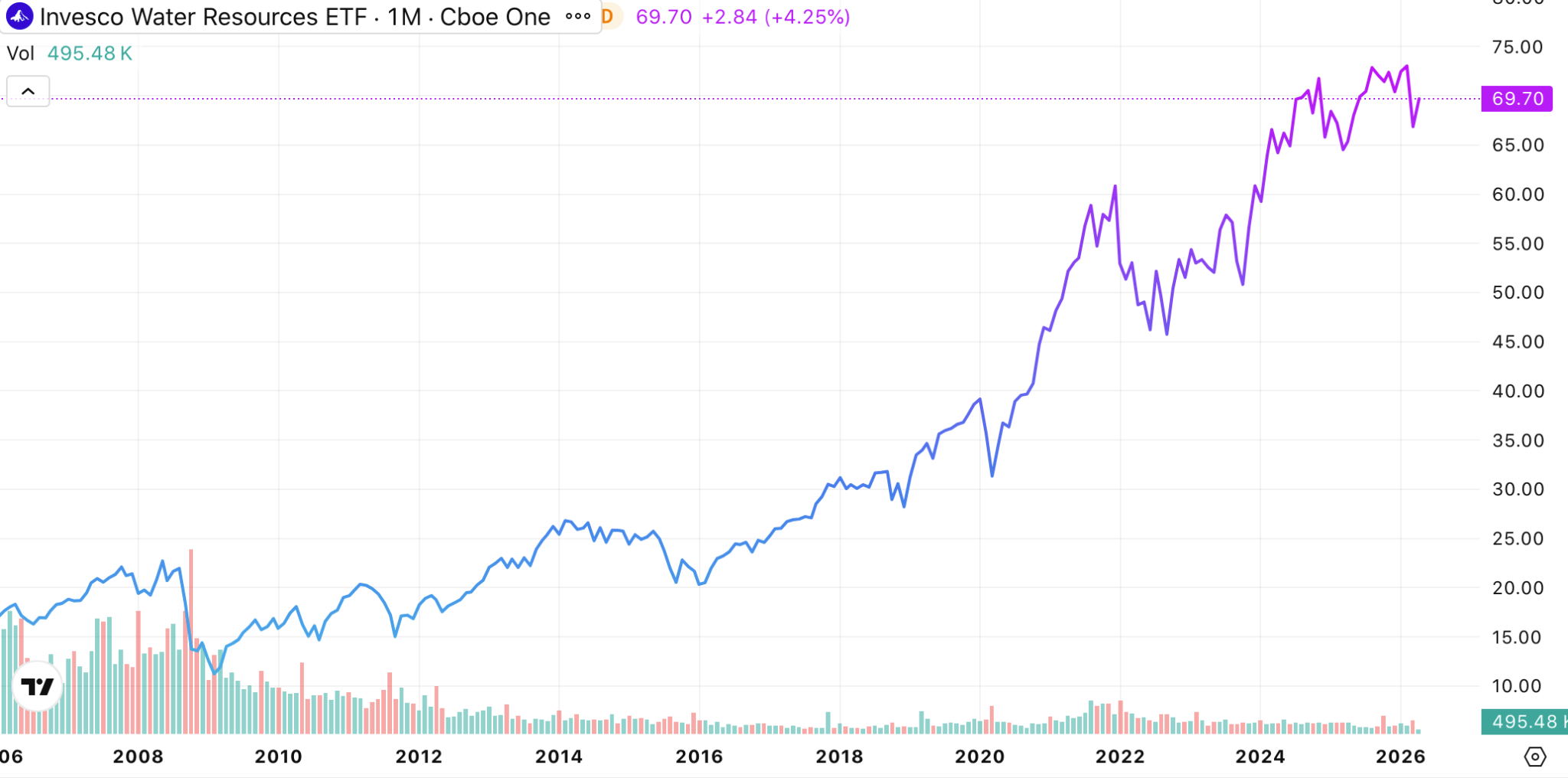
That’s why research increasingly classifies water as:
- A diversifier
- A hedge
- And in some cases, a safe haven
What’s Changing Now
For decades, water was underpriced:
- Heavily regulated
- Politically controlled
- Treated as a utility
But now, for the first time, the equation is shifting.
Because demand is no longer just population-driven. It is being driven by machines.
AI introduces a new form of demand that is:
- Constant
- Scalable
- Non-negotiable
It doesn’t conserve. It consumes. Constantly.
From Utility… to Strategic Asset
This is the inflection point.
Water is transitioning from a slow-moving utility… to a strategic asset class.
Just as oil repriced in the early 2000s. Just as data exploded in value in the cloud era.
Water is beginning to reflect its true scarcity.
What Comes Next
Because once a crisis becomes visible…
Capital follows. Policy follows. And investment flows follow.
Water is no longer just a background resource. It is becoming one of the most important assets of the next decade.
What I’ll Be Watching Next
In the coming weeks, I’ll be identifying specific investments positioned to benefit directly from this unfolding water crisis…
Companies tied to:
- Water infrastructure
- Water rights
- Water storage and distribution
The kinds of companies that don’t just survive this shift…
But surge because of it.
Because if history has taught us anything — from Klamath Falls to the Colorado River — it’s this…
When water becomes scarce, those who control it don’t just endure.
They lead.
Get to the good, green grass first…
The Prophet of Profit,

Brian Hicks
 Check us out on YouTube!
Brian is a founding member and President of Angel Publishing. He writes about general investment strategies for Wealth Daily and Energy and Capital. Brian is the managing editor and investment director of R.I.C.H Report (Retired Independent Carefree Healthy), New World Assets and Extreme Opportunities. For more on Brian, take a look at his editor’s page.
The Best Free Investment You'll Ever Make
We never spam! View our Privacy Policy
After getting your report, you’ll begin receiving the Wealth Daily e-Letter, delivered to your inbox daily.
Angel Publishing Investor Club Discord - Chat Now
Brian Hicks Premium
Introductory

Advanced


