The $15 Million Deal That Built the Future… and the Sixth-Largest Economy on the Planet!

In my last editorial, I told you about the absolute blockbuster deal the U.S. struck with Russia to buy Alaska.
Today, we are heading to the Golden State. Let’s go…
On February 2, 1848, in a village just north of Mexico City, the future of the United States changed forever.
The Treaty of Guadalupe Hidalgo was signed.
The Mexican-American War was over.
And in exchange for $15 million — plus the assumption of roughly $3.25 million in claims owed to American citizens — Mexico ceded an enormous stretch of territory to the United States.
The United States acquired:
- California
- Nevada
- Utah
- Most of Arizona
- And large parts of New Mexico, Colorado, and Wyoming
All told, America acquired more than 529,000 square miles.
That’s more than 338 million acres.
The price?
About $28 per square mile.
Less than $0.05 per acre. Five cents.
Today, you can’t buy a breath mint for $0.05.
But in 1848, America acquired the land that would eventually give us Silicon Valley, Hollywood, the Port of Los Angeles, the California gold rush, the aerospace industry, the modern venture capital industry, the defense technology complex, and one of the largest economies on Earth.
And yet, at the time, there was fierce opposition.
Many critics saw the war with Mexico as immoral.
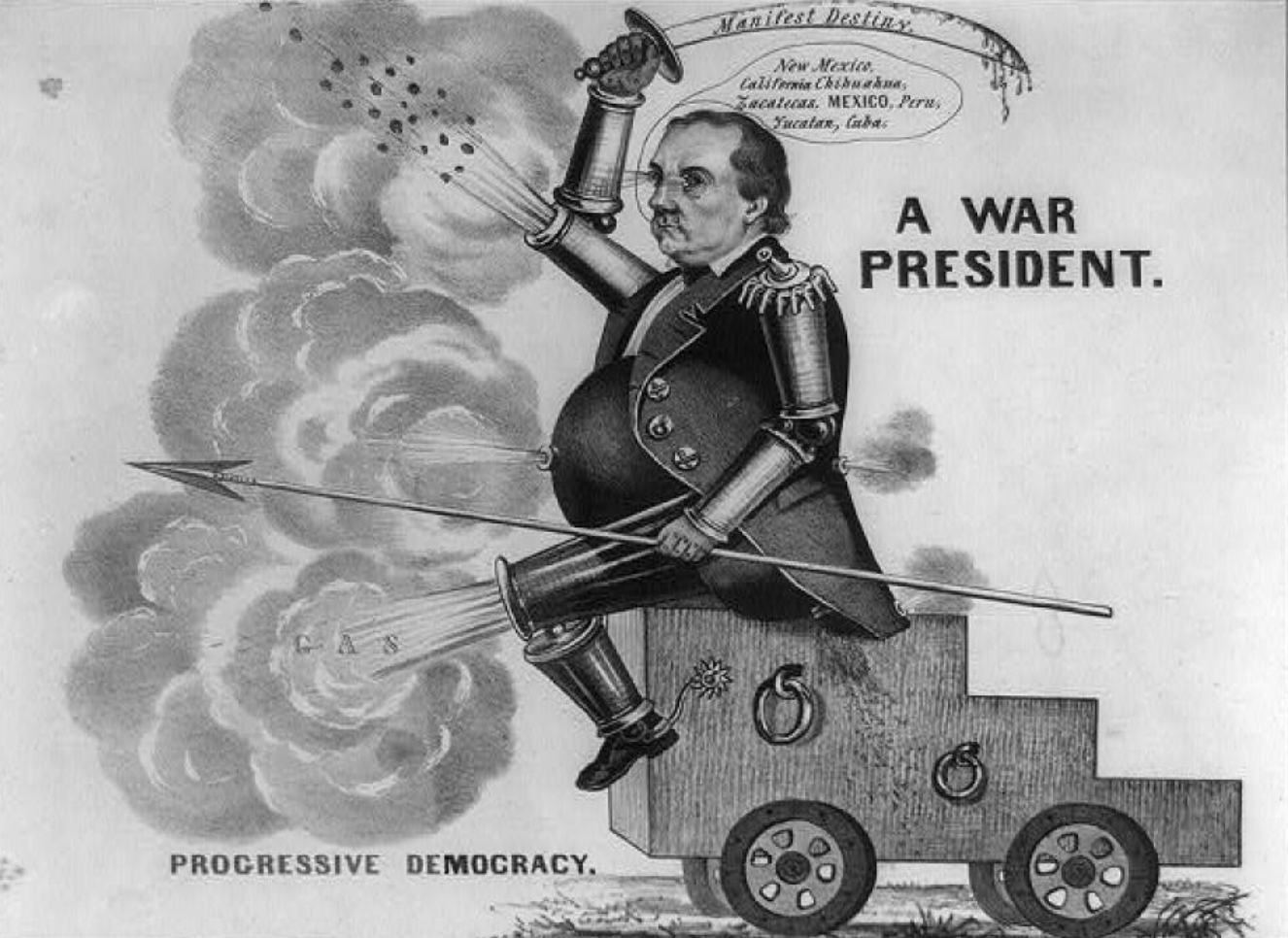
Others saw the new territory as too large, too distant, too divisive, and too dangerous to govern.
Some believed it would tear the country apart by reigniting the slavery debate.
They weren’t entirely wrong about that last part.
The acquisition of western territory did intensify the sectional crisis that eventually led to the Civil War.
But from an investment standpoint, from a national wealth standpoint, from a strategic standpoint, the Treaty of Guadalupe Hidalgo may have produced one of the greatest returns (ROI) in human history.
Ulysses S. Grant, who served in the Mexican-American War as a young officer, later called it “one of the most unjust ever waged by a stronger against a weaker nation.”
Congressional opponents accused President James K. Polk of pursuing conquest and warned against what one resolution called “consequences so disastrous.”
Others saw the new lands as barren, remote, and impossible to integrate into the American system.
But history had other plans.
Because just nine days before the treaty was signed, a carpenter named James Marshall found gold at Sutter’s Mill in Coloma, California.
At first, almost nobody knew.
By the end of 1848, everybody knew.
And then the world came running.
The California gold rush was born.
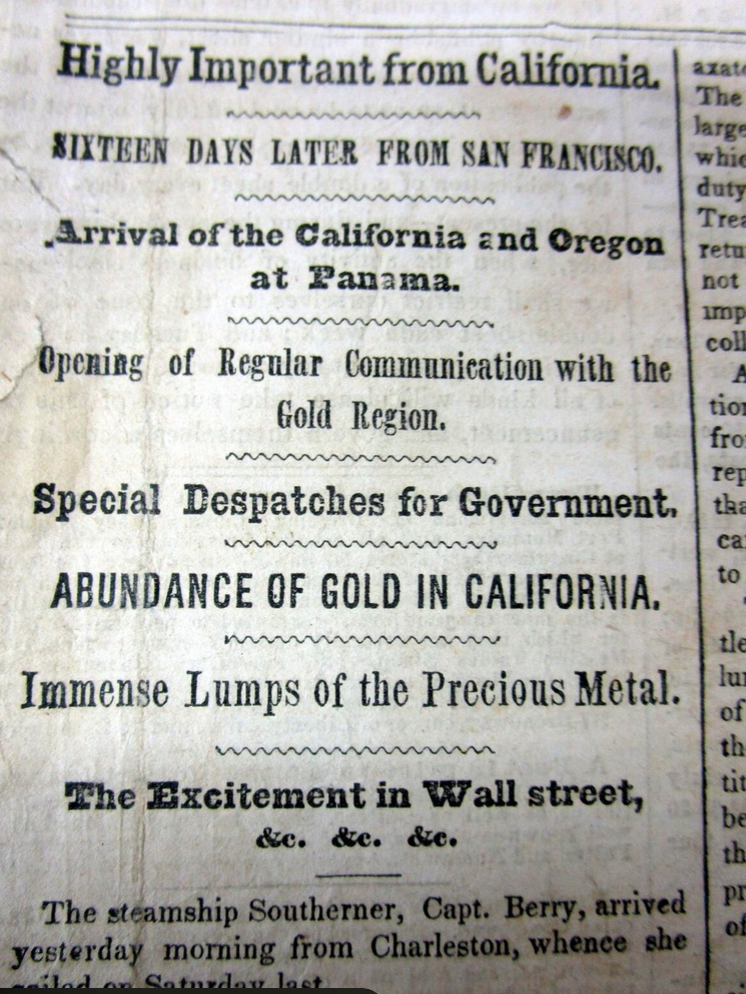
Ships filled the harbors. Wagons crossed the plains. Men left farms, shops, counting houses, and ships to chase yellow metal in the Sierra Nevada foothills.
California’s population exploded.
San Francisco transformed from a sleepy settlement into one of the most important cities in America.
And the land that critics feared would become a national burden became a national treasure almost overnight.
You see, this is how history works. The greatest opportunities are rarely obvious when the deal is made. They are usually hidden under dirt.
Or buried under ice. Or disguised as wilderness. Or, in our case today, wrapped in concrete, power lines, cooling systems, and server racks.
The critics always see the cost first.
The Best Free Investment You’ll Ever Make
Join Wealth Daily today for FREE. We’ll keep you on top of all the hottest investment ideas before they
hit Wall Street. Become a member today, and get our latest free report: “The $10 Trillion AI Infrastructure Boom.”
It contains full details on why money managers are overpaid and provides you with
tools for growing your wealth.On your own terms. No fees, no commission.
They see the disruption. They see the mess. They see the risk.
What they almost never see is the second-order wealth that follows.
When America acquired California, nobody could have imagined what was coming.
Nobody imagined Silicon Valley… or Apple, Nvidia, Google, Intel, Oracle, Meta, Tesla, Netflix, or the entire venture capital ecosystem that would spring up on the edge of the Pacific.
And nobody imagined Hollywood becoming the entertainment capital of the world.
If California were an independent country today, it would rank among the largest economies on Earth.
Think about that.
America paid $15 million. Less than $0.05 an acre. And from that acquisition came an economic engine larger than most nations.
That is not a good deal. That is not even a great deal.
That is the kind of return that makes Wall Street’s best private equity deals look like lemonade stands.
But here’s the part investors need to understand. California did not become California because the land itself was magic.
It became California because land, resources, infrastructure, capital, ambition, immigration, energy, ports, universities, technology, and risk-taking all collided in one place.
And maybe most importantly, California became California because of imagination, vision, and ambition!
That’s what creates wealth.
Not one ingredient.
And that is exactly what is happening right now with artificial intelligence.
The critics look at AI data centers and see electricity demand. They see land use. They see water consumption.
They see substations, transmission lines, gas turbines, nuclear reactors, transformers, concrete pads, steel beams, and cooling towers.
They see a boom that looks too big, too fast, too industrial, too physical.
And they say, “This is crazy.”
Good.
History’s greatest investments usually sound crazy at the beginning.
Buying California sounded crazy to many Americans. Buying Alaska sounded crazy. Building railroads across the continent sounded crazy. Electrifying rural America sounded crazy. Putting men on the moon sounded crazy. Building the internet sounded crazy. Fracking American shale sounded crazy.
And now, building the physical infrastructure for artificial intelligence sounds crazy.
But it isn’t crazy.
It’s the next platform.
You see, AI is not just software. That’s the mistake most people make.
They think AI is an app. They think it’s a chatbot. They think it’s a cute tool that writes emails, makes images, and summarizes documents.
That’s like looking at California in 1848 and seeing only dirt.
AI is a new industrial layer.
It will literally reshape everything!
It will reshape finance.
It will reshape mining, agriculture, education, robotics, transportation, and scientific discovery.
But none of that happens without infrastructure.
The California gold rush needed picks, shovels, railroads, ports, banks, steamships, warehouses, sawmills, and supply chains.
The AI gold rush needs data centers, power plants, transmission lines, substations, natural gas, nuclear, uranium, copper, silver, steel, cement, cooling systems, transformers, chips, and water infrastructure.
The wealth does not come from the server rack alone. The wealth comes from the entire build-out around it.
That’s why the AI data center backlash is so important.
Because the backlash tells you we are still early enough for most people to misunderstand what’s happening.
They don’t see the next California.
In 1848, America acquired land for less than $0.05 an acre.
Today, investors are being given the chance to buy into the companies that provide the inputs for the next great American build-out.
Power.
Grid equipment.
Turbines.
Uranium.
Natural gas.
Copper.
Silver.
Cement.
Cooling systems.
Critical minerals.
This is the physical side of the MoneyQuake.
And it may turn out to be one of the greatest investment themes of our lifetimes.
Because every major technological revolution has a physical foundation.
The internet needed fiber-optic cable.
The smartphone needed semiconductors, rare earths, towers, satellites, glass, lithium, and global supply chains.
Electric vehicles needed batteries, charging networks, copper, lithium, nickel, and grid upgrades.
AI needs more.
Much more.
This is why I believe the doom-and-gloomers are making the same mistake critics made in the 1840s.
They are judging tomorrow’s economy using yesterday’s assumptions.
They are asking whether today’s grid can handle tomorrow’s demand.
Of course it can’t.
That’s the point. The grid has to be rebuilt. Generation has to be expanded. Transmission has to be upgraded. New energy sources have to be developed. New industrial capacity has to be added.
That is not a reason to avoid the opportunity. That is the opportunity.
California was not valuable simply because America signed a treaty.
California became valuable because the acquisition forced America to build westward.
It forced the construction of roads, ports, rail, banking, and migration
It forced America to become bigger, richer, more ambitious, and more powerful.
AI will do something similar.
It will force a new energy build-out. It will force a new industrial build-out. It will force a new materials boom.
It will force companies, utilities, regulators, miners, builders, and investors to think on a scale we have not seen in generations.
And 10 years from now, many of today’s objections will sound quaint.
People will forget the hand-wringing.
They will forget the angry headlines.
They will forget the town hall fights over substations and data center permits. They will forget the pundits who warned that America was building too much.
What they will remember is that a new economy emerged.
And by then, the easy money will already have been made.
That’s always how it works.
The critics get the headlines. The builders get the future.
The investors who understand the builders get the wealth.
In 1848, critics saw a risky land grab.
History saw California.
Today, critics see AI data centers.
I see the foundation of the next great American expansion.
And just like California, the return may look obvious only after the world has already changed.
Get to the good, green grass first…
The Prophet of Profit,

Brian Hicks
 Check us out on YouTube!
Brian is a founding member and President of Angel Publishing. He writes about general investment strategies for Wealth Daily and Energy and Capital. Brian is the managing editor and investment director of R.I.C.H Report (Retired Independent Carefree Healthy), New World Assets and Extreme Opportunities. For more on Brian, take a look at his editor’s page.
The Best Free Investment You'll Ever Make
We never spam! View our Privacy Policy
After getting your report, you’ll begin receiving the Wealth Daily e-Letter, delivered to your inbox daily.
Angel Publishing Investor Club Discord - Chat Now
Brian Hicks Premium
Introductory

Advanced


