Chapter 8: The Second Twin Awakens

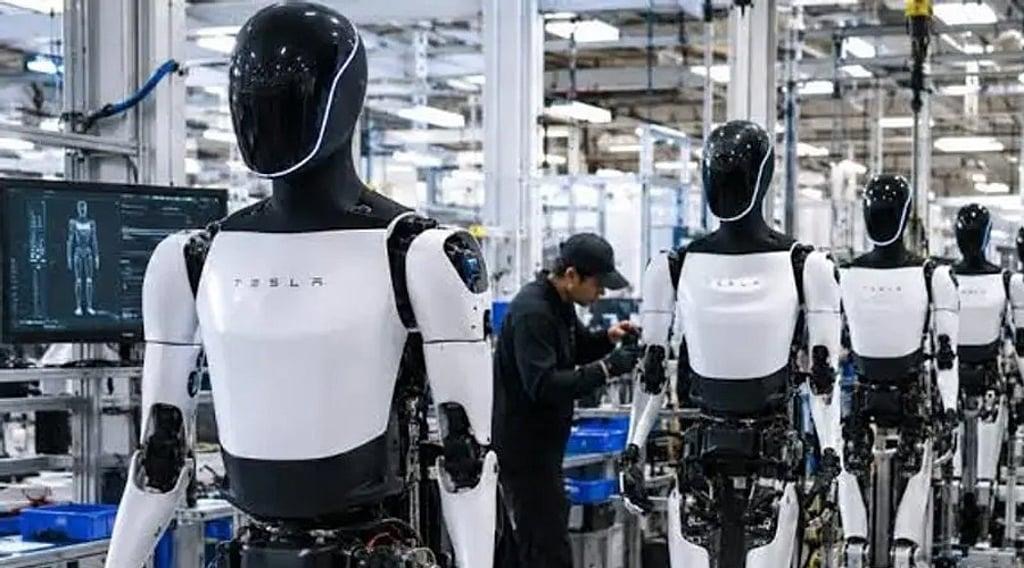
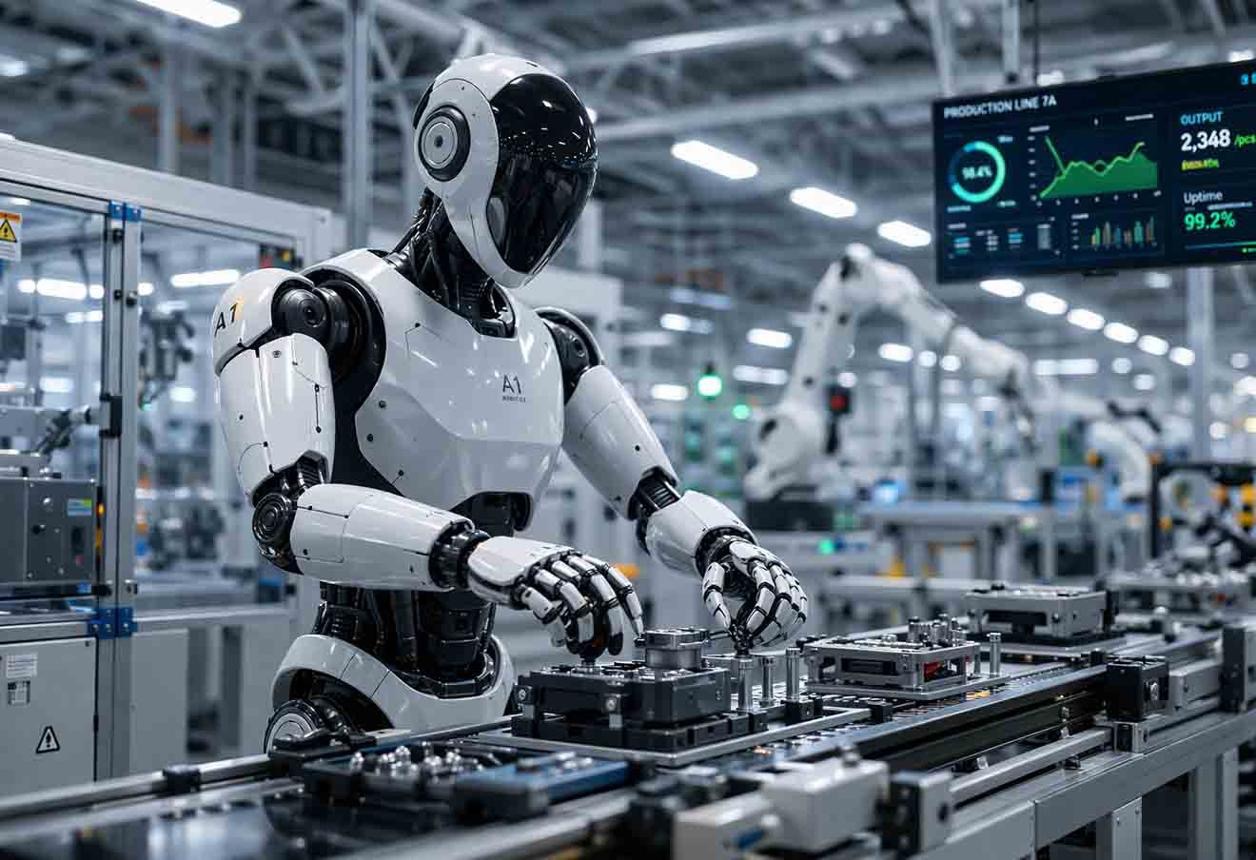
Elon Musk believes 1 billion humanoid robots could outperform the entire human workforce within a decade. Wall Street sees a robotics boom. I see something much bigger: the next phase of the MoneyQuake, where artificial intelligence escapes the computer screen and begins rebuilding the physical world.
In 1903, two bicycle mechanics from Dayton, Ohio, managed to keep a powered aircraft in the air for 12 seconds.
Twelve seconds.
The Wright brothers had accomplished something most of the world’s leading scientists and engineers considered impossible.
Sixty-six years later, Neil Armstrong was walking on the moon.
In 1946, the ENIAC computer occupied an enormous room, weighed roughly 30 tons, and required enough electricity to power a small neighborhood.
Today, the smartphone in your pocket possesses computational capabilities that would have seemed supernatural to the engineers who built it.
And in the early 1990s, when the internet was little more than an obscure network connecting universities, few people could have imagined that it would eventually become the nervous system of the global economy.
Here’s the point.
The greatest transformations in human history rarely announce themselves in ways that make the majority comfortable.
They begin as curiosities.
Then they become expensive experiments.
Then they become industries.
And finally, they become so deeply embedded in civilization that nobody remembers how the world functioned without them.
Which brings me to Elon Musk.
You recently saw his flying Tesla Roadster demonstration. Impressive? Yes.
Practical? Time will tell.
But that’s not even the point.
Because right before the flying Tesla demonstration, Musk made another prediction that might eventually belong alongside the Wright brothers, ENIAC, and the birth of the internet.
Only this time, the implications are potentially far more profound.
He’s predicting the arrival of a civilization that no longer depends primarily on human labor to produce its wealth.
And that, dear reader, is where the second twin of the MoneyQuake begins to reveal its true identity.
1 Billion Robots, 10 Years, 5 Times the Productivity
On September 1, 2026, speaking virtually at the G20 Innovation Ministerial in North Carolina, Elon Musk made an extraordinary prediction.
Within 10 years, he believes there will be at least 1 billion humanoid robots operating around the world.
Not 1 million.
Not 10 million.
One billion.
And here’s where his prediction becomes genuinely revolutionary.
Musk believes those robots could eventually produce approximately five times as much output per machine as the average human worker.
Do the arithmetic.
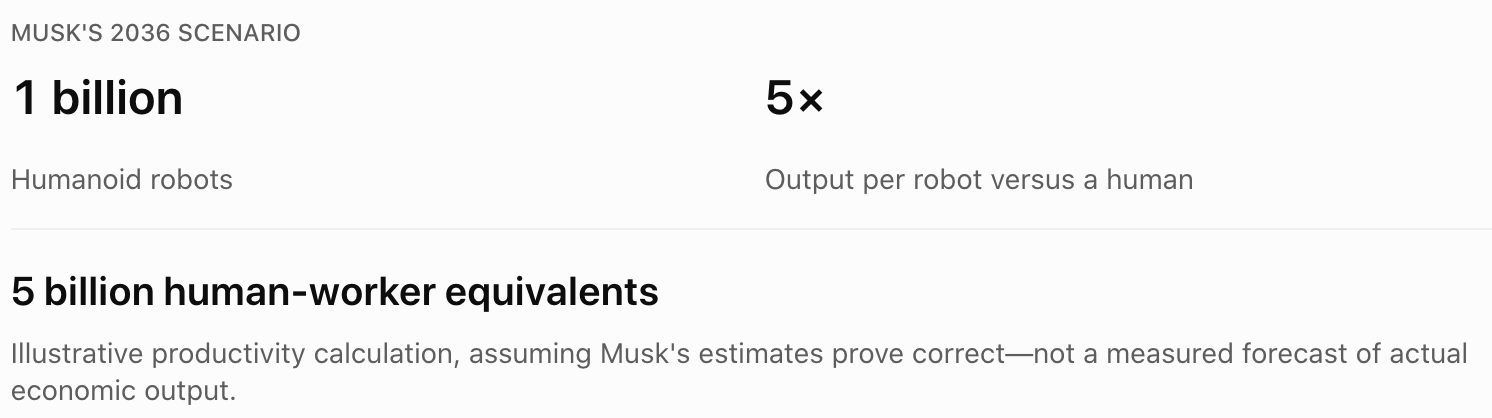
Musk’s conclusion was that these machines could collectively produce more than all humanity combined. He also described a recursive manufacturing process in which robots increasingly help manufacture additional robots.
Think about what that means.
A billion machines that don’t require salaries.
Don’t take vacations.
Don’t retire at 65.
And, depending on their design, could operate across multiple shifts, interrupted primarily by maintenance, charging, and repairs.
Now imagine these machines building automobiles, assembling electronics, constructing infrastructure, maintaining warehouses, processing minerals, operating factories, and eventually manufacturing more machines like themselves.
This isn’t simply another technological improvement.
It’s a potential fundamental restructuring of the relationship between labor, capital, and economic production.
And while the precise timing remains highly speculative, the investment implications are already beginning to take shape.
Because the important question isn’t whether Musk gets his 10-year prediction exactly right.
The important question is what happens to the global economy if he’s even directionally correct.
The Best Free Investment You’ll Ever Make
Join Wealth Daily today for FREE. We’ll keep you on top of all the hottest investment ideas before they
hit Wall Street. Become a member today, and get our latest free report: “The $10 Trillion AI Infrastructure Boom.”
It contains full details on why money managers are overpaid and provides you with
tools for growing your wealth.On your own terms. No fees, no commission.
The MoneyQuake Was Never Just About Gold
Regular readers know I’ve spent considerable time explaining what I call the MoneyQuake.
It’s my framework for understanding two enormous transformations unfolding simultaneously.
The first twin is monetary.
The second is industrial.
The monetary twin is about the transformation of money itself.
Gold. Silver. Bitcoin. Tokenization. Real-world assets. Central-bank reserves. The digitization and revaluation of ownership.
In short, it’s about what constitutes wealth, how that wealth is measured, and how ownership is transferred.
But the second twin is different.
It’s about the physical machinery of civilization.
Artificial intelligence
Data centers
Semiconductors
Electrical grids
Nuclear power
Copper
Uranium
Rare earths
Advanced manufacturing
And now, increasingly, robotics.
For months, I’ve argued that the AI revolution would require one of the largest energy-and-materials build-outs in modern history.
The world needs more electricity, more transformers, more transmission lines, more cooling equipment, more copper, more steel, more concrete, and more skilled workers.
But I want to expand that thesis today.
Because AI data centers are not the destination.
They’re the launching pad.
The data centers are building the intelligence.
Robotics will give that intelligence hands.
And once intelligence can physically manipulate the world around it, the second twin of the MoneyQuake moves into an entirely new phase.
From artificial intelligence to artificial labor.
From digital productivity to physical productivity.
From machines that calculate to machines that construct.
This is the convergence of artificial intelligence, robotics, and what futurists call the technological singularity.
And I believe it could ultimately dwarf the investment opportunities created by the internet revolution.
The $5 Trillion Robot Economy
Here’s where things get interesting.
Elon Musk isn’t the only person contemplating a world populated by billions of intelligent machines.
In May 2025, Morgan Stanley published research estimating that the humanoid robotics market could exceed $5 trillion by 2050, including the associated supply chains, maintenance, and support services.
The firm projected that the global humanoid population could surpass 1 billion units by 2050, with approximately 90% operating in industrial and commercial settings.
That’s a remarkable forecast.
But notice the difference.
Morgan Stanley’s billion-robot projection stretches toward 2050.
Musk believes the same milestone could arrive around 2036.
That’s roughly a 14-year difference.
And in a technological revolution, 14 years can separate the early investors from the latecomers.
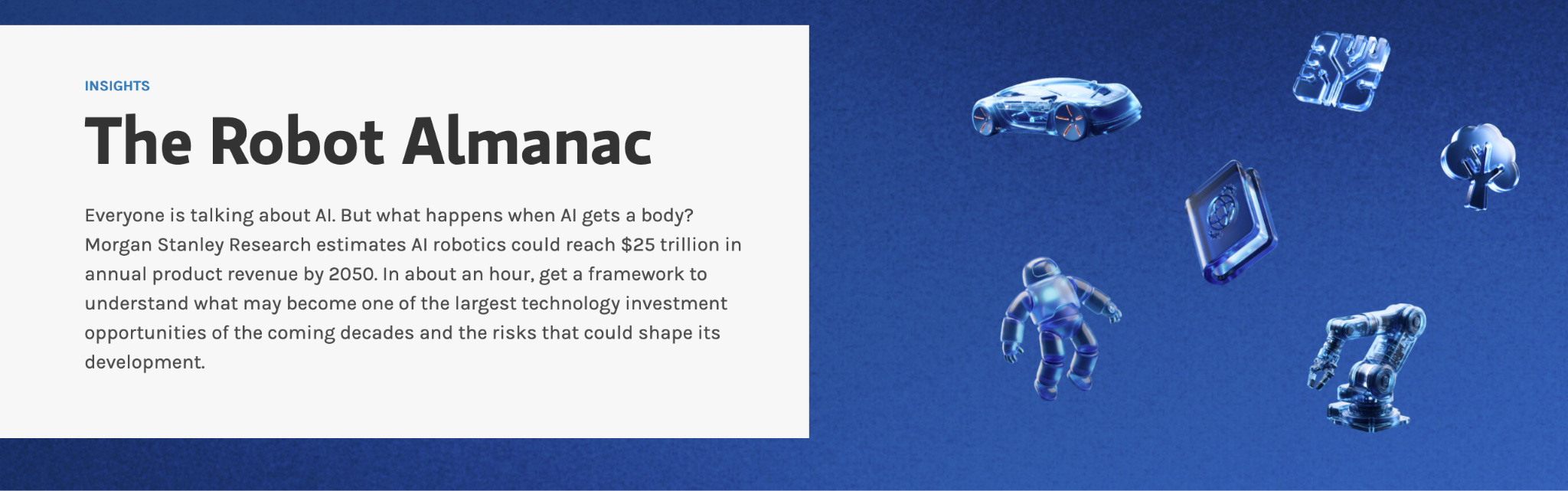
More recently, Morgan Stanley’s October 2026 Robot Almanac described an even broader opportunity spanning multiple forms of AI-powered robotics.
Its long-range model envisions a global AI robotics market reaching $25 trillion in annual product revenue by 2050, with recurring service revenues potentially exceeding twice that amount.
Those figures are projections, not existing revenues, and the broader robotics estimate should not be confused with the narrower humanoid market forecast.
Let that sink in.
We’re no longer discussing an interesting new category of factory equipment.
We’re discussing a possible multitrillion-dollar restructuring of global production.
And the most fascinating part is that much of the economic opportunity may not belong to the companies making the robots.
It may belong to the companies supplying everything the robots need to exist.
That’s the part Wall Street has a habit of overlooking.
And it’s precisely where the MoneyQuake becomes so important.
The Robot Revolution Has Already Begun
Before we get carried away with visions of a billion robots, let’s examine what’s happening right now.
On September 24, the International Federation of Robotics released its World Robotics 2026 report.
The numbers were extraordinary.
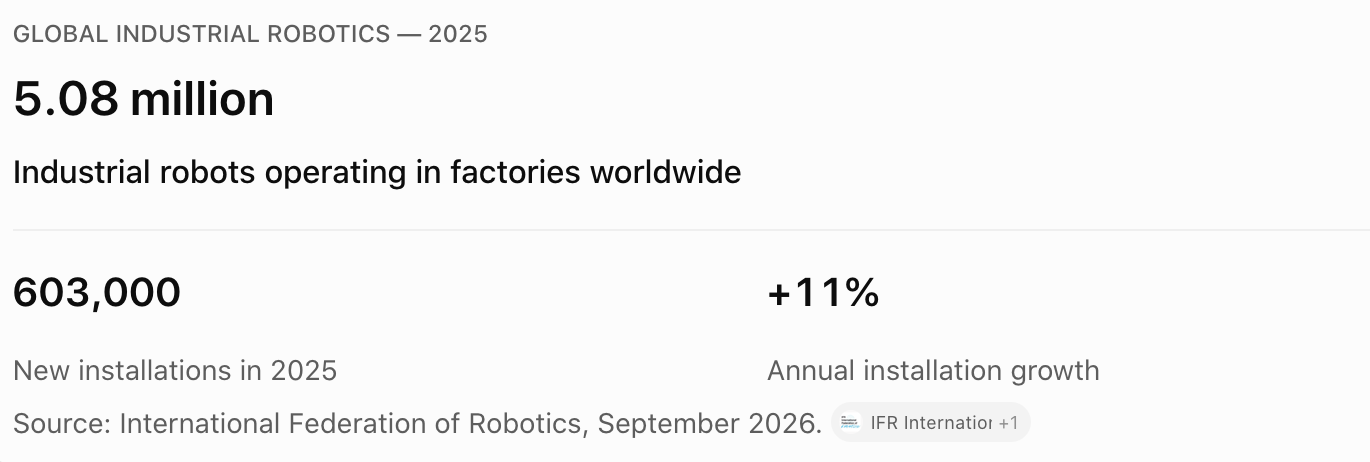
For the first time, more than 5 million industrial robots are operating in factories around the world.
And that number has more than doubled in just seven years.
But here’s the distinction that matters.
Most industrial robots are specialized machines.
They weld automobile frames.
Move materials.
Assemble electronic components.
Perform highly repetitive tasks in controlled environments.
Humanoid robots are something different.
They’re being developed to operate in environments originally designed for human beings.
And that changes the economic equation.
Instead of rebuilding an entire factory around specialized machines, imagine deploying intelligent robots capable of navigating existing facilities, operating familiar tools, and learning new tasks through software.
That’s the promise.
But the technology remains early.
According to September 2026 figures reported by Reuters, only about 7,000 humanoid robots were sold globally for industrial and professional service applications in 2025. Many were purchased for research and AI training rather than productive employment.
Bank of America Global Research nevertheless estimates that shipments could reach 90,000 units in 2026 and 1.2 million annually by 2030.
Those figures illustrate both the opportunity and the enormous distance still to travel.
A billion working humanoids by 2036 would require manufacturing growth far beyond today’s capabilities.
And that means building factories, supply chains, power systems, and materials-processing capacity on a staggering scale.
Which brings us directly back to the MoneyQuake.
The Singularity Isn’t Just About Intelligence — It’s About Production
For decades, scientists and futurists have discussed something called the technological singularity.
The basic idea is that artificial intelligence could eventually surpass human intelligence and begin accelerating technological progress beyond our ability to predict or control.
But there’s a distinction I believe investors need to understand.
Digital intelligence and physical intelligence are not the same thing.
An AI system can write computer code, analyze financial statements, discover patterns in scientific data, and help engineers design new machines.
But it cannot pour concrete. It cannot install a transformer. It cannot mine copper. It cannot repair a transmission line.
Not without some form of physical machinery.
And that machinery requires materials, energy, and manufacturing capacity.
Musk identified three critical ingredients for useful humanoid robots: AI software, onboard computing hardware, and electromechanical dexterity, particularly the hands.
He argued that improvements across all three could compound, dramatically increasing robotic usefulness.
This is where the industrial twin becomes particularly interesting.
Artificial intelligence is becoming increasingly capable of solving intellectual problems.
Robotics is attempting to translate those capabilities into physical action.
And advanced manufacturing is developing the capacity to reproduce the machines themselves.
Put those three developments together, and you get something approaching a self-reinforcing industrial system.
AI helps design better robots.
Better robots help manufacture more robots.
More robots help construct additional factories and infrastructure.
That infrastructure supports more computing power.
More computing power trains more capable AI systems.
And the cycle repeats.
Not automatically. Not without setbacks. And certainly not without enormous engineering challenges.
But the potential feedback loop is extraordinary.
I call it the MoneyQuake Industrial Flywheel.
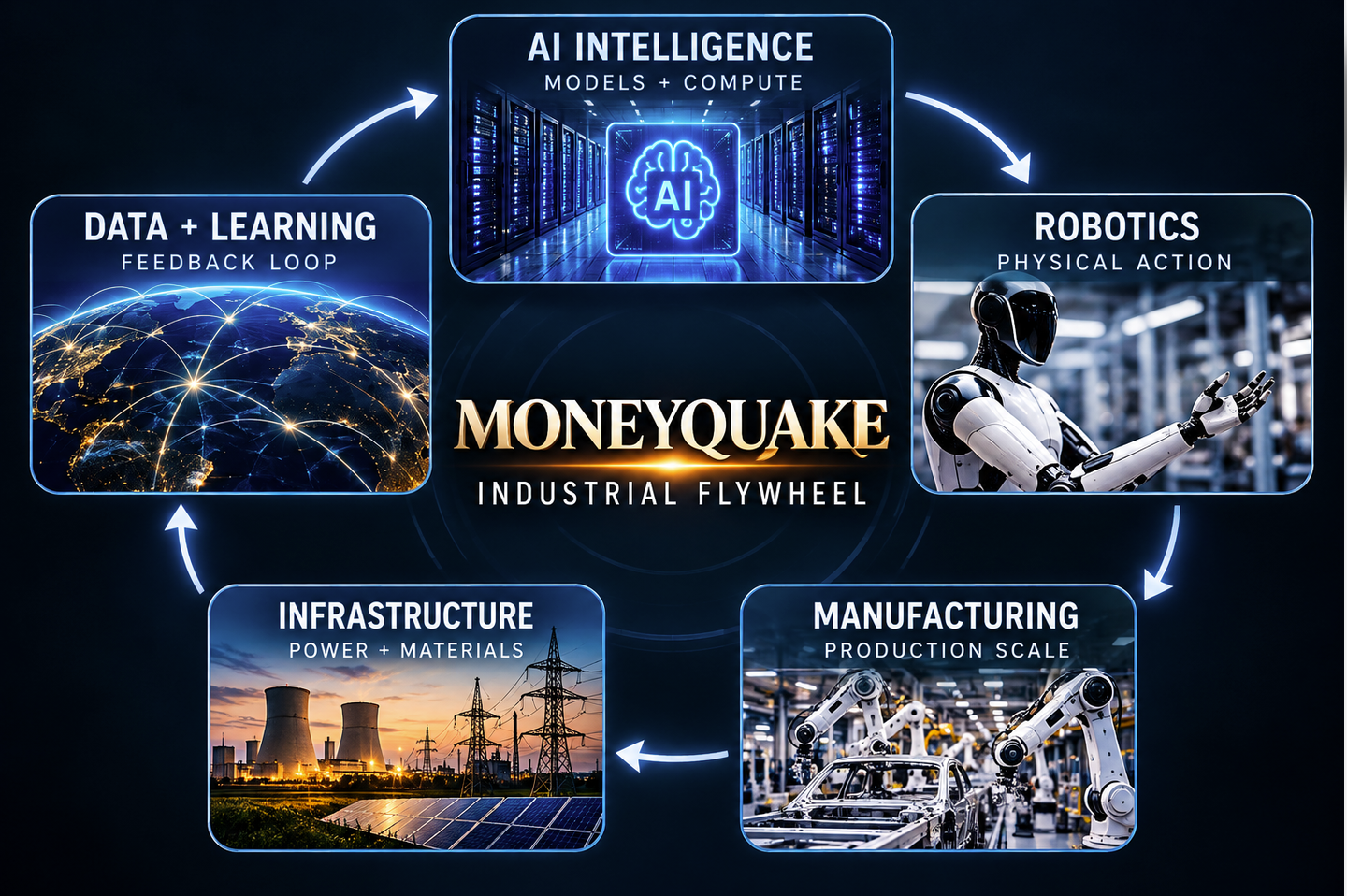
This is the conceptual feedback loop illustrating how AI, robotics, infrastructure, and manufacturing could reinforce one another.
That’s not simply automation.
That’s the possibility of accelerating industrial production itself.
And it leads to a question that every serious investor should be asking.
What happens when the machines building our economy become increasingly capable of building themselves?
The Greatest Bottleneck in the Robot Economy Won’t Be Intelligence
Here’s something that has fascinated me throughout my career studying natural resources and major investment cycles.
Technology can advance exponentially.
But physical infrastructure cannot.
You can improve an algorithm overnight.
But you cannot build a copper mine overnight, you cannot manufacture a million transformers overnight, you cannot bring a nuclear power plant online with a software update… And you certainly cannot create new deposits of copper, uranium, lithium, or rare earth elements by writing better computer code.
That’s the great paradox of the AI revolution.
The more sophisticated our digital civilization becomes, the more dependent it becomes on the physical resources beneath our feet.
Consider what goes into a sophisticated humanoid robot.
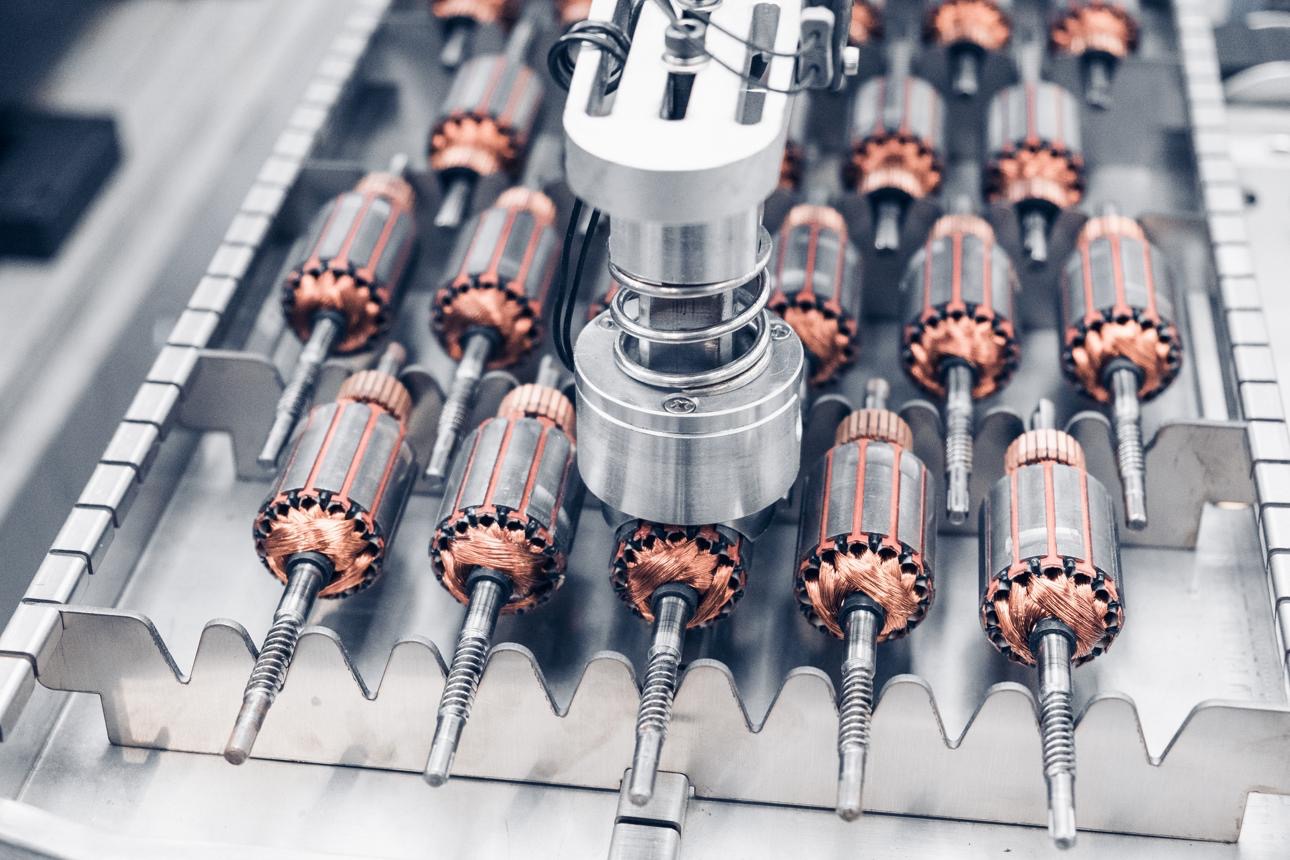
Rare-earth magnets and electric motors
Neodymium and praseodymium magnets, sometimes incorporating dysprosium or terbium, help deliver compact, powerful motion in many motor designs.
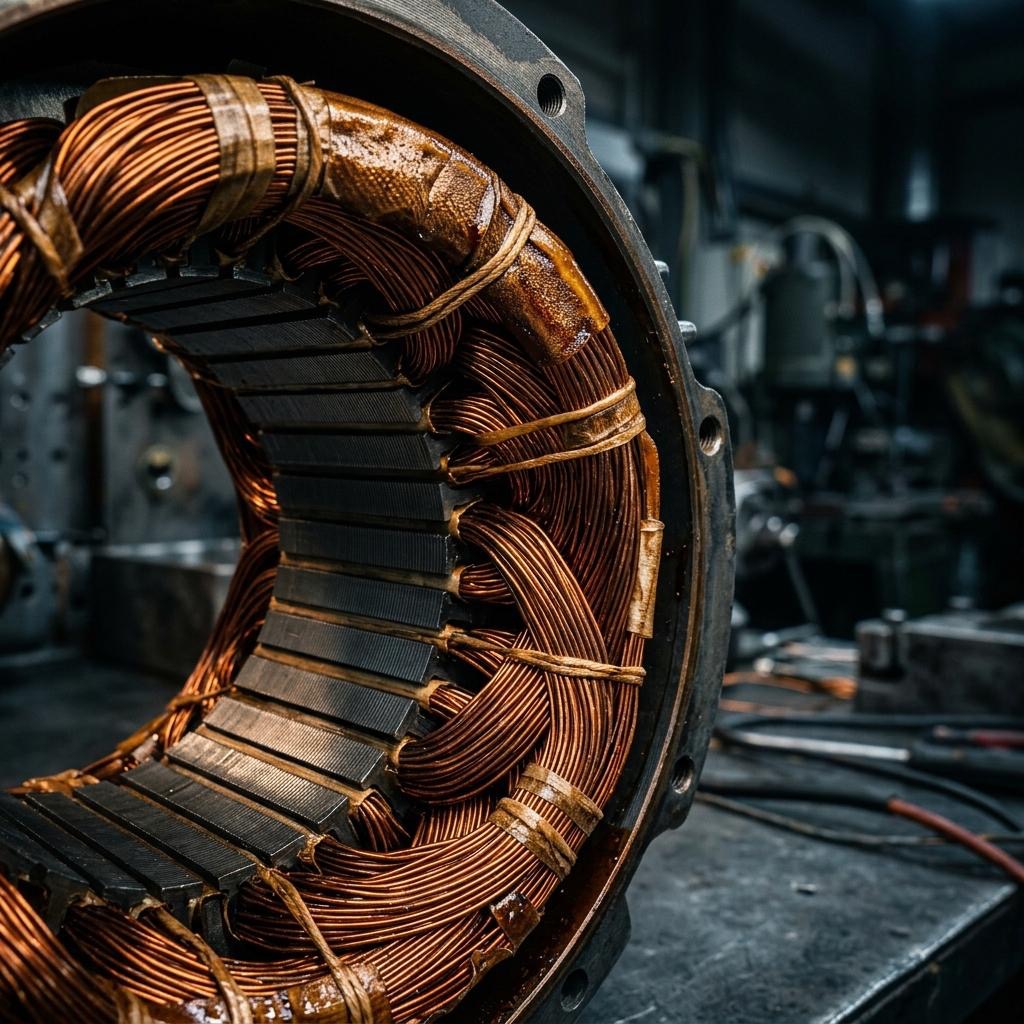
Copper and electrical components
Motors, wiring, power distribution, charging equipment, and the factories producing robots all create demand for conductive materials.
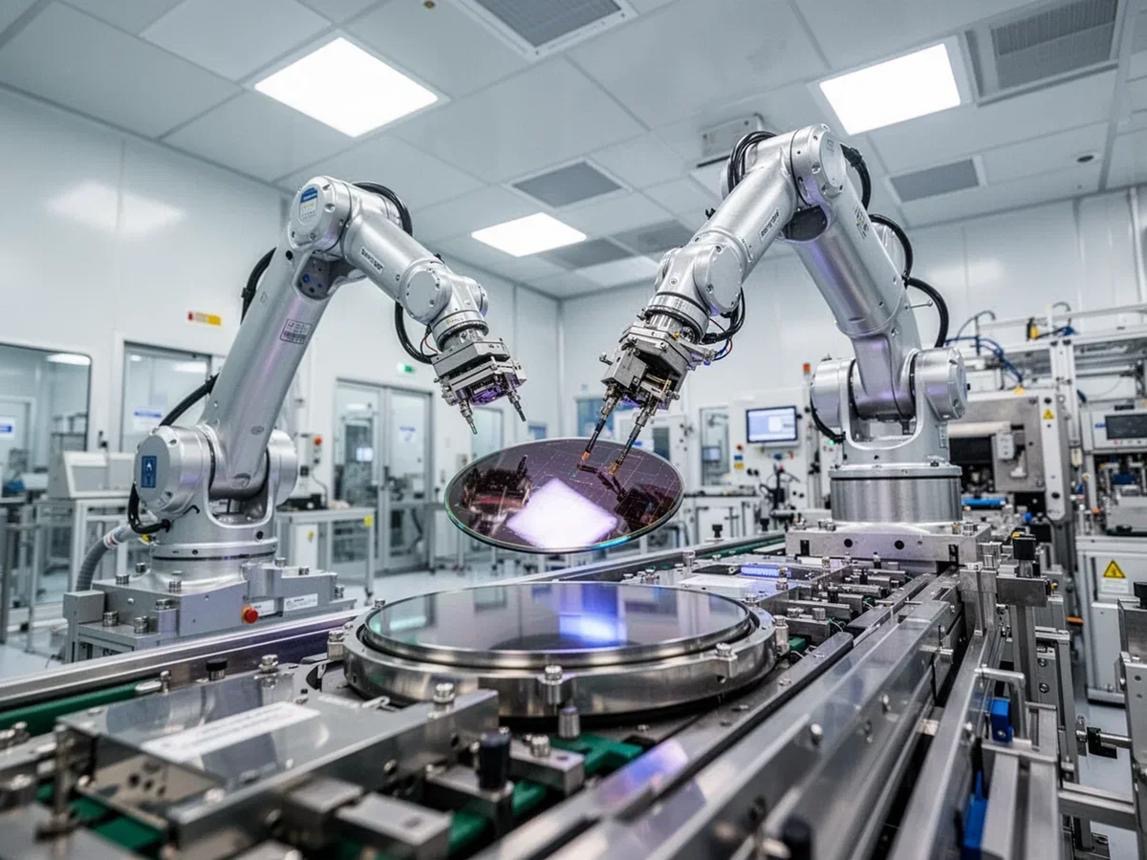
Semiconductors and sensors
Processors, memory, cameras, power-management chips, and control electronics provide perception, decision-making, and movement.
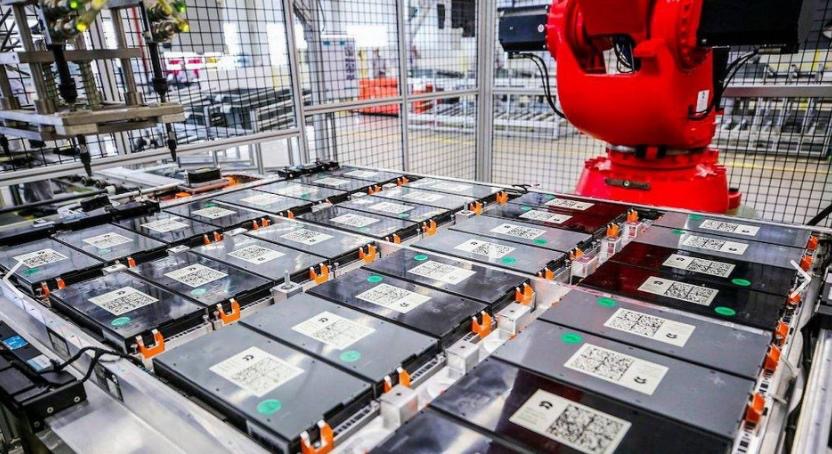
Batteries and energy storage
Mobile robots need portable energy. Different designs will compete on battery chemistry, runtime, safety, and charging speed.
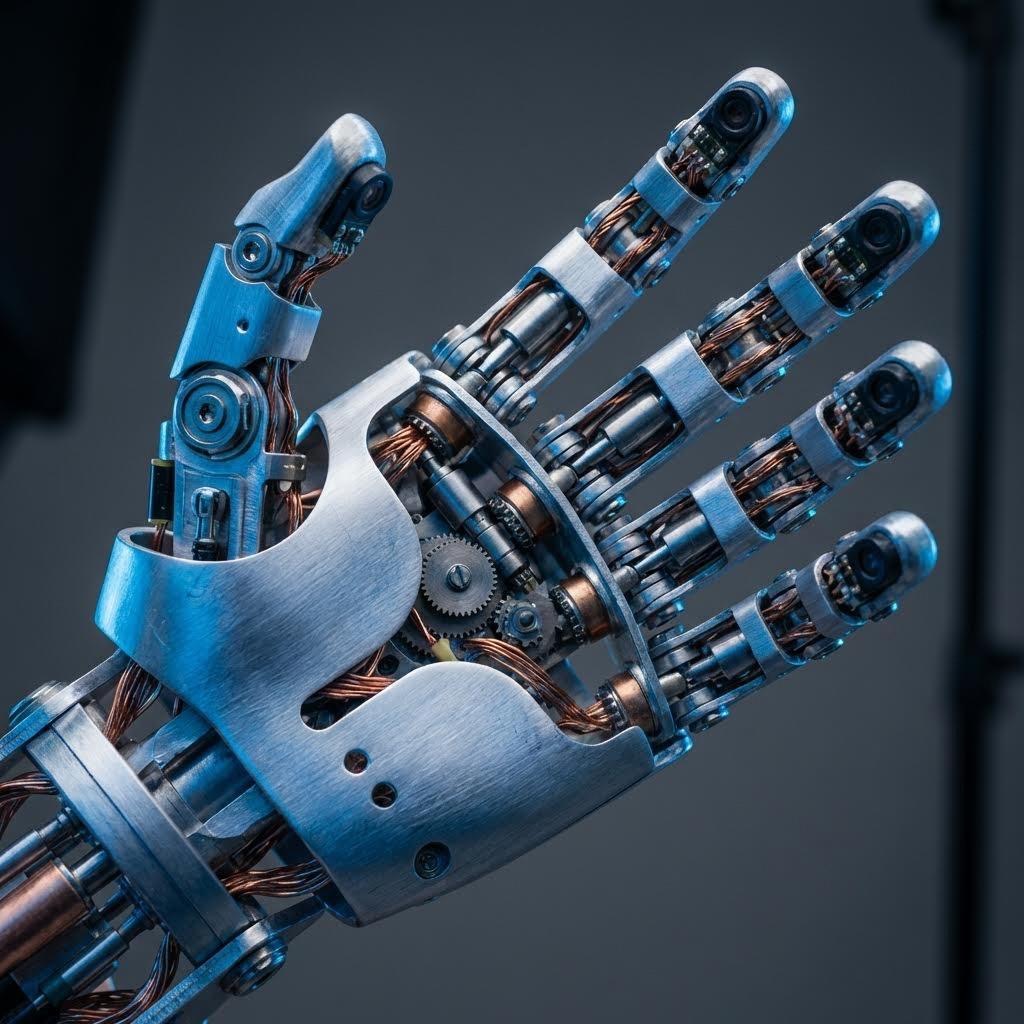
Precision metals and mechanical systems
Bearings, gears, reducers, actuators, aluminum, steel, and specialty alloys turn computer instructions into physical work.
And that’s before we even consider the factories required to manufacture these components.
Or the data centers training the AI models.
Or the electricity required to power the entire system.
Morgan Stanley’s October 2026 robotics research highlights how dramatic these component markets could become.
Its long-term model projects that, by 2050, robot-related demand could multiply the bearing market by 200 times, rare-earth magnets by 480 times, batteries by 1,500 times, and AI computing capacity by 40,000 times, relative to the model’s starting levels.
Those are highly ambitious scenario estimates, not guaranteed industry outcomes.
But even if actual growth is substantially smaller, the implications for the industrial supply chain could be enormous.
The companies that control these inputs may possess economic leverage far beyond their current market valuations.
Which is why I continue to argue that the natural resource side of the MoneyQuake deserves just as much attention as the artificial intelligence side.
The Energy Problem Nobody Can Ignore
Here’s another reason I believe this revolution will be much larger than Wall Street currently appreciates.
A billion intelligent robots would need energy.
Lots of it.
But the energy equation is more complicated than simply plugging a billion machines into the wall.
The machines themselves consume electricity.
Their factories consume electricity.
Their charging networks consume electricity.
Their semiconductor supply chains consume electricity.
And the data centers that train and support their intelligence consume electricity.
The International Energy Agency’s updated outlook projects global data center electricity consumption rising from approximately 485 terawatt-hours in 2025 to 950 terawatt-hours in 2030.
That’s nearly double the amount in just five years.
And Goldman Sachs estimated in May that U.S. data center power demand could more than double from 31 gigawatts in 2025 to 66 gigawatts in 2027.
Think about that.
We’re already struggling to supply enough electricity for the AI systems we’re building today.
Now imagine adding an enormous global population of intelligent industrial machines.
Here’s a simple illustration.
If 1 billion robots averaged just 500 watts of power consumption across an entire year, including charging and idle periods, that would imply approximately 4,380 terawatt-hours of annual electricity use.
That is a hypothetical calculation, not a forecast. Actual consumption would depend on robot design, workload, efficiency, utilization, and charging losses.
But it demonstrates the potential scale.
And it explains why the industrial twin of the MoneyQuake extends directly into electricity generation, natural gas, nuclear power, grid modernization, and energy storage.
The AI revolution doesn’t eliminate our need for energy.
It could dramatically increase the economic value of reliable energy.
And the same is true of the materials used to generate, transmit, and distribute it.
This is why I’ve been so focused on companies involved in nuclear energy, electrical equipment, uranium, and the critical minerals necessary for advanced manufacturing.
The robot economy will not be built in the cloud.
It will be built on the ground.
With metals, electricity, factories, and with capital.
The Singularity Could Create the Greatest Productivity Shock Since the Industrial Revolution
For centuries, economic growth has been constrained by a fairly simple equation.
How many people are working?
How much capital do they have?
And how productive can they become?
Industrial machinery increased the amount of work one person could accomplish.
Electricity made that machinery more flexible and efficient.
Computers increased intellectual productivity.
The internet connected information, businesses, and markets across the globe.
Artificial intelligence is now beginning to automate cognitive work.
But robotics could eventually automate a much larger portion of physical work.
That’s an extraordinary economic development.
Imagine a construction company that can operate multiple shifts without requiring proportionally more human labor.
Of course, there are real consequences.
Some jobs will be displaced. Others will be created. Wages, employment, regulation, safety, and the distribution of productivity gains will become major economic and political issues.
And the benefits will not arrive evenly.
But if robotics eventually makes physical production dramatically less expensive, it could transform the economics of entire industries.
The price of certain manufactured goods could decline.
Supply chains could become more flexible.
Domestic manufacturing could become more competitive.
And some of the labor shortages that have constrained industrial expansion could ease.
There is even a fascinating possibility that AI and robotics could help relieve the very bottlenecks that currently threaten the MoneyQuake.
Today, the world needs more electricians, welders, construction workers, machinists, and skilled industrial technicians.
Tomorrow, intelligent machines may increasingly assist those workers in completing projects faster.
In other words, the industrial revolution could begin solving some of the problems created by its own expansion.
That’s an extraordinarily powerful possibility.
Wall Street Is Looking at the Robots — I’m Looking at What Builds Them
Whenever a new technology captures the public imagination, investors tend to gravitate toward the most visible companies.
During the California gold rush, everyone wanted to find gold.
During the internet boom, everyone wanted to own the next revolutionary website.
During the electric-vehicle boom, everyone wanted to own the next Tesla.
And today, everyone wants to find the company that will manufacture the world’s dominant humanoid robot.
Maybe Tesla wins.
Maybe a Chinese manufacturer wins.
Maybe a company that barely exists today becomes the dominant player.
Or maybe the market fragments among specialized industrial machines, humanoids, and entirely new robotic designs.
Nobody knows.
But there is a second way to invest in a technological revolution.
Own the indispensable infrastructure and inputs that nearly every competitor needs.
That’s the MoneyQuake approach.
And it creates several distinct investment opportunities.
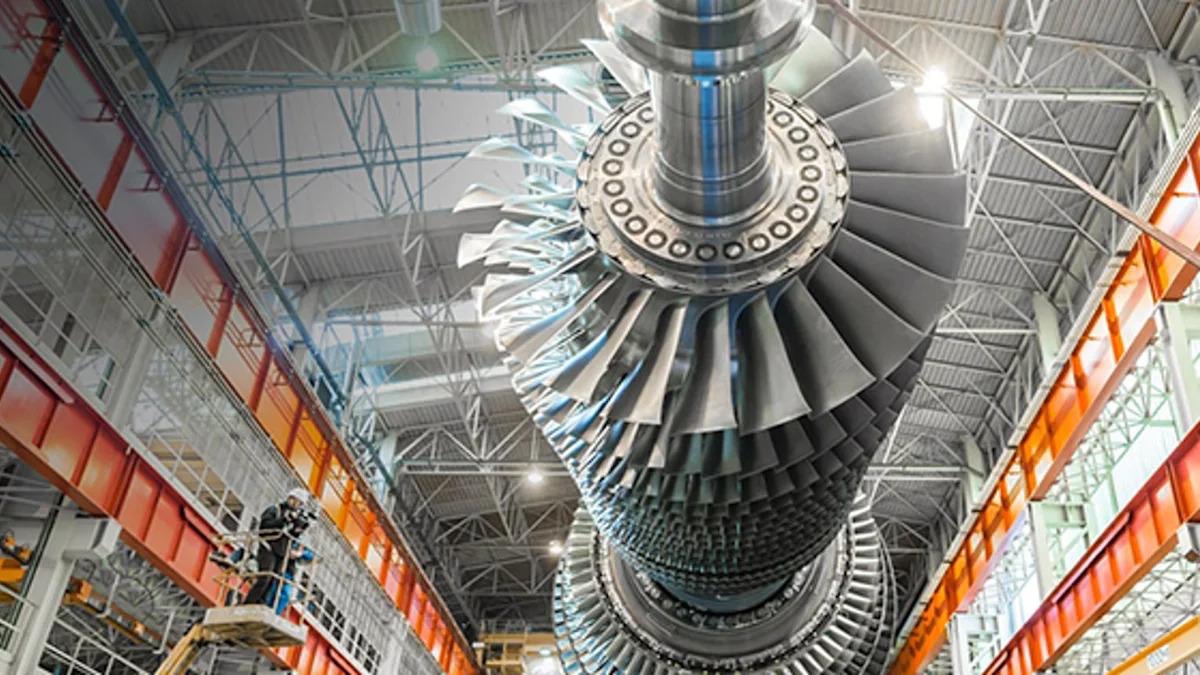
GE Vernova (NYSE: GEV)
Power generation, grid equipment, and electrification infrastructure. A potential beneficiary of growing demand for reliable electricity across data centers, factories, and automation-heavy industries.
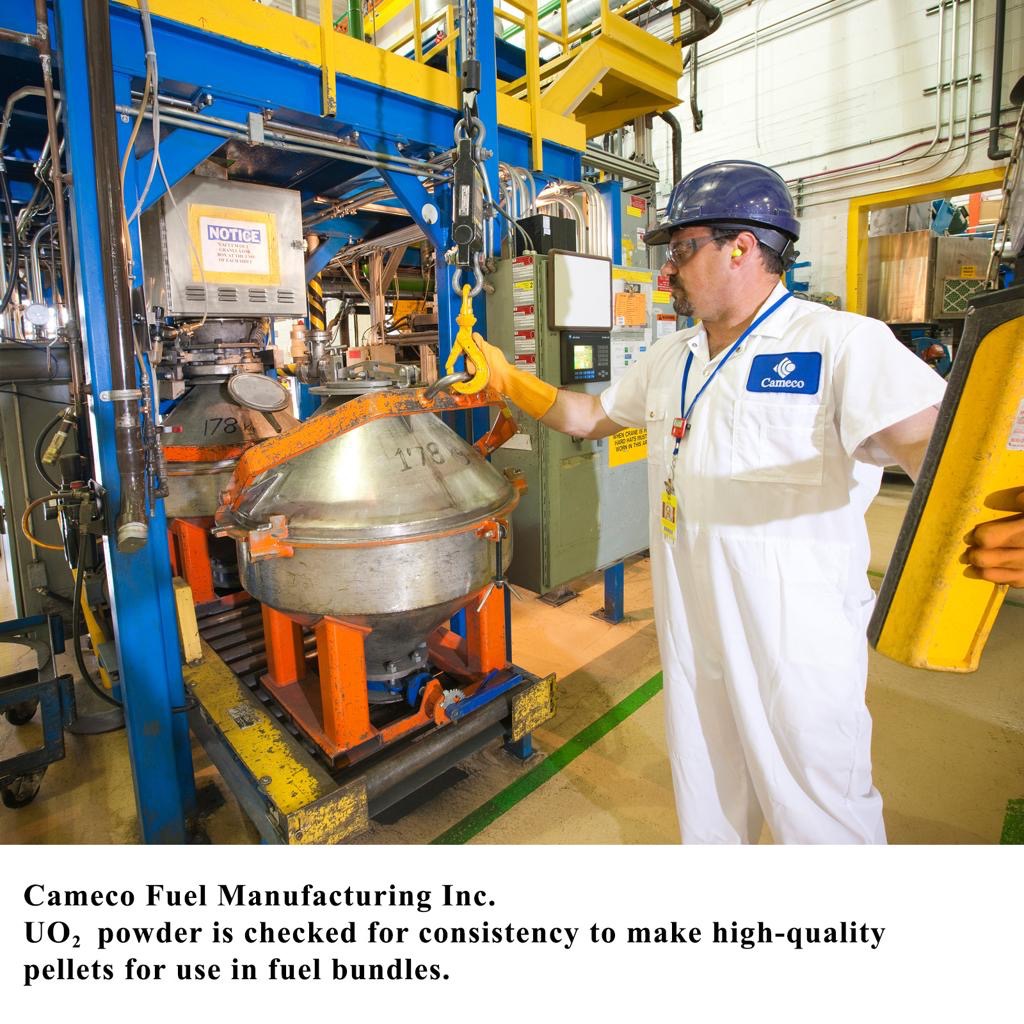
Cameco (NYSE: CCJ)
Uranium and nuclear fuel exposure. Nuclear power could become increasingly valuable as economies seek reliable, low-carbon generation for expanding digital and industrial electricity demand.
Nvidia (NASDAQ: NVDA)
AI computing and robotics development platforms. A direct technology exposure, although valuations, competition, and future margins must be weighed carefully.
MP Materials (NYSE: MP)
Rare-earth materials and magnet supply chain exposure. The opportunity depends on successful processing, manufacturing execution, and competitive economics — not simply rising robot sales.
I cover these topics and investments in my revolutionary investment service New World Assets. In fact, I told my members to buy GE Vernova on June 28, 2024. In that time, shares of GEV are up 437%.
Get to the good, green grass first…
The Prophet of Profit,

Brian Hicks
 Check us out on YouTube!
Brian is a founding member and President of Angel Publishing. He writes about general investment strategies for Wealth Daily and Energy and Capital. Brian is the managing editor and investment director of R.I.C.H Report (Retired Independent Carefree Healthy), New World Assets and Extreme Opportunities. For more on Brian, take a look at his editor’s page.
The Best Free Investment You'll Ever Make
We never spam! View our Privacy Policy
After getting your report, you’ll begin receiving the Wealth Daily e-Letter, delivered to your inbox daily.
Angel Publishing Investor Club Discord - Chat Now
Brian Hicks Premium
Introductory

Advanced


