Chapter 6: The Great AI Power Race

In 1882, Thomas Edison flipped the switch on something that would forever change the American economy.
Deep inside a building on Pearl Street in lower Manhattan, six enormous steam-powered generators were installed to supply electricity to a small section of New York City. Edison’s Pearl Street Station began operating that September, initially serving a relatively small number of customers with electric lighting. By today’s standards, it was a remarkably modest operation, generating only a fraction of the electricity consumed by a modern industrial facility.
But Edison understood something that many people at the time did not. The light bulb might have been the invention that captured the public’s imagination, but it was practically worthless without an enormous physical system capable of supplying it with electricity.
Someone had to build the generating stations. Someone had to install the wires. Someone had to manufacture the equipment. Someone had to develop a reliable system for delivering power to customers who expected the lights to turn on whenever they flipped a switch.
Edison wasn’t simply selling light bulbs. He was helping create an entirely new electrical infrastructure.
And that infrastructure would eventually become one of the foundations of the modern American economy.
Factories would electrify. Cities would illuminate. Elevators would transform the skylines of major cities. Refrigeration would revolutionize food distribution. Electric motors would change manufacturing. Air conditioning would reshape where Americans lived and worked.
The light bulb was merely the beginning.
The real revolution was everything required to keep it illuminated.
Now, nearly a century and a half later, we’re witnessing something remarkably similar.
Only this time, the invention capturing everyone’s imagination isn’t the light bulb.
It’s artificial intelligence.
And just as Edison discovered in 1882, the technology itself may be only the beginning of a much larger economic transformation.
Because behind every AI chatbot, autonomous robot, advanced language model, and artificial intelligence factory sits something extraordinarily old-fashioned.
Electricity.
Lots and lots of electricity.
And increasingly, the companies that can generate it, deliver it, control it, and manufacture the equipment required to support it may become just as important to the AI revolution as the companies manufacturing the semiconductors themselves.
Welcome to the Great AI Power Race.
From the World’s Largest Building to the World’s Largest Electrical Problem
In Chapter 5, we traveled to Everett, Washington, where Boeing constructed one of the most extraordinary industrial buildings in human history.
The company’s aircraft assembly factory covers nearly 100 acres beneath a single roof, a building so enormous that its footprint could accommodate the equivalent of roughly six Michigan Stadiums, America’s largest football stadium by seating capacity.
We then examined the next generation of industrial megaprojects, including semiconductor manufacturing complexes and gigawatt-scale AI data center campuses that could require investments measured in tens or even hundreds of billions of dollars.
But there was something about those projects that I wanted you to appreciate.
The buildings themselves aren’t necessarily the biggest challenge.
Neither are the computers.
The greatest challenge may be something that most investors rarely think about until their electricity goes out.
Where is all the power going to come from?
Think about what happens when a technology company announces plans for an AI campus requiring one gigawatt of electrical capacity. That’s 1,000 megawatts, an amount of power comparable to the output of a large commercial nuclear reactor.
Now imagine that same company announcing plans for five gigawatts.
Then imagine another technology giant announcing a similar project. And another. And another.
Suddenly we’re not talking about a handful of enormous buildings filled with computers. We’re talking about a new class of industrial electricity consumers whose demands can rival those of entire metropolitan areas.
And here’s the problem.
America’s electrical grid wasn’t built with these customers in mind.
The Best Free Investment You’ll Ever Make
Join Wealth Daily today for FREE. We’ll keep you on top of all the hottest investment ideas before they
hit Wall Street. Become a member today, and get our latest free report: “The $10 Trillion AI Infrastructure Boom.”
It contains full details on why money managers are overpaid and provides you with
tools for growing your wealth.On your own terms. No fees, no commission.
The End of an Era Nobody Noticed
For much of the past two decades, the American electricity industry lived through something unusual.
Demand barely grew.
Between 2005 and 2019, U.S. electricity demand increased at an average annual rate of only about 0.1%, according to the Energy Information Administration. Improvements in energy efficiency, changes in manufacturing, and the increasing efficiency of electrical equipment helped restrain consumption even as the economy continued expanding.
Think about what that meant for electric utilities.
For years, they operated in an environment where demand growth was modest and relatively predictable. Companies invested in maintaining existing infrastructure, replacing aging equipment, and accommodating gradual changes in population and industry.
There was little reason to build enormous amounts of new generation capacity in anticipation of some sudden explosion in electricity demand.
Then the world changed.
Electric vehicles arrived. So did charging stations.
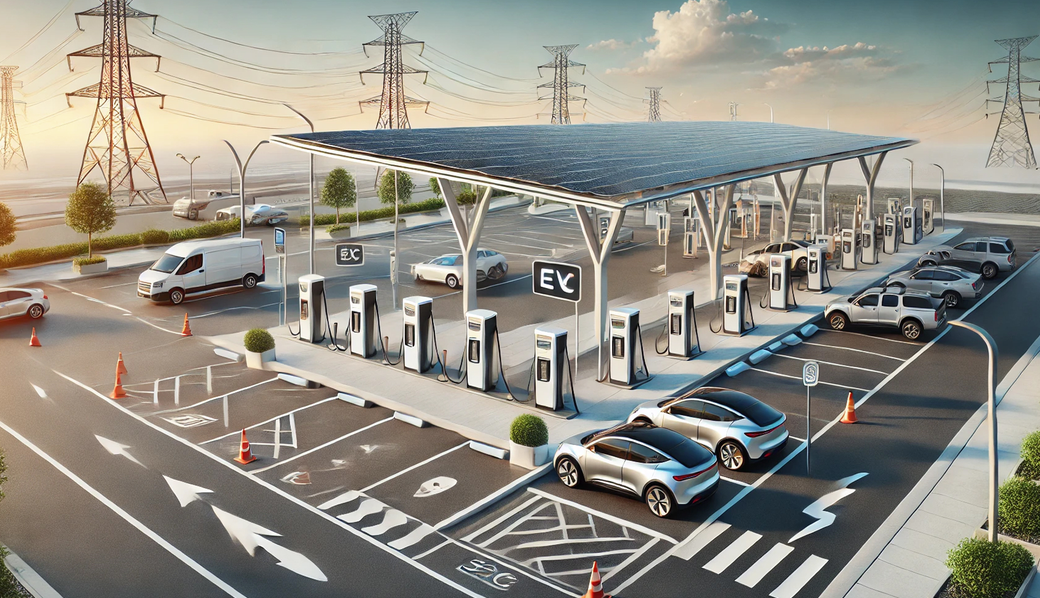
Manufacturing investment increased. More economic activity became electrified. And artificial intelligence began creating a new category of customer that could consume astonishing quantities of electricity around the clock.
According to the EIA, American electricity demand grew at approximately 1.7% annually between 2020 and 2025, a dramatic acceleration from the previous period.
And the agency expects electricity consumption to continue setting records.
In its October 2026 forecast, the EIA projected U.S. power consumption of approximately 4.29 trillion kilowatt-hours in 2026, rising to approximately 4.36 trillion kilowatt-hours in 2027.
The significance isn’t merely that Americans are using more electricity. It’s that the electricity industry is being forced to adjust to a fundamentally different demand environment after years of relatively modest growth.
For the first time in a generation, America’s electricity infrastructure is confronting the possibility of sustained, substantial new demand from customers who cannot simply wait indefinitely for the power they need.
And artificial intelligence is one of the primary reasons.
945 Trillion Watt-Hours
The International Energy Agency has put an extraordinary number on the global transformation now underway.
By 2030, the agency projects that the world’s data centers could consume approximately 945 terawatt-hours of electricity annually.
A terawatt-hour is one billion kilowatt-hours.
So we’re talking about approximately 945 billion kilowatt-hours every year.
That’s slightly more electricity than Japan consumes today.
And the IEA expects artificial intelligence to be the most important driver of that increase.
In the United States, the agency projects that data centers could account for nearly half of the growth in electricity demand through 2030.
Now consider what that means from an investment perspective.
For decades, investors viewed data centers primarily as technology infrastructure. They followed the semiconductor companies, cloud providers, software businesses, and networking equipment manufacturers.
But if data centers are becoming one of the most important sources of incremental electricity demand in the world’s largest economy, investors have to expand their thinking.
Because someone must generate those additional electrons.
Someone must move them.
Someone must manufacture the transformers, turbines, switches, circuit breakers, cables, and other equipment necessary to deliver them.
And someone must build the infrastructure that makes the entire system function.
The AI revolution is becoming an electrical infrastructure revolution.
Natural Gas: The First Responder
Let’s begin with the energy source that may have one of the most immediate opportunities to benefit from the AI power race.
Natural gas.
There’s a reason natural gas has become so important to American electricity generation. Modern gas-fired power plants can generate enormous quantities of electricity, provide dispatchable power when it’s needed and operate using a fuel that the United States produces in extraordinary abundance.
And unlike some other forms of new generation, gas-fired projects can often be developed on timelines that better align with the immediate needs of industrial customers, provided turbines, permits, pipelines, and grid connections are available.
That final qualification is important.
Because the demand for gas turbines is becoming a story of its own.
Consider what happened to GE Vernova, the energy equipment company spun out of General Electric.
In July 2026, GE Vernova reported that its gas power equipment backlog and manufacturing-slot reservation agreements had reached 116 gigawatts. Management said it expected that figure to reach at least 125 gigawatts by year-end.
The company also reported that data center orders within its Electrification business had exceeded $5 billion during the first half of 2026, more than double its total for all of 2025.
Stop and consider that for a moment.
GE Vernova isn’t building the artificial intelligence models.
It manufactures the equipment required to produce, transmit, and manage electricity.
And yet artificial intelligence is helping create enormous demand for its products.
This is precisely the type of second-order investment opportunity that sits at the heart of our MoneyQuake thesis.
The most obvious winners of a technological revolution aren’t necessarily the only winners.
Sometimes the companies supplying the physical infrastructure become just as strategically important.
The Turbine Becomes the New GPU
During the early stages of the AI boom, investors obsessed over one question: How many Nvidia GPUs could the technology giants obtain?
Those chips were scarce, extraordinarily valuable, and essential to the construction of advanced AI systems. Companies competed to acquire them, and Nvidia became one of the most important businesses in the global technology economy.
But now another shortage is emerging.
Power equipment.
A giant data center campus cannot operate simply because its developer has acquired enough GPUs. It needs a reliable source of electricity, and if existing utility infrastructure cannot provide it, developers may need to help finance additional generation or construct dedicated power facilities.
That creates demand for gas turbines, generators, transformers, switchgear, and other equipment with long manufacturing lead times.
And unlike software, you cannot simply download another industrial gas turbine.
It must be manufactured in a factory, using specialized components, skilled labor, and complex supply chains. It must then be delivered, installed, tested, and connected to the broader electrical system.
Manufacturing capacity therefore becomes a strategic asset.
In fact, GE Vernova said in July that it was implementing plans to increase annual gas turbine production capacity toward 30 gigawatts by 2030.
That tells you something important about where the industry believes demand is heading.
For investors, the lesson is straightforward.
The AI economy may be discovering that obtaining electricity generation equipment can be every bit as strategically important as obtaining computing equipment.
Nuclear Power Makes Its Comeback
Natural gas may be one of the most practical near-term solutions, but the technology giants are also looking much further into the future.
And increasingly, they’re looking at nuclear power.
For decades, nuclear energy occupied a complicated position in American energy policy. Existing reactors supplied enormous amounts of reliable electricity, but the construction of new plants faced substantial challenges involving capital costs, regulatory approvals, construction schedules, and public opposition.
Then artificial intelligence arrived.
Suddenly the largest technology companies in the world began looking for massive quantities of reliable electricity that could be delivered around the clock for decades.
And nuclear power offered something enormously attractive.
High output.
High reliability.
Low operational carbon emissions.
And the ability to generate electricity regardless of whether the sun is shining or the wind is blowing.
In January 2026, Meta announced nuclear energy agreements involving Vistra, TerraPower, and Oklo. Combined with its earlier agreement with Constellation Energy, Meta said its nuclear commitments could support up to 6.6 gigawatts of new and existing nuclear capacity by 2035.
These arrangements include supporting existing nuclear facilities as well as developing future advanced reactors. Not all of the announced capacity represents newly constructed power plants, and proposed advanced reactors still face significant commercial and regulatory hurdles.
Nevertheless, the strategic direction is unmistakable.
Companies whose core businesses involve software, advertising, social networks, and artificial intelligence are becoming major participants in the nuclear energy market.
Think about how extraordinary that is.
Twenty years ago, investors would have found it strange to imagine an Internet company negotiating long-term agreements supporting nuclear power plants.
Today, it makes perfect sense.
Because artificial intelligence has transformed electricity from an ordinary operating expense into a strategic resource.
And that creates another ripple effect through the physical economy.
Nuclear power requires uranium.
It requires fuel processing and enrichment.
It requires specialized steel, concrete, valves, pumps, control systems, and highly trained engineers.
It requires an industrial supply chain that cannot be rebuilt overnight.
Once again, the digital revolution reaches deep into the physical economy.
Renewables, Batteries, and the New Energy Mix
Of course, the Great AI Power Race isn’t going to be won by natural gas or nuclear power alone.
Solar and wind generation will also play important roles, particularly where developers can add capacity economically and connect it to the grid without lengthy delays. Battery storage can help shift electricity across hours, support grid stability, and reduce certain peak-demand pressures.
The IEA expects renewables to supply nearly half of the additional global electricity generation needed for data centers through 2030, with natural gas also playing a major role and nuclear becoming increasingly important later in the decade and beyond.
The challenge is that an AI campus operating continuously needs electricity continuously. Solar output varies with daylight and weather. Wind output varies with atmospheric conditions. Batteries can shift electricity over limited periods, but long-duration reliability requires careful planning and a broader mix of resources.
That means developers increasingly have to think about the entire energy system rather than simply purchasing electricity from the cheapest available source.
And they need all of it delivered on a timeline that allows their computing investments to begin generating revenue.
This is why I believe the next decade could become one of the most important periods for energy infrastructure investment in modern American history.
We’re not merely replacing old power plants.
We’re attempting to supply entirely new categories of electricity demand while simultaneously modernizing an aging grid.
And that brings us to perhaps the most overlooked part of the entire story.
The Electricity Has to Get There
Imagine building the world’s most advanced AI data center.
You’ve purchased the land. You’ve constructed the buildings. You’ve installed thousands of servers containing some of the most sophisticated processors ever manufactured. You’ve invested billions of dollars in networking, cooling, storage, and security.
Then the utility informs you that the necessary transmission upgrades won’t be ready for several more years.
Your computers may be ready.
Your buildings may be ready.
Your customers may be waiting.
But without electricity, your investment cannot operate at its intended capacity.
This is one of the great infrastructure challenges of the AI age.
Generating electricity is only part of the equation. Power has to move from generating stations to the places where customers need it, often across enormous distances and through networks that were designed decades ago.
That requires transmission lines, substations, transformers, circuit breakers, conductors, protective equipment, and sophisticated control systems.
Many of these components have lengthy manufacturing and installation timelines. New transmission projects can also face permitting disputes, land-use challenges, and complicated negotiations among utilities, regulators, and property owners.
The result is a growing mismatch between the speed at which technology companies want to deploy computing capacity and the speed at which the electrical system can accommodate it.
And here’s where the MoneyQuake becomes particularly interesting.
Because every major transmission project requires enormous quantities of physical materials. They require “new world assets”!
Copper.
Aluminum.
Steel.
Concrete.
Electrical equipment.
Construction machinery.
And skilled labor.
The electrical grid is becoming another enormous conduit through which AI investment flows into the industrial economy.
In my next installment, I’ll go through each “new world asset” and why they’ll be in a bull market for the next several years.
Get to the good, green grass first…
The Prophet of Profit,

Brian Hicks
 Check us out on YouTube!
Brian is a founding member and President of Angel Publishing. He writes about general investment strategies for Wealth Daily and Energy and Capital. Brian is the managing editor and investment director of R.I.C.H Report (Retired Independent Carefree Healthy), New World Assets and Extreme Opportunities. For more on Brian, take a look at his editor’s page.
The Best Free Investment You'll Ever Make
We never spam! View our Privacy Policy
After getting your report, you’ll begin receiving the Wealth Daily e-Letter, delivered to your inbox daily.
Angel Publishing Investor Club Discord - Chat Now
Brian Hicks Premium
Introductory

Advanced


