Chapter 4: The Cloud Was Never in the Sky

Sometime during the early 2000s, the technology industry pulled off one of the greatest marketing tricks in history. It took something extraordinarily physical and made it sound like it didn’t physically exist at all.
They called it the cloud.
It was brilliant. The name conjured images of something weightless, limitless, and floating somewhere above us. Upload your photographs to the cloud. Store your files in the cloud. Run your software in the cloud. Stream your movies from the cloud. Back up your phone to the cloud.
Eventually, businesses would move entire corporate computing systems into the cloud. Before long, billions of people were using it every day without giving much thought to where “the cloud” actually was.
But here’s the dirty little secret…
The cloud was never in the sky.
It was sitting on the ground inside enormous buildings filled with computers, connected by fiber-optic cable, fed by substations, cooled by industrial equipment, and backed up by generators. The cloud didn’t eliminate the data center.
It industrialized it.
And that transformation would set the stage for the enormous AI infrastructure boom we’re witnessing today.
The Internet Survived
Remember where we left off. The dot-com bubble burst in 2000. Technology stocks collapsed, internet companies disappeared, telecommunications companies went bankrupt, and billions of dollars of investment were destroyed. Critics looked at all the fiber, servers, and data center capacity built during the boom and declared that America had constructed too much infrastructure.
And for a while, they were right. There was excess capacity. But underneath the wreckage, something else was quietly happening.
Internet usage kept growing. More homes connected. More businesses connected. Broadband began replacing dial-up. Search engines improved. E-commerce expanded. Digital photography proliferated. Online banking grew. Video began moving online, and companies accumulated enormous quantities of data.
Remember the catch-phrase back then? “Big Data!”
All that information needed somewhere to go.
More importantly, businesses were discovering an uncomfortable truth: Running your own computing infrastructure was a pain. You had to buy servers, install them, maintain them, replace them, secure them, cool them, back them up, and hire people to operate them. Then, every few years, you had to buy even more.
That was when a company best known for selling books online began asking a deceptively simple question…
What if businesses didn’t have to own the computers at all?
Amazon Had a Problem
By the early 2000s, Amazon had become one of the internet’s great survivors. The company had lived through the dot-com crash, but behind Amazon’s increasingly simple-looking website sat an increasingly complicated technological machine.
Millions of customers were interacting with product databases, payment systems, warehouses, inventory systems, recommendations, and search tools. Amazon had to build enormous amounts of computing infrastructure simply to keep Amazon running.
As the company grew, its engineers repeatedly encountered the same problem. Every new project required developers to obtain computing resources — servers, storage, databases. and networking. That took time. Infrastructure itself was becoming a bottleneck.
So Amazon began thinking differently.
Instead of treating computing infrastructure as something each development team had to build individually, why not create standardized computing services that could be accessed whenever they were needed?
Then came the bigger realization…
The Best Free Investment You’ll Ever Make
Join Wealth Daily today for FREE. We’ll keep you on top of all the hottest investment ideas before they
hit Wall Street. Become a member today, and get our latest free report: “The $10 Trillion AI Infrastructure Boom.”
It contains full details on why money managers are overpaid and provides you with
tools for growing your wealth.On your own terms. No fees, no commission.
If Amazon needed that, other companies probably did too.
In 2006, Amazon Web Services launched S3, a storage service, followed by EC2, which allowed customers to rent computing capacity.
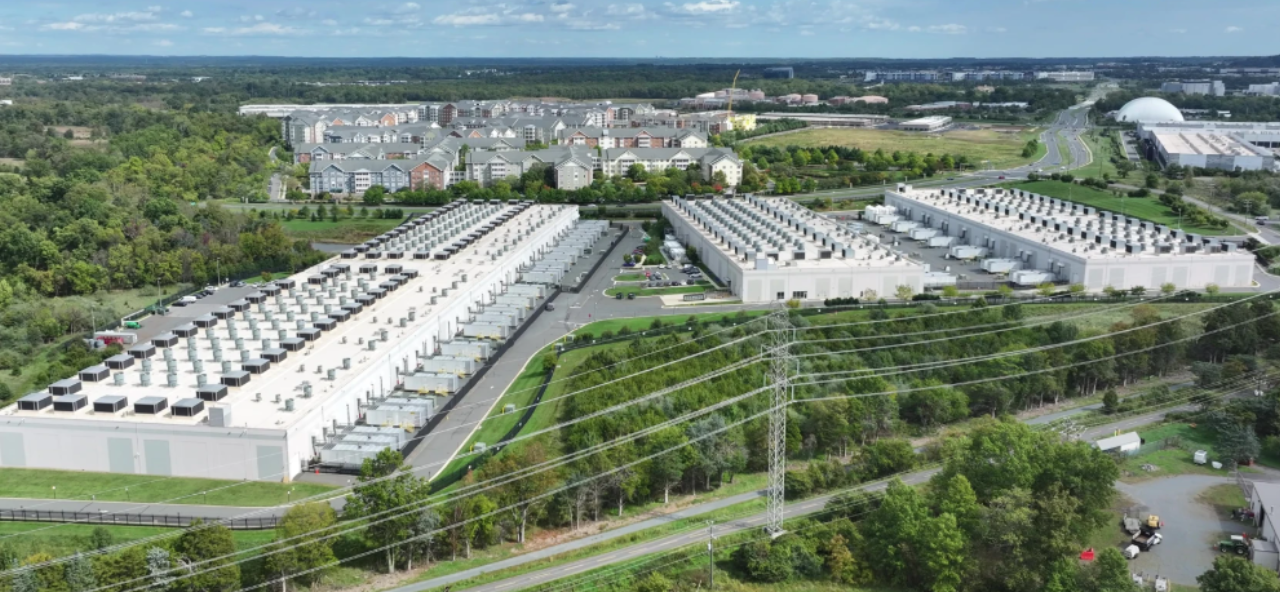
Amazon built its first data center in Northern Virginia in 2006:
The idea was revolutionary because a startup no longer necessarily needed to purchase racks of servers before launching a business. It could rent computing power from Amazon.
Need more capacity? Add it.
Need less? Scale back.
Instead of spending enormous amounts of money upfront buying computers, businesses could increasingly purchase computing the way they purchased another commodity: on demand.
And that seemingly simple idea transformed the data center.
Computing Becomes a Utility
Think about electricity. You don’t build a power plant behind your house. You don’t own a turbine or mine your own coal. You plug something into the wall, flip a switch, and electricity appears.
Of course, the infrastructure required to make that happen is enormous. Somewhere there are power plants, transmission lines, substations, transformers, control systems, and thousands of workers maintaining the network. Yet from the customer’s perspective, all of that complexity disappears behind the electrical outlet.
That was essentially the promise of cloud computing.
Companies no longer needed to know exactly where their server was. They didn’t necessarily need to know which building contained it or which individual machine was performing a calculation. They simply requested computing capacity and then somewhere a machine went to work.
This abstraction was extraordinarily powerful, but notice what happened: Cloud computing made physical infrastructure less visible to the customer while simultaneously requiring vastly more physical infrastructure behind the scenes.
That’s one of the great paradoxes of the digital economy.
The easier technology becomes to use, the more complicated the infrastructure behind it often becomes.
Then the Buildings Became Enormous
Cloud computing fundamentally changed the economics of the data center. In the old model, thousands of companies might each maintain their own computing facilities. Some were sophisticated. Many weren’t.
The cloud began concentrating more of that computing demand inside enormous facilities operated by a relatively small group of technology giants: Amazon, Google, Microsoft, Meta, and others.
The scale became difficult to comprehend.
These weren’t server rooms anymore. Increasingly, they weren’t even conventional data centers. They became what the industry calls hyperscale data centers — enormous facilities designed to add computing capacity on a massive scale.
Picture a building the size of a giant warehouse and fill it with row after row after row of servers. Thousands of them. Tens of thousands of them. Across the largest campuses, computing equipment could occupy multiple enormous buildings.
But here’s the part investors need to understand: The servers were only one component of the investment.
Those servers needed massive electrical systems. Substations. Transformers. Switchgear. Backup generators. Battery systems. Cooling equipment. Pumps. Fans. Fiber-optic connections. Security systems. Fire suppression. Water infrastructure.
And land.
Lots of land.
The humble computer room we encountered in Chapter 2 had evolved into something that looked increasingly like an industrial facility.
The Factory Returns
There’s an irony here that I love.
During the 20th century, America spent decades moving from an industrial economy toward what we increasingly called a digital economy. Factories became less visible. Software became more important. Information became more valuable. Silicon Valley replaced Detroit as the great symbol of American economic power.
Everything seemed to be becoming virtual.
Yet behind that virtual economy, we started building factories again.
Only these factories didn’t manufacture cars or refrigerators. They manufactured computation.
Instead of assembly lines, they contained server racks. Instead of steel moving down conveyor belts, information moved through fiber-optic cables. Instead of stamping presses, processors performed billions and eventually trillions of calculations. Instead of warehouses filled with physical inventory, storage systems held enormous quantities of digital information.
The cloud looked virtual from your laptop.
From the other side of the screen, it looked industrial.
And that is one of the most important ideas behind MoneyQuake. The digital economy never replaced the physical economy.
It became dependent upon it.
Your Netflix Movie Has an Address
Think about what happens when you sit on your couch and stream a movie. You tap the screen and the movie appears almost instantaneously. It feels effortless. Almost magical.
But nothing magical happened.
Your request traveled through physical networking equipment and across physical fiber-optic cable until it reached computing infrastructure somewhere. Servers accessed data. Other machines processed your request. Electrical systems powered those machines. Cooling systems removed the heat they generated. Networking equipment then sent the information back toward you.
The same basic physical chain sits behind countless things we now consider ordinary: searching Google, opening Instagram, buying something online, sending an email, storing a photograph, accessing online banking, or asking an AI chatbot a question.
The digital world feels weightless because engineers have become extraordinarily good at hiding the machinery.
But behind virtually every digital interaction, something physical happens somewhere.
A processor performs work. A cable carries information. A transformer supplies electricity. A cooling system removes heat. A building houses the equipment.
That’s the cloud.
Then the Smartphone Arrived
Just as cloud computing was taking off, another technological revolution arrived. In 2007, Apple introduced the iPhone, and over the following years the internet stopped being something most people visited primarily from a computer.
It traveled in their pockets.
Eventually, billions of people would carry internet-connected devices everywhere they went, and those devices began generating extraordinary quantities of data: photographs, videos, messages, searches, music, applications, social media activity, backups, and countless other digital interactions.
Every swipe, upload, stream, and search created another tiny demand somewhere inside the world’s computing infrastructure.
Once again, something counterintuitive happened. Computers became smaller, but the infrastructure supporting them became larger.
We’ve seen this pattern repeatedly throughout our story. The personal computer didn’t destroy centralized computing; it expanded it. The smartphone didn’t eliminate data centers; it created vastly more demand for them.
And the cloud didn’t eliminate physical infrastructure.
It created some of the largest computing facilities humanity had ever constructed.
The Hyperscalers Arrive
This is where the economics become particularly interesting for investors.
Meta, Amazon, Microsoft, Google, and other hyperscale operators began spending billions of dollars building computing infrastructure. Because scale mattered, the facilities kept getting larger, and their physical requirements became increasingly important.
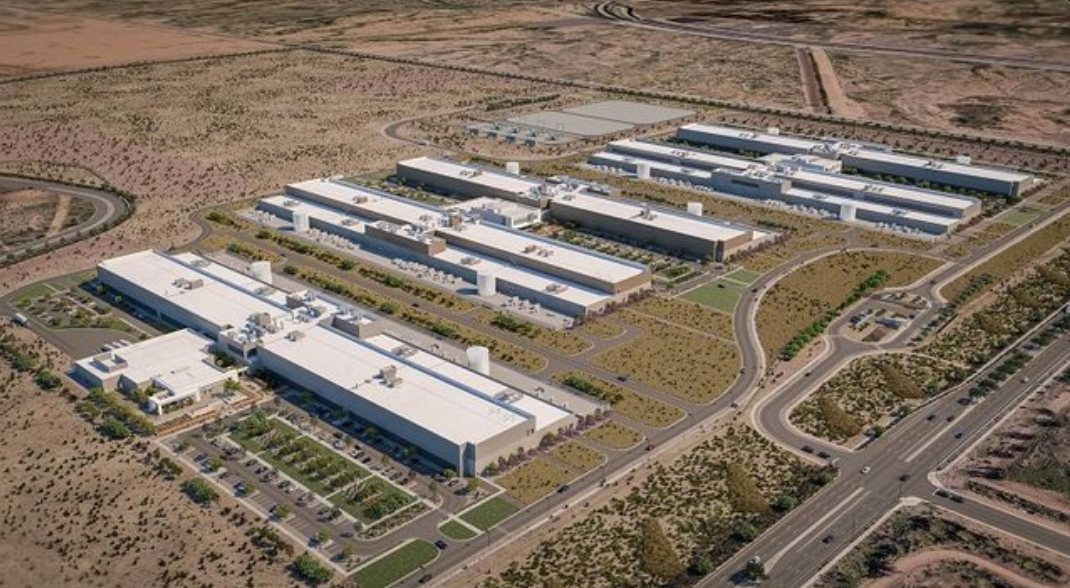
This is Meta’s Prineville, Oregon, data center, currently the largest in the U.S.:
They needed inexpensive electricity, but they also needed reliable electricity. They needed multiple fiber connections, available land, cooling resources, access to major population centers, favorable permitting environments, tax incentives, and skilled workers.
The location of a data center became a strategic decision.
Northern Virginia, for example, developed into one of the world’s most important data center markets. Other clusters emerged across America and around the world. Entire local economic ecosystems began forming around these facilities.
Utilities had to plan for them. Transmission operators had to accommodate them. Real estate developers pursued them. Equipment manufacturers supplied them. Construction companies built them.
In other words, the cloud was creating its own industrial supply chain.
And then something happened that would make even the cloud boom look small.
November 30, 2022
OpenAI released ChatGPT.
Suddenly millions of ordinary people could experience generative artificial intelligence firsthand. People began asking machines to write, code, analyze, summarize, translate, and create.
The interface couldn’t have been much simpler.
A box.
A blinking cursor.
Type a question and receive an answer.
Yet behind one of the simplest interfaces ever created sat one of the most computationally demanding technologies ever brought to a mass audience.
And artificial intelligence required a different kind of computing infrastructure.
Traditional cloud workloads had relied heavily on CPUs. Modern AI increasingly depended upon specialized accelerators — particularly GPUs — capable of performing enormous numbers of calculations simultaneously.
And these chips were hungry.
They needed electricity. They needed memory. They needed extraordinary amounts of bandwidth. And they produced enormous amounts of heat that had to be removed.
Put thousands upon thousands of them together and suddenly the data center had to evolve again.
Power density increased. Cooling requirements increased. Networking requirements increased. Electrical requirements increased. In some cases, the building itself increasingly had to be redesigned around the machines inside it.
And for the first time since ENIAC, we were again confronting an intriguing reality…
The computer was becoming so demanding that the infrastructure surrounding it had to be redesigned around the machine.
History had come full circle.
From Computer Room to AI Factory
Now look at the journey we’ve taken.
In 1946, ENIAC demonstrated that an enormously powerful computer might require an entire room.
During the 1960s and 1970s, corporate America built specialized computing centers around mainframes.
During the 1980s, computing escaped the computer room and spread across millions of desks.
During the 1990s, those computers connected to the internet, creating explosive demand for servers, fiber, and commercial data centers.
During the 2000s, the cloud transformed computing into something resembling a utility and concentrated millions of workloads inside enormous hyperscale facilities.
Then the smartphone revolution connected billions of people to those facilities nearly every minute of the day.
And now artificial intelligence is transforming the data center yet again.
The data center is becoming an AI factory.
This is where our history lesson crashes directly into the MoneyQuake, because the AI revolution isn’t happening somewhere in cyberspace. It’s happening on physical land, inside physical buildings, using physical machines connected by physical cables, and consuming physical electricity.
And those facilities require staggering quantities of physical infrastructure: copper, steel, aluminum, concrete, transformers, turbines, semiconductors, cooling equipment, transmission equipment, natural gas, nuclear power, water, and land.
Suddenly that projected $31 trillion global data center build-out through 2035 doesn’t look like a technology story alone.
It looks like one of the largest industrial construction cycles in modern history.
Which brings us back to that wonderfully misleading word…
Cloud.
For 20 years, we’ve been conditioned to imagine computing as something intangible. But there was never anything intangible about it.
The cloud was always a building. The cloud was always a machine. The cloud was always connected to the electrical grid.
The cloud was always physical.
Artificial intelligence is simply making that physical reality impossible to ignore.
Because this next generation of data centers won’t merely connect to the electrical grid. In some places, their enormous demand will influence where new power plants are built, where transmission lines go, where utilities deploy new substations, and where billions of dollars of industrial equipment gets installed.
They’ll drive demand for turbines, transformers, copper, natural gas, and nuclear energy. They’ll consume power measured not merely in megawatts, but increasingly in gigawatts.
Think about where we started.
One 30-ton computer in 1946.
Eighty years later, we’re building entire industrial complexes around millions of processors.
The computer room became the data center.
The data center became the cloud.
And now…
The cloud is becoming the AI factory.
That’s where we’ll go next.
Get to the good, green grass first…
The Prophet of Profit,

Brian Hicks
 Check us out on YouTube!
Brian is a founding member and President of Angel Publishing. He writes about general investment strategies for Wealth Daily and Energy and Capital. Brian is the managing editor and investment director of R.I.C.H Report (Retired Independent Carefree Healthy), New World Assets and Extreme Opportunities. For more on Brian, take a look at his editor’s page.
The Best Free Investment You'll Ever Make
We never spam! View our Privacy Policy
After getting your report, you’ll begin receiving the Wealth Daily e-Letter, delivered to your inbox daily.
Angel Publishing Investor Club Discord - Chat Now
Brian Hicks Premium
Introductory

Advanced


