The IPO That Lit the Fuse… and the Two That Could Detonate the Next Financial Supercycle

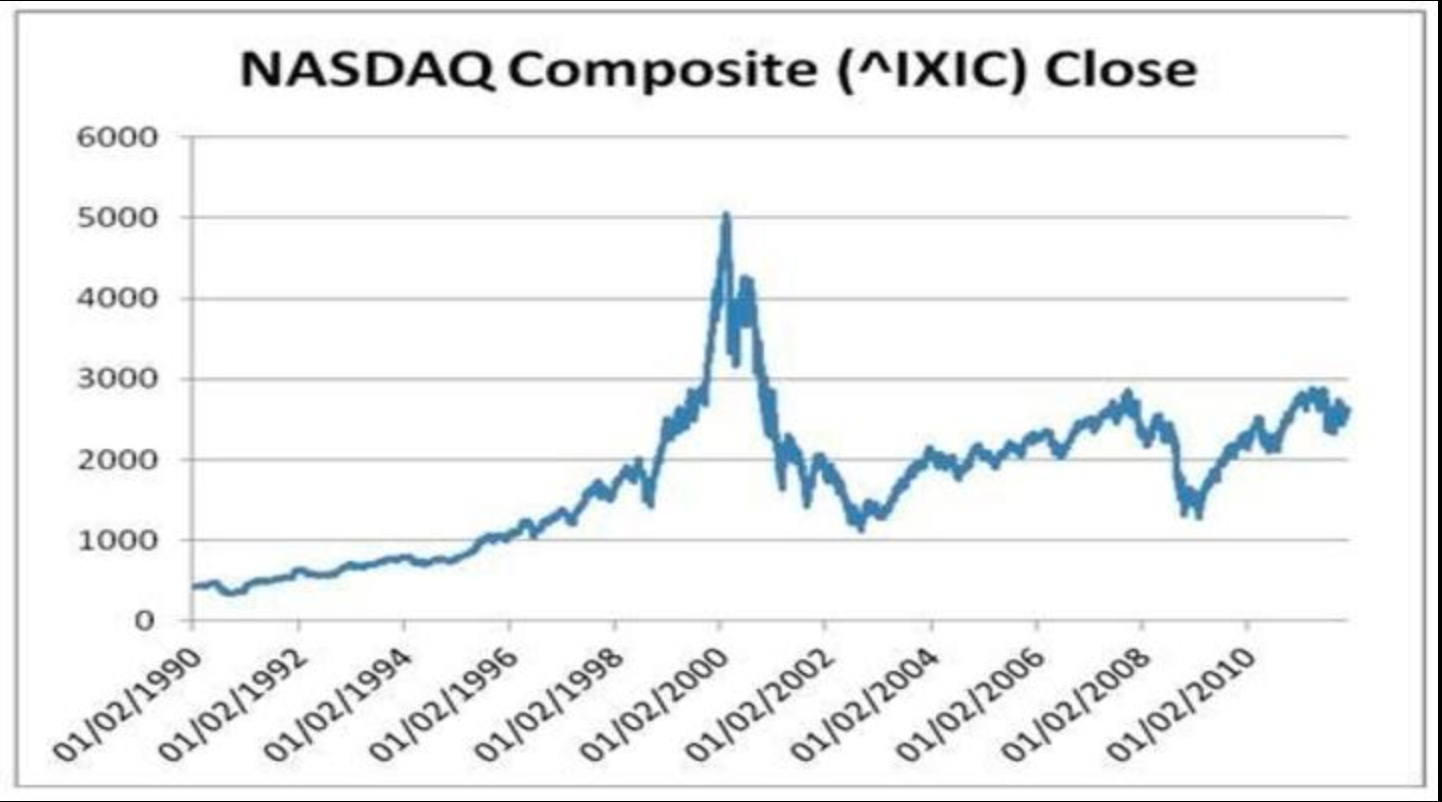
In August of 1995, something extraordinary happened on Wall Street — something that, at the time, very few people fully understood. And many even dismissed it as a fad that wouldn’t last.
A relatively unknown company called Netscape Communications stepped onto the public stage. It wasn’t profitable. It wasn’t dominant. And outside of a small circle of technologists and early adopters, hardly anyone could even explain what it did in a way that made sense to the average investor.
But that didn’t matter. What mattered was what it represented: a gateway into an entirely new economic frontier that had yet to be priced, scaled, or even properly imagined.
The IPO was originally priced at $28 a share.
Within hours, it opened at $71.
By the end of the trading session, the message was unmistakable: Something powerful had just been unleashed.
It wasn’t about Netscape’s balance sheet. It wasn’t about its earnings. It was about belief. Belief that the internet was real. Belief that it would reshape commerce, communication, and culture.
And most importantly, belief that those who moved early could capture generational wealth. That single moment didn’t just mint early winners — it ignited a capital migration unlike anything Wall Street had seen in decades.
Money didn’t trickle into the internet after that.
It flooded.
Venture capital firms began writing checks at a pace that would have seemed reckless just months earlier. Institutional investors scrambled to gain exposure. Retail investors piled in, desperate not to miss “the next Netscape.” Entire industries were born almost overnight, fueled not by profits but by access to capital. Amazon, Google, eBay — these companies didn’t just emerge from innovation. They emerged because capital had finally been given permission to believe in the future.
Netscape didn’t build the internet economy.
It validated it.
And once validation occurs in markets, everything changes.
We’re Standing at That Moment Again
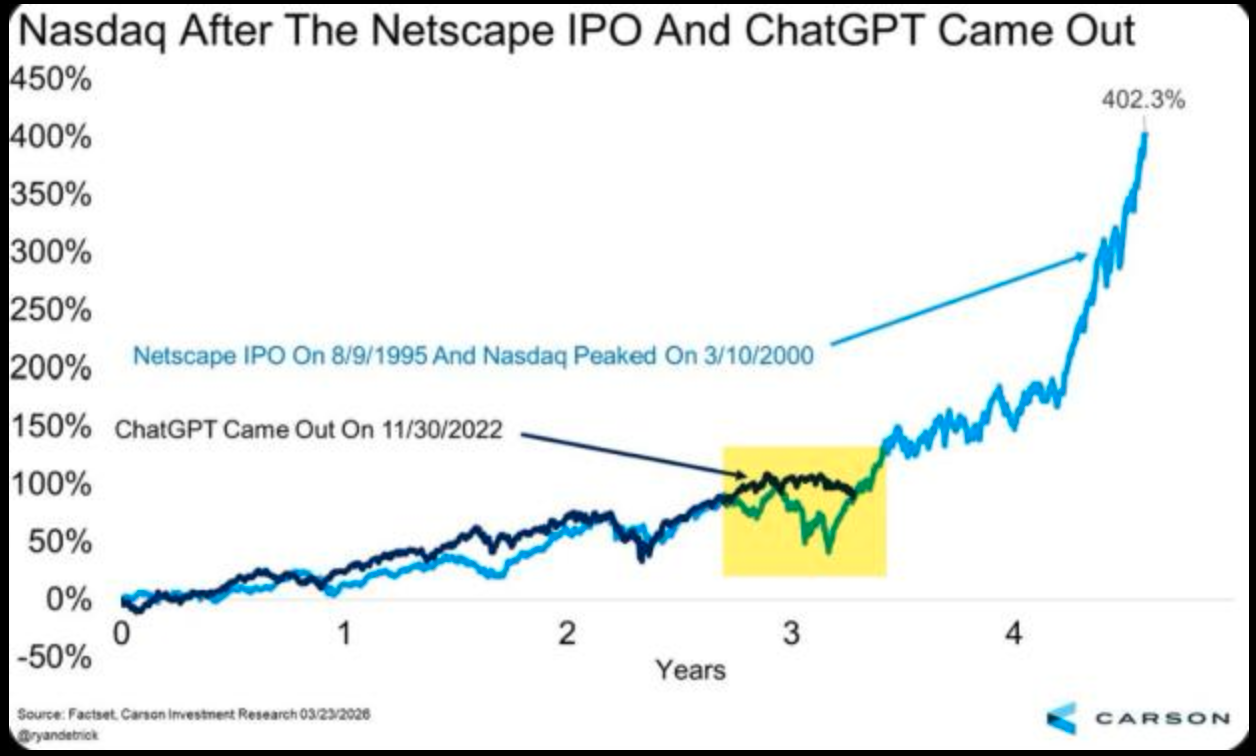
Fast-forward to today and you can feel that same tension building beneath the surface. The same skepticism from the masses. The same quiet accumulation of capital behind the scenes. The same sense that something enormous is forming — but hasn’t yet fully revealed itself.
This time, however, the stakes are exponentially higher.
Because now we’re not talking about websites or digital storefronts.
We’re talking about the infrastructure of intelligence itself — a foundational shift that will redefine not just industries, but also how decisions are made, how economies function, and how power is distributed on a global scale.
At the center of this shift are two entities that, like Netscape before them, are not just companies — but signals:
- SpaceX
- OpenAI
These are not speculative startups.
They are already shaping the future.
And when they eventually step into the public markets, they won’t simply be raising capital…
They will be triggering a capital event.
Twin #2 of the MoneyQuake: The Industrial Rebuild of Intelligence
To understand why this matters, you have to zoom out — and I mean really zoom out. The MoneyQuake framework I’ve been laying out isn’t just about monetary chaos or central banks scrambling for gold. That’s only one side of the story. The other side — the side that is quietly building momentum right now — is what I call Twin #2: the industrial rebuild required to support artificial intelligence at scale.
And this is where most investors completely miss the plot.
They think AI is software. They think it lives in the cloud. They think it’s weightless.
It’s not.
AI is one of the most resource-intensive technological revolutions in human history. Every model trained, every query processed, every system deployed requires enormous amounts of physical infrastructure. We’re talking about hyperscale data centers that consume as much electricity as small cities. We’re talking about cooling systems that devour millions — sometimes billions — of gallons of water. We’re talking about supply chains stretching across continents to secure the copper, aluminum, silicon, and rare earth elements needed to build and maintain these systems.
This is not a digital revolution in the traditional sense.
It’s an industrial supercycle disguised as software.
OpenAI: The Demand Engine
When you look at OpenAI through that lens, you begin to understand its true role. This isn’t just a company creating tools or applications. It is a demand engine — one that forces the entire system around it to scale. Every advancement in AI capability requires an exponential increase in compute power. And that compute power doesn’t magically appear. It must be built, powered, cooled, and maintained.
That means OpenAI is indirectly driving demand for:
- Energy infrastructure at unprecedented scale
- Advanced semiconductor manufacturing
- Data center construction across multiple continents
- Water systems capable of sustaining continuous cooling cycles
In other words, OpenAI doesn’t just participate in the AI revolution.
It forces the build-out of everything that makes the revolution possible.
And that is exactly the kind of catalytic force that triggers massive capital inflows once public markets gain access.
SpaceX: The Global Backbone
Now layer in SpaceX and the picture becomes even more compelling. Because while OpenAI is driving demand for compute and intelligence, SpaceX is building the infrastructure that allows that intelligence to move — instantly, globally, and reliably.
Through its Starlink network, SpaceX is creating a planetary-scale communications grid. This isn’t just about faster internet. It’s about enabling real-time data exchange across remote locations, military systems, industrial operations, and emerging AI-driven networks that require constant synchronization. In a world where intelligence is distributed, connectivity becomes just as critical as computation.
Think about autonomous systems operating in remote environments. Think about AI-driven logistics networks coordinating across continents. Think about national security systems that rely on real-time data flows.
None of that works without connectivity.
And SpaceX is building that layer from the ground up — literally from orbit.
The Capital Tsunami
Here’s the part that should make every investor stop and think.
When Netscape went public, it told the world the internet was investable.
When SpaceX and OpenAI go public, they will tell the world that AI infrastructure is the next great industrial frontier.
And capital will respond accordingly.
Not cautiously. Not gradually. But aggressively.
Because capital doesn’t wait once validation occurs.
It moves. Fast.
The Real Opportunity
And just like in the 1990s, most investors will chase the obvious names. They’ll focus on the IPO headlines. They’ll try to get in on the companies themselves. But history tells us something different: The biggest fortunes are often made not in the headline names but in the ecosystems that support them.
The suppliers. The infrastructure builders. The resource providers.
Because when an entire system scales, every component of that system benefits.
And that’s where the MoneyQuake thesis becomes not just insightful, but actionable.
The Bottom Line
We are not just witnessing another tech cycle.
We are witnessing the early stages of a full-scale industrial transformation, one that merges digital intelligence with physical infrastructure in a way the world has never seen before.
Netscape was the spark that lit the internet boom.
SpaceX and OpenAI have the potential to do something even bigger.
They could ignite the largest coordinated capital deployment into infrastructure, energy, and resources in modern history.
And if that happens…
This won’t just be another bull market.
It will be a generational wealth-building event.
And I plan to have you right there with me.
Get to the good, green grass first…
The Prophet of Profit,

Brian Hicks
 Check us out on YouTube!
Brian is a founding member and President of Angel Publishing. He writes about general investment strategies for Wealth Daily and Energy and Capital. Brian is the managing editor and investment director of R.I.C.H Report (Retired Independent Carefree Healthy), New World Assets and Extreme Opportunities. For more on Brian, take a look at his editor’s page.
The Best Free Investment You'll Ever Make
We never spam! View our Privacy Policy
After getting your report, you’ll begin receiving the Wealth Daily e-Letter, delivered to your inbox daily.
Angel Publishing Investor Club Discord - Chat Now
Brian Hicks Premium
Introductory

Advanced


