The Energy Revolution: The Critics Saw an Energy Crisis. Visionaries Built an Entirely New Energy System.

Initial Investment:
Trillions of dollars across shale drilling, pipelines, LNG facilities, solar farms, wind projects, geothermal, battery storage, electric vehicles, transmission lines, and renewable energy infrastructure.
Estimated Return on Investment:
Immeasurable. Conservatively, hundreds of trillions of dollars in economic activity, technological innovation, lower energy costs, and improved global living standards.
Today, we talk about what the shale revolution and the prospect of “peak oil” did in the mid-2000s in the U.S.
More specifically, the threat that the U.S. was facing increasing oil and gas costs prompted a massive wave of investment into other sources of energy, like solar, wind, geothermal, and electric vehicles.
Both sides of the political spectrum dug in their heels over the investment into what the right would call “tree hugger” renewable energy. But here we are today. Solar farms are everywhere. So are wind farms. Seeing Teslas on the road is no longer a novelty; it’s common.
But it wasn’t always this way.
So let’s roll back the tape…
At the beginning of this century, one of the most important investment themes in the world was born.
It started with a simple realization…
The age of cheap, easy-to-find oil was coming to an end.
By the early 2000s, oil prices were climbing sharply. Conventional oil discoveries had become smaller and more difficult to develop. Mature fields around the world were declining. Many experts feared the world was entering an era of permanent energy scarcity.
The phrase “peak oil” entered the mainstream.
A growing number of analysts believed the world was running out of affordable energy.
To many people, it looked like an economic disaster in the making.
The profit motive would prove otherwise.
You see, periods of scarcity often become periods of innovation.
High oil prices sent a powerful signal to entrepreneurs, engineers, and investors around the world: Find new sources of energy.
And that’s exactly what happened.
The shale revolution was born.
Horizontal drilling and hydraulic fracturing unlocked enormous quantities of oil and natural gas trapped inside rock formations that had previously been considered uneconomic. Places like the Permian Basin, the Bakken, and the Marcellus suddenly became some of the most productive energy regions on Earth.
At the same time, another revolution was quietly taking shape.
The Best Free Investment You’ll Ever Make
Join Wealth Daily today for FREE. We’ll keep you on top of all the hottest investment ideas before they
hit Wall Street. Become a member today, and get our latest free report: “Why You Need to Fire Your Money
Manager.”
It contains full details on why money managers are overpaid and provides you with
tools for growing your wealth.On your own terms. No fees, no commission.
Solar energy began to scale. Wind power expanded rapidly. Geothermal investment accelerated. Battery technology improved dramatically.
And a small electric vehicle company called Tesla began to challenge one of the largest industries in the world.
Few people appreciated it at the time, but a global energy renaissance was underway.
The world wasn’t running out of energy. It was reinventing how energy would be produced.
You see, this is what makes the period so fascinating. The fear of scarcity didn’t lead to decline. It unleashed one of the greatest waves of innovation and infrastructure investment in modern history.
Trillions of dollars flowed into new technologies. Drilling companies built new fields. Pipeline companies expanded their networks. Utilities invested in renewable generation. Battery manufacturers scaled production.
Mining companies raced to secure supplies of copper, lithium, nickel, silver, and rare earth elements.
Electric vehicle companies emerged. Grid infrastructure expanded. An entirely new energy ecosystem was born.
Today, renewable energy is one of the largest industries on the planet.
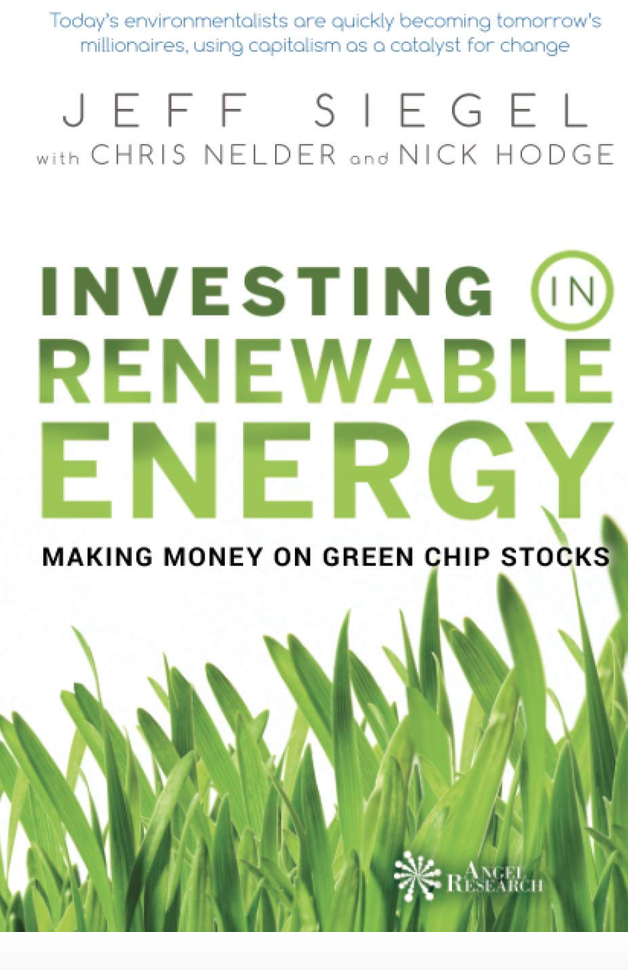
In 2008 — the same year we published the book Profit From the Peak — we also published the book titled Investing in Renewable Energy: Making Money on Green Chip Stocks.
Solar and wind are among the fastest-growing sources of electricity generation in the world. Battery storage is transforming how electricity is managed. Electric vehicles have become a major force in the global automobile market. Tesla itself became one of the most valuable companies in history.
Think about this: Based on market capitalization, Tesla is worth 4x more than the combined market capitalization of both Ford and General Motors!
And, remarkably, all of this occurred alongside the rise of American energy dominance through shale.
The world didn’t choose one path.
It pursued many.
Trying to calculate the return on investment becomes almost impossible.
The combined economic value created by the shale revolution and the renewable energy revolution likely runs into the hundreds of trillions of dollars. Entire industries, fortunes, technologies, and supply chains owe their existence to one simple realization…
The old energy system was no longer sufficient for the future.
That’s the lesson investors should remember.
The most important investment opportunities often emerge when existing systems begin showing signs of strain.
That’s an important distinction.
The end of cheap, easy-to-find oil wasn’t the end of energy. It became the catalyst for a new energy era. Every major economic transformation works this way.
Constraints create innovation. Scarcity creates investment. Rising demand creates entirely new industries.
You see, that’s exactly what’s happening today with artificial intelligence.
The critics look at AI and see an electricity problem.
I see an investment opportunity.
Artificial intelligence is placing enormous new demands on the electrical grid. Utilities are scrambling to add capacity. Natural gas demand is rising. Nuclear power is experiencing a renaissance. Renewable energy projects are being accelerated. Battery storage is expanding. Transmission lines, substations, transformers, and grid equipment are all in short supply.
The world isn’t running out of electricity. The world is reinventing how electricity will be produced and delivered.
That distinction is everything.
The AI revolution may become one of the greatest catalysts for energy investment in modern history.
More natural gas will be needed. More nuclear power will be needed. More solar, wind, geothermal, and battery storage.
And that means the world will need more transmission infrastructure.
And in turn, all of that new energy infrastructure will need more copper, silver, and uranium…
More everything!!!
Artificial intelligence isn’t simply a software story.
It’s an energy story.
And just as high oil prices gave birth to entirely new energy industries twenty years ago, the enormous energy demands of artificial intelligence may give birth to entirely new industries over the next 20 years.
Nobody standing in the early days of the peak-oil debate could have fully envisioned the shale boom, the explosion of renewable energy, or the rise of Tesla.
Likewise, nobody today can fully appreciate all the industries that abundant artificial intelligence and abundant electricity may create.
The critics of the energy revolution saw scarcity and crisis. The builders saw opportunity.
The critics saw expensive infrastructure. Visionary investors saw an entirely new energy system.
And today, the critics of artificial intelligence see enormous power requirements and trillions of dollars in capital expenditures.
I see another great investment cycle taking shape.
Because history has a remarkable habit of turning constraints into opportunities.
The end of cheap oil gave birth to an energy renaissance.
The rise of artificial intelligence may give birth to an infrastructure renaissance.
And just as the visionaries who understood the energy transition were rewarded handsomely, I suspect the investors who understand the physical demands of artificial intelligence may one day look back on this period as one of the greatest investment opportunities of the 21st century.
Get to the good, green grass first…
The Prophet of Profit,

Brian Hicks
 Check us out on YouTube!
Brian is a founding member and President of Angel Publishing. He writes about general investment strategies for Wealth Daily and Energy and Capital. Brian is the managing editor and investment director of R.I.C.H Report (Retired Independent Carefree Healthy), New World Assets and Extreme Opportunities. For more on Brian, take a look at his editor’s page.
The Best Free Investment You'll Ever Make
We never spam! View our Privacy Policy
After getting your report, you’ll begin receiving the Wealth Daily e-Letter, delivered to your inbox daily.
Angel Publishing Investor Club Discord - Chat Now
Brian Hicks Premium
Introductory

Advanced


