The Apollo Program: The Critics Saw an Expensive Moonshot. America Built Technological Capability.

Initial Investment:
$25.8 billion between 1960 and 1973 (approximately $250 billion–$300 billion in 2026 dollars).
Estimated Return on Investment:
Immeasurable. Conservatively, tens of trillions of dollars in technological innovation, productivity gains, and economic value.
Today, we’re continuing our journey through America’s 11 greatest investments the pessimists hated.
Hindsight has a funny way of making yesterday’s “outrageous idea” look like today’s obvious success. Again and again, the investments that generated the greatest returns — economically, technologically, and strategically — were ridiculed, opposed, or dismissed when they were first proposed.
This installment examines one of the greatest examples of all: the Apollo program. Critics saw an expensive moonshot with little practical value. America built technological capabilities that transformed the world for generations. As you’ll see, the lessons of Apollo may have more in common with today’s artificial intelligence revolution than most people realize.
You see, on May 25, 1961, President John F. Kennedy stood before a joint session of Congress and made one of the boldest proposals in American history.
He declared that the United States should commit itself to landing a man on the moon and returning him safely to Earth before the decade was over.
At the time, the idea sounded almost ridiculous.
America had only recently put its first astronaut into space. The Soviet Union appeared to be winning the Space Race. (Sound familiar about the fears of China winning the AI race?)
The technology required to reach the moon didn’t yet exist. The engineering challenges were staggering, and the price tag would eventually climb into the tens of billions of dollars.
Many Americans wondered whether the entire endeavor was worth it.
Why spend enormous sums of money going to the moon when there were pressing problems here on Earth?
Why divert resources to rockets and astronauts when cities needed investment, schools needed funding, and poverty remained widespread?
To many critics, the Apollo program looked like an expensive vanity project.
History would prove otherwise.
On July 20, 1969, Neil Armstrong stepped onto the lunar surface and uttered the words that would become immortal…
“That’s one small step for man, one giant leap for mankind.”
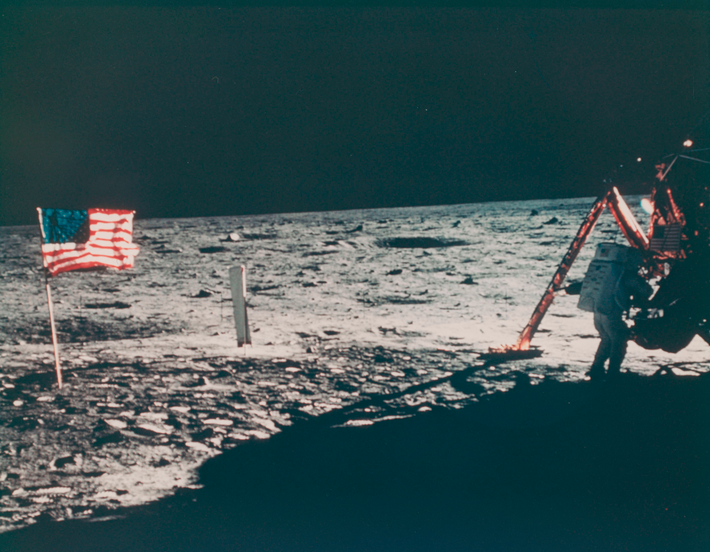
But the moon landing itself was never the entire story.
The real story was everything that happened along the way.
The Apollo program forced America to solve problems that nobody had ever solved before. Engineers developed more powerful computers, new materials, advanced telecommunications systems, sophisticated software, miniaturized electronics, and entirely new approaches to systems engineering.
The effort touched nearly every corner of American industry.
More than 400,000 people worked on Apollo. Over 20,000 companies and universities participated.
An entire generation of scientists and engineers was inspired by the mission.
The technologies born from that effort eventually found their way into nearly every aspect of modern life.
Computing accelerated. Semiconductor development accelerated. Materials science advanced. Telecommunications improved. Aerospace capabilities expanded. Complex project management reached entirely new levels.
Trying to calculate Apollo’s return on investment becomes almost impossible.
The technologies, capabilities, and human capital it created have generated economic value for more than half a century. Apollo helped establish American leadership in aerospace, computing, electronics, and advanced manufacturing at precisely the moment those industries would shape the global economy.
You see, the moon was the destination. Capability was the prize.
That’s an important distinction.
The Best Free Investment You’ll Ever Make
Join Wealth Daily today for FREE. We’ll keep you on top of all the hottest investment ideas before they
hit Wall Street. Become a member today, and get our latest free report: “The $10 Trillion AI Infrastructure Boom.”
It contains full details on why money managers are overpaid and provides you with
tools for growing your wealth.On your own terms. No fees, no commission.
President Kennedy wasn’t simply funding a space mission.
He was mobilizing an entire nation to build technological muscles that didn’t previously exist.
The journey itself became transformative.
Every great investment works this way.
The stated objective is often only part of the story.
The second-order and third-order effects frequently become far more valuable than anyone originally imagined.
And that’s exactly what I believe is happening with artificial intelligence today.
The critics look at AI and ask whether chatbots, image generators, and digital assistants justify hundreds of billions — or perhaps trillions — of dollars in infrastructure spending.
I think they’re asking the wrong question.
The better question is this…
What entirely new capabilities will emerge because humanity is trying to build artificial intelligence at planetary scale?
Because the effort itself is already forcing extraordinary innovation. New semiconductor architectures are being designed. Cooling technologies are advancing rapidly.
Power generation is being reimagined. Nuclear energy is experiencing renewed interest. Electrical grids are being modernized.
Robotics is accelerating. Scientific computing is advancing.
Entire industries are being pushed to innovate faster than they otherwise would.
The AI build-out is becoming a forcing function for technological progress, much the way Apollo was more than 60 years ago.
Nobody standing beside President Kennedy in 1961 could have predicted personal computers.
Or smartphones. Or GPS. Or cloud computing. Or the modern internet economy.
Those breakthroughs weren’t the stated objective of Apollo.
They were byproducts of humanity stretching beyond what it thought was possible.
Likewise, nobody today can fully appreciate what capabilities may emerge from our pursuit of artificial intelligence.
The first applications we see today may ultimately become the least important part of the story.
You see, if history has taught us anything, it’s that the biggest ideas almost always sound outrageous before they become inevitable.
Today, entrepreneurs like Elon Musk openly discuss building permanent human settlements on Mars, establishing long-term bases on the moon, and expanding civilization beyond Earth. As artificial intelligence continues demanding unprecedented amounts of computing power and energy, engineers have even begun discussing concepts that sound almost unbelievable today — including placing data centers in orbit, where nearly continuous solar energy and the cold vacuum of space could eventually help power and cool future computing infrastructure.
Data centers… in space?
Entire cities… on Mars?
For many people, those ideas belong in science fiction.
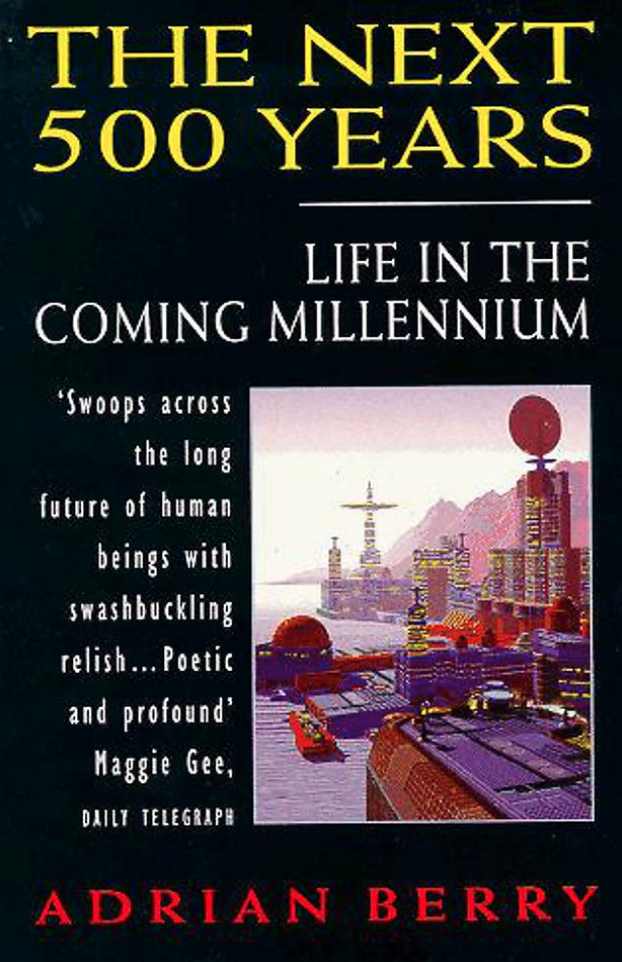
But so did landing a man on the moon in 1961.
Remember the questions critics asked then.
Why would anyone spend billions of dollars to send astronauts nearly 240,000 miles through space?
What practical purpose could it possibly serve?
Wasn’t it an extraordinary waste of money?
Those questions echo across history.
Every generation inherits a frontier that appears impossible until someone begins building it.
The Louisiana Purchase looked like an expensive gamble on wilderness.
The Erie Canal looked like an enormous ditch.
The transcontinental railroad looked like rails leading to nowhere.
Apollo looked like an expensive publicity stunt.
The commercial internet looked like a toy for academics and hobbyists.
Artificial intelligence looked like an overhyped curiosity only a few years ago.
Now the frontier is expanding once again.
If AI continues to demand ever-greater computing power, ever-greater energy supplies, and ever-greater communications capabilities, it isn’t difficult to imagine humanity eventually looking beyond Earth’s surface for solutions. The same civilization that built railroads across a continent, electrical grids across a nation, fiber-optic cables beneath oceans, and massive AI campuses across deserts may someday build critical infrastructure in orbit, on the moon, or even on Mars.
Will every one of those ideas happen exactly as envisioned?
Probably not.
History rarely follows anyone’s blueprint.
Some ideas fail. Others evolve.
Still others become something even bigger than their creators imagined.
But that’s almost beside the point. The lesson isn’t whether every bold vision succeeds. The lesson is that every generation consistently underestimates where the next frontier will be.
Apollo wasn’t the end of humanity’s journey into space.
It was the beginning.
And if artificial intelligence becomes the defining technological platform of the 21st century, we shouldn’t be surprised if its infrastructure eventually follows humanity wherever our next great frontier lies.
You see, that’s what makes this moment so thrilling.
The critics of Apollo saw an expensive trip to the moon. The builders saw an opportunity to expand the boundaries of human capability.
The critics saw costs. America gained decades of technological leadership.
Today, critics of artificial intelligence see massive data centers, soaring electricity demand, and staggering capital expenditures.
I see another moonshot.
I see a global effort pushing humanity to solve problems we’ve never solved before. I see engineers inventing technologies that don’t yet exist.
And I see capabilities whose ultimate value cannot possibly be measured today.
History has a remarkable habit of rewarding societies willing to undertake ambitious projects long before the payoff is obvious.
The moon landing was never just about planting a flag.
It was about expanding the frontier of what humanity believed was possible.
Artificial intelligence may prove to be exactly the same kind of story.
The critics see an expensive experiment. I see the construction of capabilities that could shape the next century.
And just as the technologies born from Apollo changed the world in ways few people could have imagined in 1961, the infrastructure being built for artificial intelligence today may ultimately carry us not only into a new technological age — but into humanity’s next great frontier.
Get to the good, green grass first…
The Prophet of Profit,

Brian Hicks
 Check us out on YouTube!
Brian is a founding member and President of Angel Publishing. He writes about general investment strategies for Wealth Daily and Energy and Capital. Brian is the managing editor and investment director of R.I.C.H Report (Retired Independent Carefree Healthy), New World Assets and Extreme Opportunities. For more on Brian, take a look at his editor’s page.
The Best Free Investment You'll Ever Make
We never spam! View our Privacy Policy
After getting your report, you’ll begin receiving the Wealth Daily e-Letter, delivered to your inbox daily.
Angel Publishing Investor Club Discord - Chat Now
Brian Hicks Premium
Introductory

Advanced


