The Economy Everyone Thinks Is Broken… Isn’t

Publisher’s Preface
Next week, I’ll be traveling to Elk River, Idaho, to visit the historic Friday Mine — and I won’t be going alone. I’ll be joining teams from NatGold Digital and Sovereon Gold Corp. for what I believe is a pivotal moment in the evolution of gold itself.
This isn’t a theoretical exercise or another white paper promise… this is boots-on-the-ground verification of premium, unmined gold reserves that are now on the cusp of being tokenized.
In other words, we are getting very close to unlocking a new financial asset class — one that could fundamentally reshape how gold is owned, valued, and traded. When I return, I’ll bring you a full field report from the ground in Idaho. Because what’s happening out there ties directly into a much bigger story unfolding right now — one that most investors are completely missing.
Turn on the television. Scroll through your phone. Listen to the endless parade of experts and commentators trying to make sense of where we are.
You’ll hear a familiar refrain — that the economy is slowing, that consumers are stretched, that cracks are forming beneath the surface. It’s become the dominant narrative, repeated so often that it’s now accepted as fact.
And yet…
When you step away from the noise and actually examine the underlying data — not just the headlines, not just the sentiment, but the real drivers of economic activity — a very different picture begins to emerge. Not a perfect picture, not an economy without risks, but one that is far more resilient, far more dynamic, and far more opportunistic than most people are being led to believe.
The Labor Market Isn’t Breaking — It’s Balancing
Start with the labor market, because that’s where most of the fear begins.
At roughly 4.3%–4.4% unemployment, the United States is operating at what economists have historically defined as “full employment.” This is not weakness — it’s equilibrium. It means the vast majority of people who want jobs can find them, and the remaining unemployment is simply the natural churn of a functioning economy.
But what’s happening now is subtle… and easily misunderstood.
We’re seeing job openings come down from extreme levels. Hiring is becoming more selective. Wage growth is stabilizing. To the casual observer, this looks like deterioration.
It’s not.
It’s normalization.
The U.S. still has roughly 6.8 million–7 million open jobs — millions of opportunities sitting there, waiting to be filled. That is not the profile of a collapsing economy. That is the profile of an economy transitioning from unsustainable heat… to sustainable strength.
The Best Free Investment You’ll Ever Make
Join Gold World today for FREE. Get the latest insight on gold, silver, and precious metals delivered straight to your inbox. When you become a member today, you’ll get our latest free report: “The #1 Golden Token to Buy Now.” Don’t Delay!
After getting your report, you’ll begin receiving the Gold World e-Letter, delivered to your inbox daily.
Housing Just Sent a Shock Signal
Now let’s talk about something that absolutely nobody expected to see right now…
A surge in housing demand.
According to a recent report highlighted by CNBC, new home sales jumped sharply in March, even as prices fell to a five-year low — a combination that is quietly reigniting activity in one of the most interest rate-sensitive sectors of the economy.
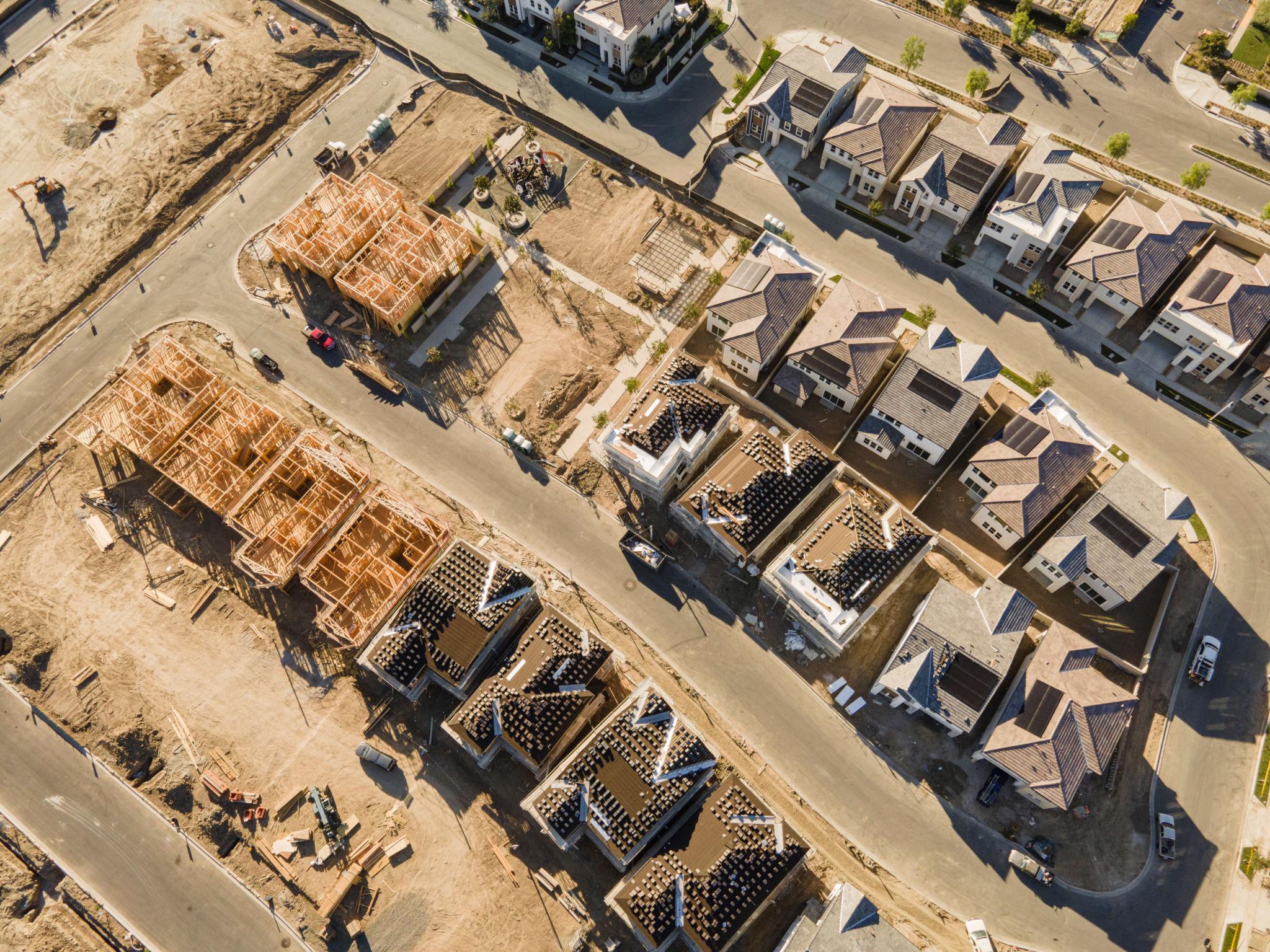
Think about that for a moment.
Lower prices are pulling buyers back into the market. Builders are moving inventory. Transactions are picking up. That’s not contraction — that’s reacceleration.
Even from my own personal experience in Longboat Key, Florida. Just a few years ago, my LBK house was valued between $2.5 million and $3 million. It’s substantially down today.
Housing has always been one of the most powerful multipliers in the economy. When it moves, everything moves — from construction jobs to raw materials to financing activity.
And right now?
It’s moving again.
The $1 Trillion Engine Nobody Can Ignore
But housing is just one piece of the story. Because the real force driving this economy — the one that dwarfs almost everything else — is something much bigger.
Artificial intelligence.
And more specifically…
The infrastructure being built to support it.
According to CNBC, Big Tech capital expenditures tied to AI are now projected to exceed $1 trillion annually by 2027.
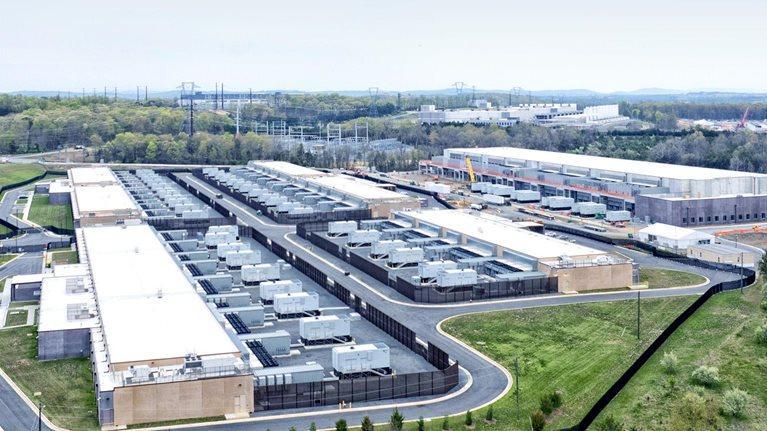
Let that sink in.
One trillion dollars… per year. That is not a sector trend. That is not a cyclical bump. That is a full-scale industrial build-out — one of the largest in modern history.
This is what I’ve been calling Twin #2 of the MoneyQuake.
The Conjoined Twins Are Alive and Well
If you’ve been following my work, you know the framework.
The global economy right now is being driven by two massive, converging forces…
Twin #1: Monetary instability — the rise of gold, de-dollarization, central bank accumulation.
Twin #2: Industrial expansion — the largest infrastructure and resource buildout the world has ever seen.
And what we’re witnessing right now — with housing reaccelerating and AI capex exploding — is direct evidence that Twin #2 is not slowing down… it’s accelerating.
This is the demand side of the equation. The pull, if you will.
The force that requires:
- Copper
- Steel
- Cement
- Energy
- Water
- Land
- Labor
At unprecedented scale.
Markets Are Already Pricing It In
Now ask yourself this…
If the economy were truly in trouble… Would markets be behaving the way they are?
The answer is no.
Markets are forward-looking mechanisms. They don’t wait for confirmation — they anticipate it. And right now, they are signaling strength.
The S&P 500 has surged roughly 20% since the start of Trump’s second term. That kind of move doesn’t happen in a vacuum. It reflects confidence — in earnings, in growth, and in the underlying economic engine.
At the same time, U.S. net wealth has expanded by trillions of dollars, reinforcing the idea that asset values are rising, not falling.
This is not what economic deterioration looks like.
Why Everyone Feels So Negative
And yet despite all of this…
Sentiment remains overwhelmingly cautious.
Why?
Because people are confusing change with decline. They’re confusing cultural headlines with capital inflows.
They’re looking at cooling data — fewer job openings, slower hiring — and assuming it signals weakness.
But what they’re missing is the starting point.
We’re not coming down from average conditions. We’re coming down from extreme, historic highs.
Of course things feel slower. They’re supposed to.
The Quiet Shift That Creates Opportunity
Here’s the part that matters most for investors.
Because, while the economy is stronger than advertised…
It is also evolving. Labor is loosening but not breaking. Capital is rotating into infrastructure, energy, and hard assets.
And productivity — driven by AI — is on the verge of a major breakout. This is not the end of a cycle.
This is the transition into a new phase of one.
Final Thought: The Story Behind the Story
The headlines will keep telling you the same thing.
That the economy is fragile. That risks are rising. That trouble is ahead.
But when you step back… when you connect the dots… when you understand both sides of the MoneyQuake…
A very different reality comes into focus.
The economy isn’t breaking.
It’s being rebuilt. From the ground up.
From Idaho gold reserves… to trillion-dollar AI infrastructure in remote parts of Utah… to a housing market quietly coming back to life.
And for those who recognize it early…
This won’t be a period to fear. It will be a period to capitalize on.
Get to the good, green grass first…
The Prophet of Profit,

Brian Hicks
 Check us out on YouTube!
Brian is a founding member and President of Angel Publishing. He writes about general investment strategies for Wealth Daily and Energy and Capital. Brian is the managing editor and investment director of R.I.C.H Report (Retired Independent Carefree Healthy), New World Assets and Extreme Opportunities. For more on Brian, take a look at his editor’s page.
The Best Free Investment You'll Ever Make
We never spam! View our Privacy Policy
After getting your report, you’ll begin receiving the Wealth Daily e-Letter, delivered to your inbox daily.
Angel Publishing Investor Club Discord - Chat Now
Brian Hicks Premium
Introductory

Advanced


