The Data Center in Your Backyard

Wall Street thinks the future of artificial intelligence looks like this:
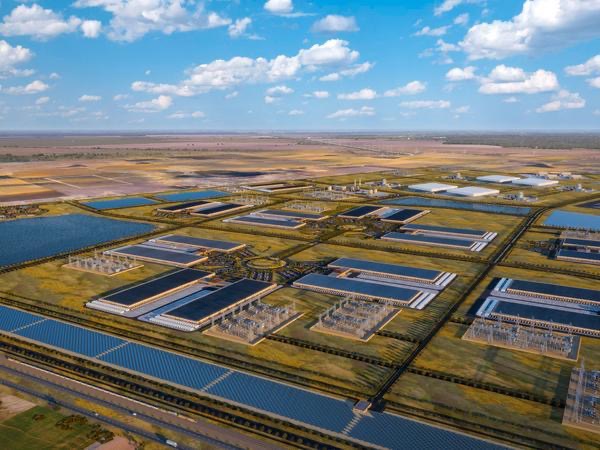
Massive data centers. Gigantic power plants. Miles of transmission lines. Hundreds of acres of land. And billions of dollars poured into giant computing campuses.
That model has worked so far, but it’s starting to crack…
Because AI companies need more computing power than the grid can provide.
New data centers are running into power shortages, permitting delays, transmission bottlenecks, and increasingly hostile local communities.
In other words, the AI boom has created a transportation problem for electricity.
There’s plenty of demand for computing, but the problem is getting enough power to the places where that computing happens.
And a radical new solution is beginning to emerge.
Instead of building the next data center as one gigantic campus…
What if we spread it across thousands of homes?
The Data Center Without the Data Center
Picture a small computing unit attached to the outside of your house…
Inside are powerful chips designed to process AI workloads.
Your unit connects to thousands of others through software, creating one enormous distributed computing network.
Individually, each machine is small, but collectively, they could operate like a massive virtual data center.
And here’s the important part…
The system doesn’t need to find one location with an enormous new supply of electricity.
It uses small amounts of available power from thousands, eventually perhaps millions of existing residential connections.
Instead of finding one site capable of handling 500 megawatts…
You find 500,000 homes, each capable of handling a little bit.
That changes everything.
Think Rooftop Solar — Except for AI
Electricity used to work in one direction…
A giant power plant generated it. The grid transported it. Your house consumed it.
Then rooftop solar flipped that model…
Suddenly millions of homes became miniature power plants.
Add batteries, smart thermostats, electric vehicles, and intelligent energy-management software and those homes can even be coordinated into virtual power plants.
One gigantic centralized asset can now be replaced, or supplemented, by thousands of smaller distributed ones.
Now imagine doing the same thing with computing.
Your rooftop generates power. Your battery stores it…
And a small computing node converts some of that energy into AI processing power.
Instead of selling excess electricity back to the grid, your house could effectively sell computing capacity into the AI economy.
That’s a completely different way of thinking about data centers. And it could create a completely new industry.
The Best Free Investment You’ll Ever Make
Join Wealth Daily today for FREE. We’ll keep you on top of all the hottest investment ideas before they
hit Wall Street. Become a member today, and get our latest free report: “The $10 Trillion AI Infrastructure Boom.”
It contains full details on why money managers are overpaid and provides you with
tools for growing your wealth.On your own terms. No fees, no commission.
Your House Could Become Part of the AI Economy
The economics could be attractive for everyone involved…
AI companies get access to more computing capacity without waiting years for gigantic campuses to be built.
Utilities avoid some of the strain caused by enormous concentrated loads.
Homeowners could receive compensation for participating.
That might come in the form of lower power bills, subsidized internet, battery backup, lease payments, or other financial incentives.
And suddenly your house isn’t merely consuming energy…
It’s producing something valuable: Computing power.
And once you start thinking about it that way, the opportunity becomes enormous.
Millions of homes already have electricity.
Millions already have high-speed internet.
Millions increasingly have solar panels and batteries.
The basic infrastructure is already sitting there.
Power. Connectivity. Storage.
Why This Could Be the Next Massive AI Industry
Wall Street has spent years pouring money into the obvious AI infrastructure plays.
Chips. Servers. Cooling systems. Networking equipment. Utilities. Data centers…
But disruptive technologies often create their biggest opportunities one layer beyond the obvious winners.
Think about what rooftop solar created…
It wasn’t just an opportunity for solar panel manufacturers.
It created entire industries around installation, financing, inverters, batteries, energy management, grid software, and virtual power plants.
Distributed computing could do the same thing.
Somebody has to manufacture these mini data centers.
Somebody has to provide the chips.
Somebody has to cool them.
Somebody has to connect them.
Somebody has to secure them.
Somebody has to manage power consumption.
Somebody has to aggregate millions of machines into one usable computing network.
And somebody has to sell that computing capacity to AI companies.
That’s not one investment opportunity.
That’s an entirely new ecosystem.
And the market is barely paying attention.
The Beginning of the End for the Mega Data Center?
To be clear, gigantic data centers aren’t disappearing tomorrow…
Some workloads will always require massive centralized facilities.
But that’s not the important point…
Utility-scale power plants didn’t disappear when rooftop solar arrived either.
They simply lost their monopoly, and the same thing could happen to data centers.
Instead of assuming every new unit of computing power has to come from another gigantic billion-dollar campus…
We could start building an entirely new distributed layer beneath the traditional system.
And when that happens, the companies enabling it could become some of the biggest winners of the next stage of the AI boom.
That’s why our research team has been digging into this shift now, before it becomes another obvious Wall Street theme.
And we’ve identified three investments we’re convinced are especially well positioned to profit as distributed AI computing moves from an emerging idea toward a massive new infrastructure market.
These aren’t the same giant AI stocks everybody already knows…
They’re positioned around the technology required to make this new network work.
And we’ve put the entire investment thesis into a new proprietary research report.
Inside, we explain why the traditional data center model is running into serious limitations, how this new distributed architecture could solve them, and the three investments we believe could deliver the biggest upside if this trend takes off.
You can get access to that report right here. And you probably should…
Because if we’re right, the next great AI infrastructure boom won’t be built on some enormous campus in the middle of nowhere.
It’ll be built in neighborhoods across America.
And investors who recognize that shift early could have a tremendous head start.
And we’ve already watched almost the exact same transformation happen once before.
The missing piece is compute.
To your wealth,

Jason Williams
 @TheReal_JayDubs
 Angel Research on Youtube
After graduating Cum Laude in finance and economics, Jason designed and analyzed complex projects for the U.S. Army. He made the jump to the private sector as an investment banking analyst at Morgan Stanley, where he eventually led his own team responsible for billions of dollars in daily trading. Jason left Wall Street to found his own investment office and now shares the strategies he used and the network he built with you. Jason is the founder of Main Street Ventures, a pre-IPO investment newsletter; the founder of Future Giants, a nano cap investing service; and authors The Wealth Advisory income stock newsletter. He is also the managing editor of Wealth Daily. To learn more about Jason, click here.
Want to hear more from Jason? Sign up to receive emails directly from him ranging from market commentaries to opportunities that he has his eye on.
The Best Free Investment You'll Ever Make
We never spam! View our Privacy Policy
After getting your report, you’ll begin receiving the Wealth Daily e-Letter, delivered to your inbox daily.
Angel Publishing Investor Club Discord - Chat Now
Jason Williams Premium
Introductory

Advanced


