The Critical Metal the West Can’t Afford to Lose

Last week, we looked at several obscure metals that quietly make the modern world possible.
These materials rarely dominate financial headlines. Most investors don’t follow their prices, know where they’re mined or recognize the companies producing them.
But many are essential to industries far larger than the metals markets themselves.
And tungsten may be the best example…
It isn’t mined or consumed in the enormous quantities associated with copper, aluminum or iron ore.
Yet it plays a critical role in manufacturing, energy production, aerospace, electronics, and national defense.
Tungsten helps cut steel, drill rock, machine precision parts, and build equipment capable of operating under extreme heat and pressure.
It also strengthens armor, improves the effectiveness of ammunition, and supports technologies ranging from jet engines to rockets.
The world may not use much tungsten compared with other industrial metals. But it would have a tough time functioning without it.
And that alone should make tungsten worth watching.
But what makes it especially important today is that the Western supply chain remains dangerously dependent on China…
Because tungsten is yet another critical material that the West needs badly but largely allows someone else to control.
A Metal Built for Extreme Conditions
Tungsten has one of the highest melting points of any element.
It’s exceptionally dense, resistant to wear, and capable of maintaining its strength under conditions that would destroy many conventional metals.
And it’s those properties that make it unusually difficult to replace.
When combined with carbon, tungsten forms tungsten carbide, an extremely hard material used in industrial cutting, drilling, and machining tools.
These tools help shape steel, bore through rock, manufacture vehicle components, and produce the precision parts used throughout the modern economy.
Construction companies need tungsten. Miners need it. Oil and gas drillers need it.
Aerospace manufacturers, automakers, machine shops, and defense contractors all depend on it.
But tungsten’s density also makes it useful in armor-piercing ammunition, missile components, counterweights, radiation shielding, and other military applications.
And its resistance to heat and deformation becomes even more valuable as weapons and aircraft become faster, more powerful, and more technologically advanced.
Hypersonic systems, advanced jet engines, and space vehicles all operate in environments where ordinary materials reach their physical limits.
But tungsten keeps working.
And that makes it less like a conventional commodity and more like a strategic bottleneck…
A manufacturer may only need a relatively small amount of tungsten. But without that small amount, it may be unable to complete a product worth millions of dollars.
The West’s Supply Problem
The problem we’re facing, though, isn’t a lack of tungsten in the Earth’s crust. The problem is where the metal is mined, processed, and converted into usable products…
You see, China dominates global tungsten production by an enormous margin.
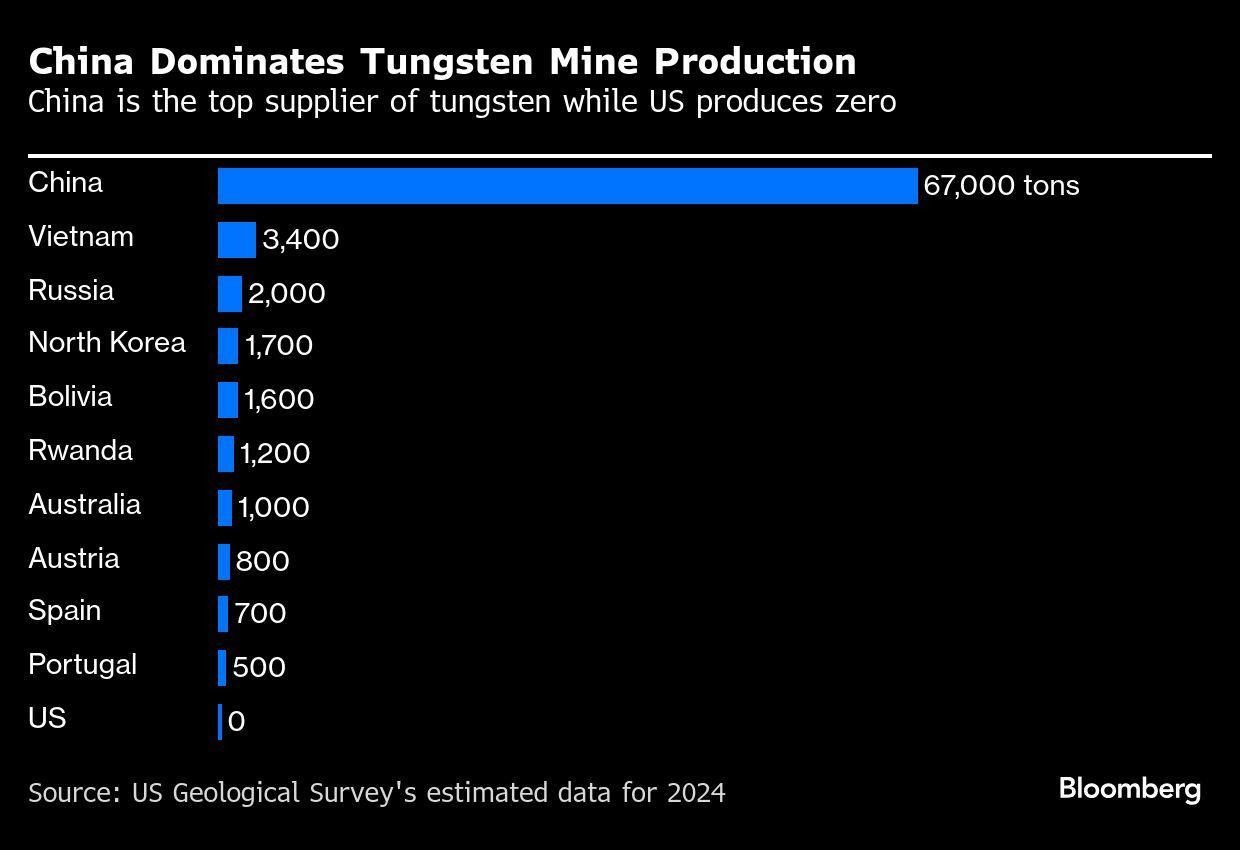
It also controls a substantial portion of the processing capacity required to transform raw ore into the powders, carbides, chemicals, and alloys used by manufacturers.
That creates a vulnerability extending well beyond the mine itself…
Even when a Western company purchases tungsten from a supplier outside China, the material may still have passed through Chinese processors or originated from Chinese feedstock somewhere further up the chain.
That makes the supply network far less diversified than import statistics initially suggest.
Aside from China, some remaining production comes from countries such as Russia and North Korea.
And most other sources are located in regions vulnerable to political instability, corruption, sanctions, or Chinese economic influence.
In practical terms, much of the global tungsten supply is either directly controlled by China or routed through countries that may not remain reliable during a serious geopolitical conflict.
The United States, meanwhile, has not operated a significant commercial tungsten mine for years.
And that is a pretty remarkable position for a country with the world’s largest defense budget, one of its most advanced aerospace industries, and an enormous manufacturing base.
America has the technology, the capital, and the demand. But it lacks secure domestic supply.
China Has Already Shown Its Hand
For years, Western policymakers treated critical-mineral dependence as a theoretical future risk.
But China’s export restrictions have made it much harder to maintain that illusion…
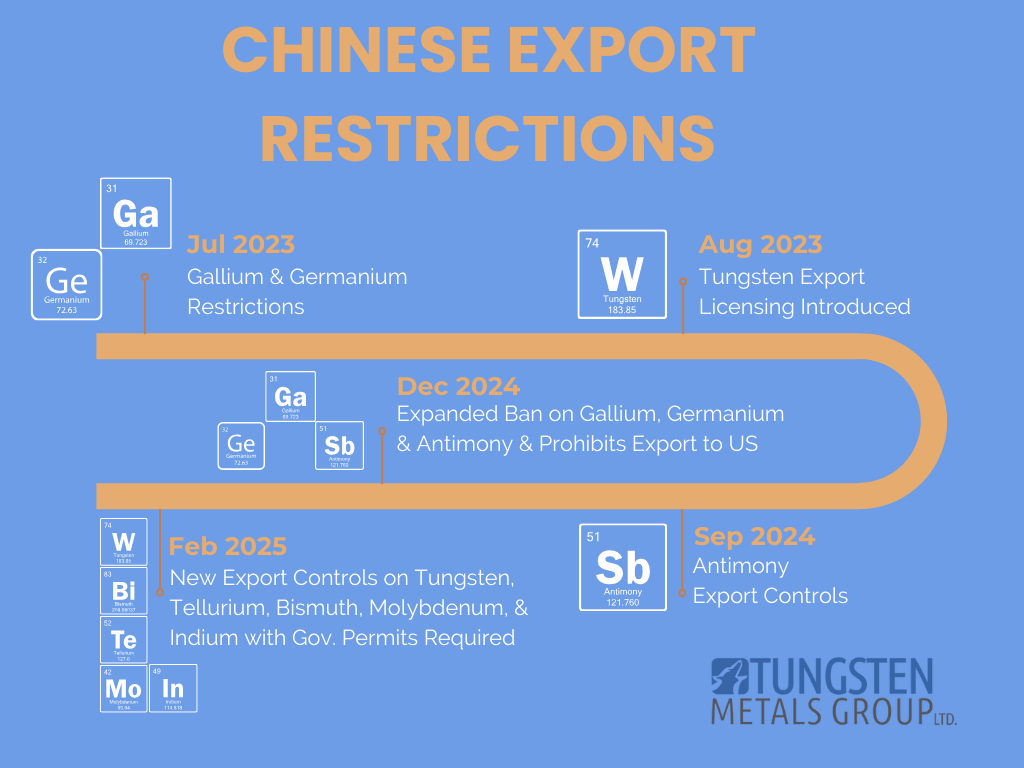
Beijing has already demonstrated that it’s willing to use access to strategic materials as leverage in disputes over trade, semiconductors, artificial intelligence, and military technology.
Tungsten is part of that larger contest.
When China restricts exports, changes licensing rules, or prioritizes domestic users, prices can rise quickly and foreign manufacturers can be forced to compete for limited material.
And the risk isn’t necessarily that every shipment stops overnight. The greater threat is that supply becomes slower, more expensive, and less predictable…
The Best Free Investment You’ll Ever Make
Join Wealth Daily today for FREE. We’ll keep you on top of all the hottest investment ideas before they
hit Wall Street. Become a member today, and get our latest free report: “The $10 Trillion AI Infrastructure Boom.”
It contains full details on why money managers are overpaid and provides you with
tools for growing your wealth.On your own terms. No fees, no commission.
At exactly the moment Western governments need to increase production of weapons, vehicles, aircraft, and infrastructure.
Modern industrial systems were designed around efficiency and low-cost global sourcing. They weren’t designed to withstand a major confrontation with the country dominating their critical inputs.
And tungsten exposes that weakness clearly.
The Producers Already Making a Difference
Rebuilding Western tungsten supply will require a combination of existing producers, mine restarts, new developments, and early-stage exploration.
A few companies are already helping establish the foundation…
Almonty Industries has emerged as one of the most important names in non-Chinese tungsten.
The company operates the Panasqueira mine in Portugal and has been advancing the much larger Sangdong project in South Korea.
Sangdong was once one of the world’s most significant tungsten mines. It closed after low-cost Chinese material pushed many competing operations out of the market.
And its revival is strategically important because South Korea is a major industrial economy and a close U.S. ally.
So a large, long-life tungsten mine there could become a meaningful source of supply for manufacturers seeking to reduce their exposure to China.
Australia’s EQ Resources is another company contributing to the Western supply chain through its Mt Carbine operation in Queensland.
Australia offers exactly the kind of jurisdiction the West needs: politically stable, relatively mining-friendly, and closely aligned with the United States and its allies.
Operations in Portugal, Spain, and Austria also provide useful supply. And while none can challenge China individually, together they can begin forming a more resilient network.
You see, the goal is not to replace China with a single new dominant producer. It’s to create enough independent sources that no one country can threaten the entire system.
The Next Mines Matter Even More
But the thing is that current production alone won’t solve the problem. The West also needs large new deposits capable of supporting decades of future demand.
And that makes tungsten explorers and developers central to the investment story.
Fireweed Metals owns the Mactung project in Canada’s Yukon Territory, one of the largest high-grade undeveloped tungsten resources in the world.
A successful mine there could become a cornerstone of North American supply. Canada offers political stability, strong geological expertise, and direct access to the U.S. market.
Guardian Metal Resources is advancing tungsten assets in Nevada, including Pilot Mountain and Tempiute.
These projects are especially important because they sit inside the United States, close to domestic manufacturers and defense customers.
Government support under national-security programs also shows that Washington increasingly understands their strategic value.
In the United Kingdom, Tungsten West is attempting to restart the Hemerdon mine, while Strategic Minerals is advancing the Redmoor tungsten-tin-copper project in Cornwall.
These companies remain speculative. Mining projects face permitting risk, financing risk, metallurgy risk, construction risk, and commodity-price risk.
And, as resource investors well know, not every deposit becomes a mine.
But without developers and explorers taking those risks today, the West will still be discussing the same supply shortage a decade from now.
Mining Is Only Part of the Answer
But digging tungsten out of the ground isn’t enough…
The ore still has to be concentrated and then processed into intermediate and finished materials, which include ammonium paratungstate, tungsten oxides, powders, carbides, and specialty alloys.
A truly secure supply chain, therefore, needs more than mines…
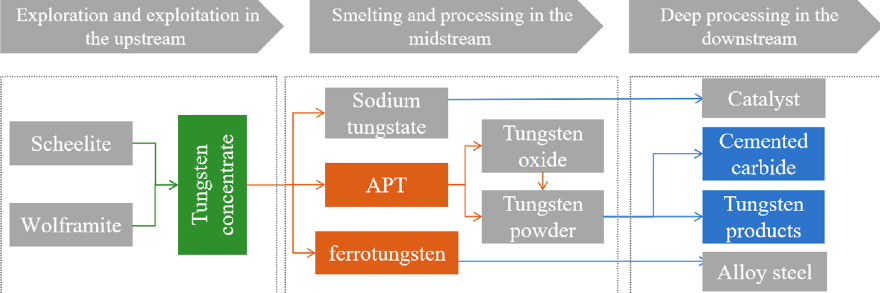
It needs processing plants, recycling capacity, technical expertise, and customers willing to sign long-term purchase agreements.
Government involvement is also likely to remain necessary…
Grants, low-cost loans, tax incentives, strategic stockpiles, and guaranteed defense purchases can all help projects compete against a Chinese industry supported by state policy and decades of investment.
Western governments spent years assuming the private market would solve critical-mineral dependence on its own. But it didn’t…
Cheap imported material dumped on the markets repeatedly made domestic projects appear uneconomic, causing mines and processing facilities to close while Chinese market share exploded.
Reversing that trend will require treating tungsten as strategic infrastructure rather than simply another raw material.
The Investment Opportunity Behind the Supply Crisis
Tungsten may never attract the widespread media attention given to gold, copper, or lithium. But that’s part of what makes the opportunity so compelling.
It’s essential, difficult to replace, and deeply connected to several of the largest long-term investment themes in the market…
Reindustrialization, defense spending, energy development, aerospace growth, and the rebuilding of Western supply chains.
Demand doesn’t even need to explode for the market to tighten.
Because China controls so much production and processing, even modest disruptions can have an outsized effect on available supply and prices.
And the companies capable of producing tungsten outside China could become incredibly valuable to governments, defense contractors, and industrial manufacturers.
The most promising explorers could become acquisition targets as established producers and strategic buyers compete for secure resources in friendly jurisdictions.
We’re talking about an irreplaceable material that the modern economy quietly depends on every day.
For decades, the West traded supply security for cheap tungsten. Now it’s beginning to understand the true cost of that decision.
The race to rebuild the supply chain has already begun, and some companies are positioned far better than others to benefit.
We recently completed a full report identifying what we believe is the best way to invest in this unique yet irreplaceable critical mineral.
Click here to get access and discover the company we believe offers investors the strongest combination of strategic importance, resource potential, and long-term upside.
Because tungsten is yet another critical material that the West needs badly, and the race is on to secure reliable domestic supply.
To your wealth,

Jason Williams
 @TheReal_JayDubs
 Angel Research on Youtube
After graduating Cum Laude in finance and economics, Jason designed and analyzed complex projects for the U.S. Army. He made the jump to the private sector as an investment banking analyst at Morgan Stanley, where he eventually led his own team responsible for billions of dollars in daily trading. Jason left Wall Street to found his own investment office and now shares the strategies he used and the network he built with you. Jason is the founder of Main Street Ventures, a pre-IPO investment newsletter; the founder of Future Giants, a nano cap investing service; and authors The Wealth Advisory income stock newsletter. He is also the managing editor of Wealth Daily. To learn more about Jason, click here.
Want to hear more from Jason? Sign up to receive emails directly from him ranging from market commentaries to opportunities that he has his eye on.
The Best Free Investment You'll Ever Make
We never spam! View our Privacy Policy
After getting your report, you’ll begin receiving the Wealth Daily e-Letter, delivered to your inbox daily.
Angel Publishing Investor Club Discord - Chat Now
Jason Williams Premium
Introductory

Advanced


