Rural Electrification: The Critics Saw Waste. America Electrified Productivity.

Initial Investment:
Approximately $500 million in initial federal commitments and loans through the Rural Electrification Administration (equivalent to roughly $11 billion in 2026 dollars).
Estimated Return on Investment:
Immeasurable. Conservatively, tens of trillions of dollars in increased productivity, economic output, and higher living standards.
Today I’m back with the next investment in our series on America’s 11 greatest investments many people hated…
On May 11, 1935, President Franklin D. Roosevelt signed an executive order creating the Rural Electrification Administration.
At first glance, the idea seemed almost absurd.
Bring electricity to millions of Americans who lived on farms and in remote communities scattered across the countryside. Build power lines over vast distances to serve customers that private utilities had largely ignored because the economics simply didn’t work.
In 1935, nearly 90% of urban households had electricity.
In rural America, fewer than one in 10 farms did.
The disparity was staggering.
By the standards of the day, millions of Americans were still living in a world that looked remarkably similar to the late 19th century. Kerosene lamps illuminated homes. Ice boxes preserved food. Water had to be pumped by hand. Farm work remained labor-intensive and time-consuming.
The private sector looked at rural America and concluded that the investment simply wasn’t worth making.
The customers were too spread out. The costs were too high. The returns looked too low.
Critics of rural electrification made many of the same arguments we hear today regarding large infrastructure projects. They argued that taxpayers would be left holding the bag. They claimed the government was throwing money at unprofitable customers. Some believed the project would become a permanent boondoggle that could never justify its expense.
To many Americans, rural electrification looked like an enormously expensive effort to string wires across empty farmland.
History would prove otherwise.
Once electricity arrived, everything changed.
Farm productivity surged. Electric pumps brought water to homes and livestock. Refrigeration transformed food storage. Milking machines revolutionized dairy operations. New tools and machinery made farms more efficient and profitable. Household appliances dramatically improved living standards and freed up countless hours of labor.
Electricity didn’t simply make life more comfortable.
It made life more productive.
This is a continuing theme found in these investments: It made Americans more productive!
Entire communities were transformed. Small businesses expanded. Rural industries emerged. Educational opportunities improved. Healthcare improved. Quality of life improved. The economic gap between rural and urban America narrowed substantially.
By the early 1950s, nearly every American farm had electricity.
Today, the idea that millions of households should go without power seems unthinkable.
Trying to calculate the return on investment is almost impossible.
The economic value generated by rural electrification runs into the trillions of dollars. The gains in productivity, income, education, and living standards have compounded for nearly a century. Entire industries and communities flourished because America made the decision to build infrastructure that initially appeared uneconomic.
You see, the most important lesson of rural electrification isn’t about power lines.
It’s about capacity.
The critics evaluated the investment based on existing demand.
The builders understood that new infrastructure creates new demand.
That’s an important distinction.
Nobody in 1935 could fully predict how electricity would change rural life because many of the benefits had not yet been invented. Once power became widely available, entrepreneurs and consumers discovered countless new ways to use it.
The Best Free Investment You’ll Ever Make
Join Wealth Daily today for FREE. We’ll keep you on top of all the hottest investment ideas before they
hit Wall Street. Become a member today, and get our latest free report: “Why You Need to Fire Your Money
Manager.”
It contains full details on why money managers are overpaid and provides you with
tools for growing your wealth.On your own terms. No fees, no commission.
The infrastructure came first. The innovation followed.
Every major technological revolution works this way.
Railroads were built before western commerce exploded.
Fiber-optic networks were laid before streaming and cloud computing emerged.
The interstate highway system existed long before modern logistics and e-commerce transformed the economy.
Artificial intelligence will likely follow the same path.
You see, one of the biggest criticisms of AI today is that the technology consumes too much electricity.
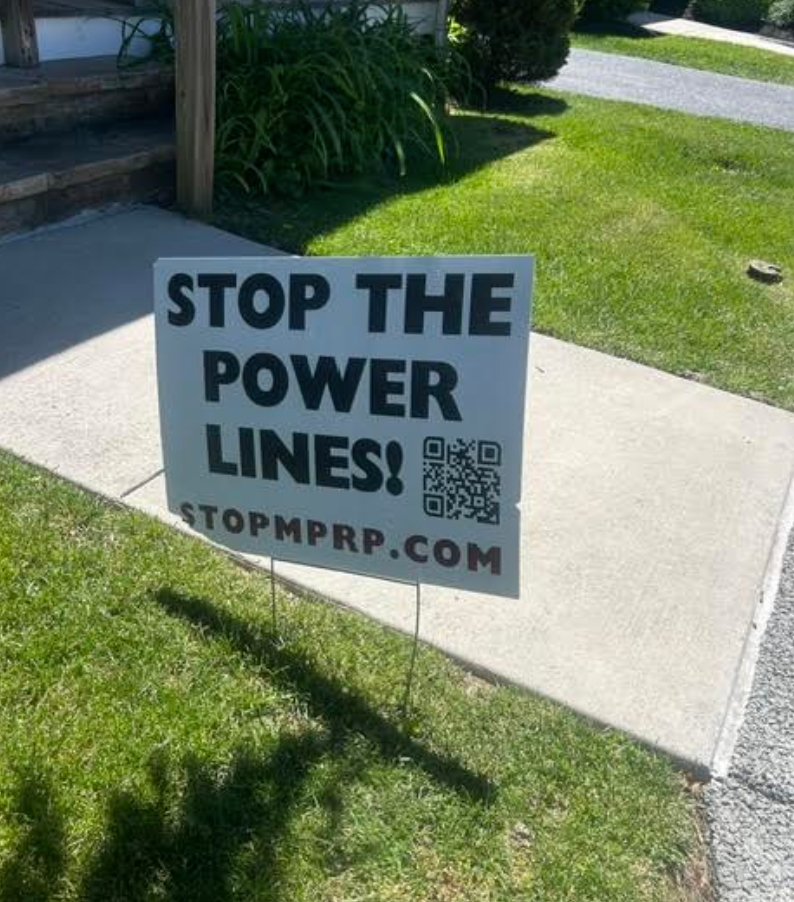
The data centers require enormous amounts of power. Utilities are being forced to rethink generation plans. Transmission systems are being upgraded. New gas plants are being built. Nuclear power is experiencing a renaissance. Demand forecasts are being revised upward for the first time in decades.
To many people, this looks like a problem.
I think it looks like an opportunity.
The critics are essentially asking why we need all this new electricity.
The better question is: What becomes possible once we have it?
Because artificial intelligence is not simply creating demand for more power.
It is forcing America to rebuild the physical infrastructure that underpins the entire economy.
New power generation. New transmission lines. New substations. New transformers.
All of this creates new investments in natural gas, uranium, nuclear energy, copper, silver, and electrical equipment.
The scale of the build-out is enormous because the opportunity is enormous.
And just like rural electrification, the full value of these investments may not be immediately obvious.
Nobody in 1935 could have predicted personal computers, data centers, or smartphones.
Likewise, nobody today can fully predict the industries that abundant artificial intelligence and abundant computing power will create 20 years from now.
The critics of rural electrification saw utility poles and wires stretching across farmland.
The builders saw productivity.
The critics saw costs.
America gained a more prosperous and modern economy.
And today, the critics of artificial intelligence see electricity demand and giant data centers.
I see the next great electrification of the American economy.
Because that’s ultimately what AI represents.
Not simply a new software platform. Not merely another technology cycle.
But a new layer of intelligence added to nearly every industry on Earth.
History has a remarkable habit of rewarding those who recognize that infrastructure often appears excessive right before it becomes indispensable.
Get to the good, green grass first…
The Prophet of Profit,

Brian Hicks
 Check us out on YouTube!
Brian is a founding member and President of Angel Publishing. He writes about general investment strategies for Wealth Daily and Energy and Capital. Brian is the managing editor and investment director of R.I.C.H Report (Retired Independent Carefree Healthy), New World Assets and Extreme Opportunities. For more on Brian, take a look at his editor’s page.
The Best Free Investment You'll Ever Make
We never spam! View our Privacy Policy
After getting your report, you’ll begin receiving the Wealth Daily e-Letter, delivered to your inbox daily.
Angel Publishing Investor Club Discord - Chat Now
Brian Hicks Premium
Introductory

Advanced


