MoneyQuake Is Back

If you thought the gold trade was over…
Think again.
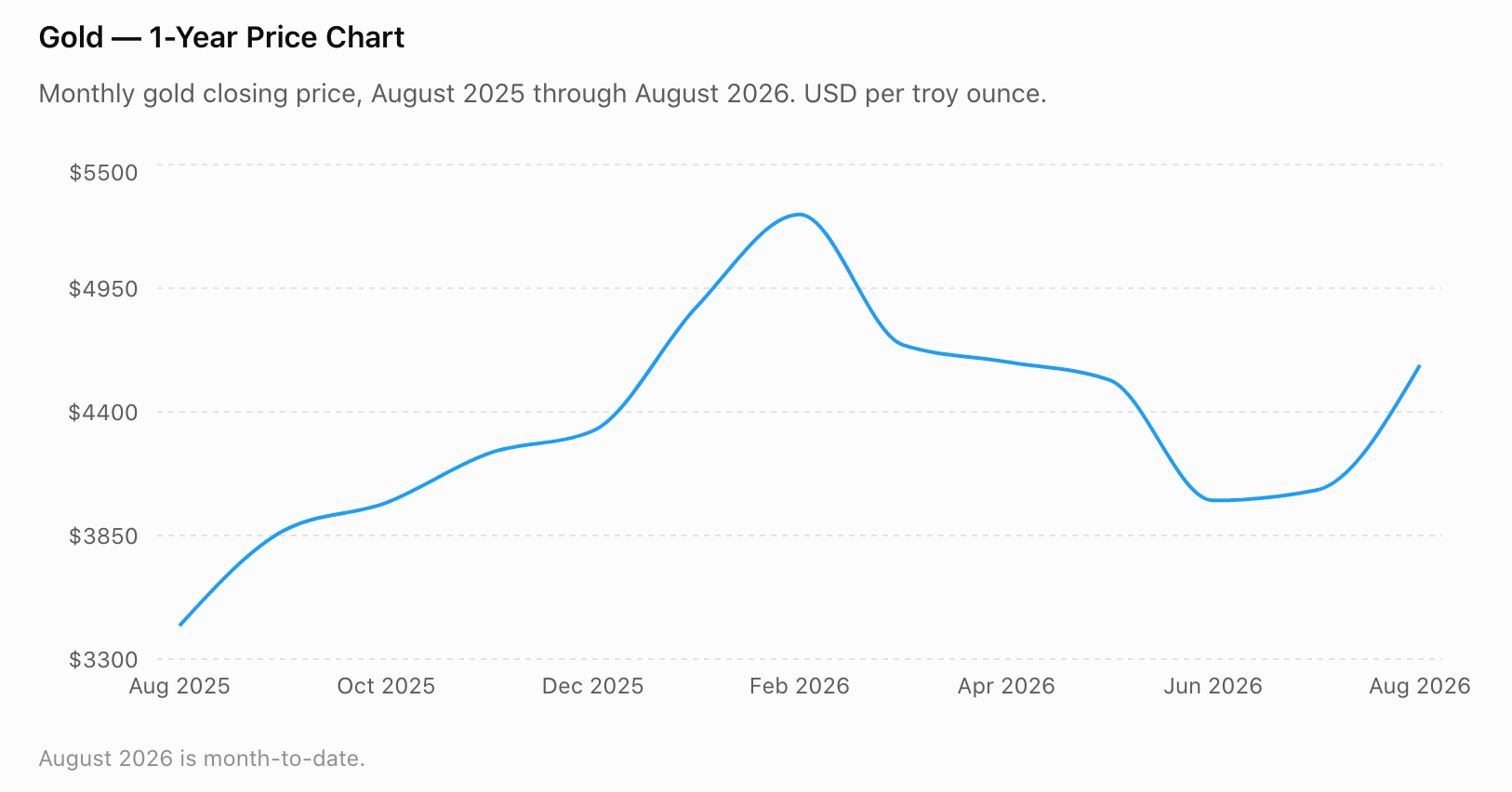
Earlier this year, gold stormed to record highs.
Silver followed with one of its strongest rallies in history.
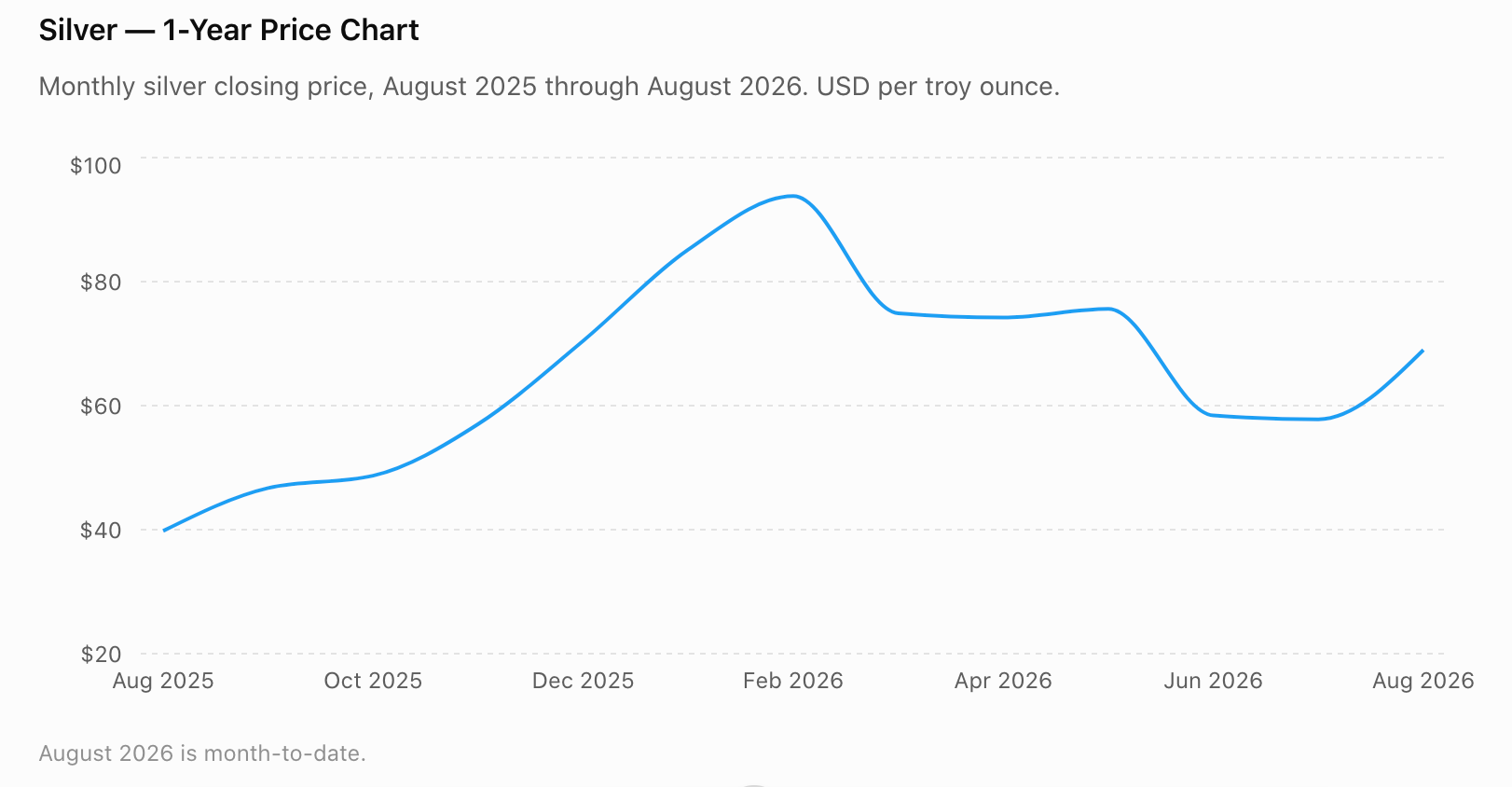
Headlines screamed that the move had gone too far, too fast. They weren’t wrong.
Analysts declared the trade overcrowded. Momentum investors rushed to take profits.
Then something healthy happened.
The market did what every great bull market does.
It took a breath.
Prices consolidated. Weak hands sold. Skeptics reappeared. Financial television moved on to the next shiny object.
And now?
The precious metals market is waking up again.
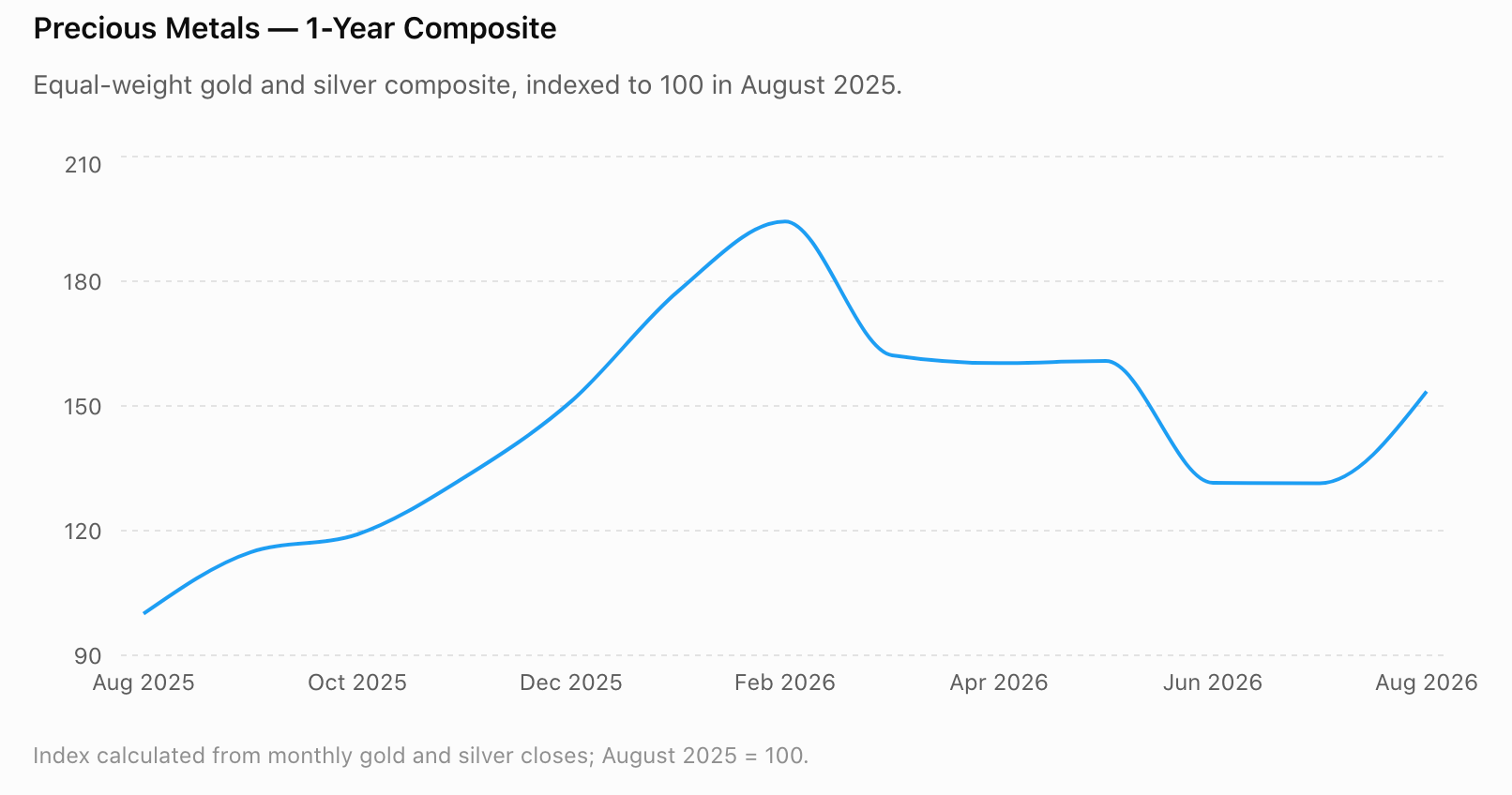
Only this time, the foundation beneath the rally may be even stronger than before.
Because this isn’t just another commodity cycle.
It’s another chapter in what I’ve been calling the MoneyQuake.
A decades-long monetary and industrial transformation that is quietly rewriting the rules of investing.
And I believe we’re still in the early innings.
You see, most investors make the same mistake every cycle.
They think gold is simply an inflation trade.
Or a recession trade. Or a geopolitical trade.
They’re looking for one catalyst.
But that’s never been my argument.
Gold isn’t rising because of one event.
It’s rising because nearly every major pillar supporting the old monetary system is beginning to shift at the same time.
The MoneyQuake has never been about predicting next week’s inflation report.
It has never been about guessing what the Federal Reserve will do at its next meeting.
It’s about recognizing that the financial world we’ve lived in for the last 40 years is slowly giving way to an entirely different one.
That’s a much bigger story.
Let’s start with the debt.
The United States is approaching debt levels once thought impossible.
Interest payments alone are exploding.
Governments around the world face the same dilemma. They owe too much. They’ve promised too much.
And politically, there is no painless way out.
The Best Free Investment You’ll Ever Make
Join Gold World today for FREE. Get the latest insight on gold, silver, and precious metals delivered straight to your inbox. When you become a member today, you’ll get our latest free report: “The #1 Golden Token to Buy Now.” Don’t Delay!
After getting your report, you’ll begin receiving the Gold World e-Letter, delivered to your inbox daily.
History tells us what usually comes next. Governments rarely default outright. They inflate.
They devalue. They quietly reduce the purchasing power of their currencies over time.
It’s politically easier.
That’s exactly why billionaire investor Ray Dalio continues to pound the table on gold. Dalio recently argued investors should consider putting 10%–15% of their portfolios into gold — not because he’s trying to predict tomorrow’s price, but because he sees gold as strategic insurance against debt-driven currency debasement.
Notice something important. He isn’t talking about trading. He’s talking about protecting wealth.
That’s a completely different mindset.
And it happens to align almost perfectly with the MoneyQuake thesis we’ve been developing for years.
Back when gold first exploded higher this year, many investors assumed they had missed the move.
Then prices cooled.
Some wondered whether the bull market was over before it had really begun.
But bull markets don’t move in straight lines.
They advance. They consolidate. Then they advance again.
That appears to be exactly what’s happening now.
Professional positioning has become healthier after months of consolidation, while institutional interest continues building beneath the surface.
That’s often how the strongest advances begin.
Quietly.
What’s different today is that gold isn’t standing alone.
Look around the world.
Central banks continue accumulating gold. Nations are diversifying reserves.
Investors are questioning whether government debt deserves the same unquestioned confidence it once enjoyed.
Even major Wall Street institutions are increasingly framing gold as the beneficiary of what many call the “debasement trade” — the idea that persistent deficits and expanding government liabilities ultimately push capital toward hard assets.
That phrase matters. Debasement trade.
Because that’s another way of describing the monetary side of the MoneyQuake.
But here’s where our thesis goes further than almost anyone else’s…
Most commentators stop with gold.
We don’t.
The MoneyQuake has always had two massive forces working together.
The first is monetary reformation. The second is industrial transformation. Those two earthquakes are colliding.
On one side, governments are accumulating debt, restructuring monetary systems, embracing digital assets, tokenization, stablecoins, and increasingly recognizing gold once again as strategic money.
On the other side…
The physical world is being rebuilt. Artificial intelligence. Massive data centers. Power plants. Transmission lines. Copper mines.
Silver demand. Uranium. Natural gas. Water infrastructure. Critical minerals.
This is the largest physical build-out we’ve seen in generations.
One earthquake is financial.
The other is industrial. Together…
They’re creating the MoneyQuake.
That’s why I continue believing silver could become one of the most misunderstood opportunities of this decade.
Gold is money. Silver is money… and an industrial metal.
Investors often think of silver as “gold’s little brother.”
I think that’s far too simplistic.
Silver may become one of the few assets that benefits from both sides of the MoneyQuake simultaneously.
Monetary demand.
Industrial demand.
That’s an extraordinarily powerful combination.
I also find it fascinating how quickly sentiment changes.
Only a few months ago, investors worried gold had become too expensive.
Now, many are asking whether the next move higher has already begun.
That’s exactly how bull markets fool people.
They shake out conviction before rewarding patience.
The strongest trends rarely feel comfortable.
Remember…
The MoneyQuake was never built on a prediction that gold would rise every week.
Or every month. Markets breathe. Corrections happen.
Volatility is part of the journey.
What matters is whether the structural forces continue moving in the same direction.
Today they do.
Debt continues rising. Currency concerns continue growing. Central bank buying continues. Industrial demand for critical metals continues expanding.
Artificial intelligence continues demanding enormous quantities of electricity, infrastructure, and raw materials.
Governments continue competing for strategic resources.
Nothing about those long-term trends has disappeared.
If anything…
They’ve accelerated.
That’s why I don’t view the recent consolidation in precious metals as the end of the story.
I view it as another chapter.
A necessary pause. A market catching its breath before deciding where to go next.
Could there be more volatility?
Of course. There always is.
But I believe investors who focus only on short-term price swings risk missing the much bigger picture unfolding beneath the surface.
The MoneyQuake isn’t a one-year phenomenon.
It’s a once-in-a-generation monetary transition colliding with a once-in-a-generation industrial expansion.
That’s an incredibly rare combination.
And I continue believing it will define investment returns for years to come.
Gold was the first to recognize it. Silver is beginning to recognize it.
The rest of Wall Street may simply be catching up.
The MoneyQuake never stopped.
It merely paused long enough for the next wave to build.
And judging by what we’re seeing today…
That next wave may already be here.
And that brings me to another wave that’s getting bigger and bigger.
I’m talking about NatGold
Gold had a very good three weeks. NatGold had a better one.
Gold is up 14.5% since July 30.
That’s a serious move for the most mature commodity market on Earth — $4,100 to $4,700 an ounce in under two weeks.
NatGold (NATG) is up 26.8% over the same stretch.
And Bitcoin — the asset that has spent a decade being sold to you as digital gold — is down 23.8%.
NatGold vs. Bitcoin vs. Gold
Sit with that for a second, because it’s the whole argument.
NATG went the same direction as gold, but further — because a NatGold token is priced off certified in-ground gold minus the cost of getting it out, and that spread widens faster than the metal itself. Gold went up. NATG went up more.
This is what an asset backed by certified gold resources looks like when gold runs.
Click here to learn more about NatGold.
106,800 NATG exist so far — the entire supply minted to date, tokenized from certified gold in Idaho’s Friday gold mine and California’s Cahuilla gold project. That’s the whole pool. And it’s trading right now.
Outside the U.S.? MEXC is where NATG trades — over 40 million users across over 170 countries. Search NATG to take your position.
In the U.S.? NATG is available through High Ridge Trust — a Nevada-chartered custodian, not an offshore crypto app. Start here.
High Ridge is run by veterans of Deutsche Bank, State Street, and BNY Mellon, with a board chaired by the CEO of Equity Trust Company — a 50-year-old, IRS-approved custodian overseeing roughly $73 billion across 368,000 accounts.
Whichever path is yours, nobody takes the position for you. You execute the trade yourself.
Get to the good, green grass first…
The Prophet of Profit,

Brian Hicks
 Check us out on YouTube!
Brian is a founding member and President of Angel Publishing. He writes about general investment strategies for Wealth Daily and Energy and Capital. Brian is the managing editor and investment director of R.I.C.H Report (Retired Independent Carefree Healthy), New World Assets and Extreme Opportunities. For more on Brian, take a look at his editor’s page.
The Best Free Investment You'll Ever Make
We never spam! View our Privacy Policy
After getting your report, you’ll begin receiving the Wealth Daily e-Letter, delivered to your inbox daily.
Angel Publishing Investor Club Discord - Chat Now
Brian Hicks Premium
Introductory

Advanced


