The Race for the Intelligence Economy Has Already Begun

Take a look at this picture:
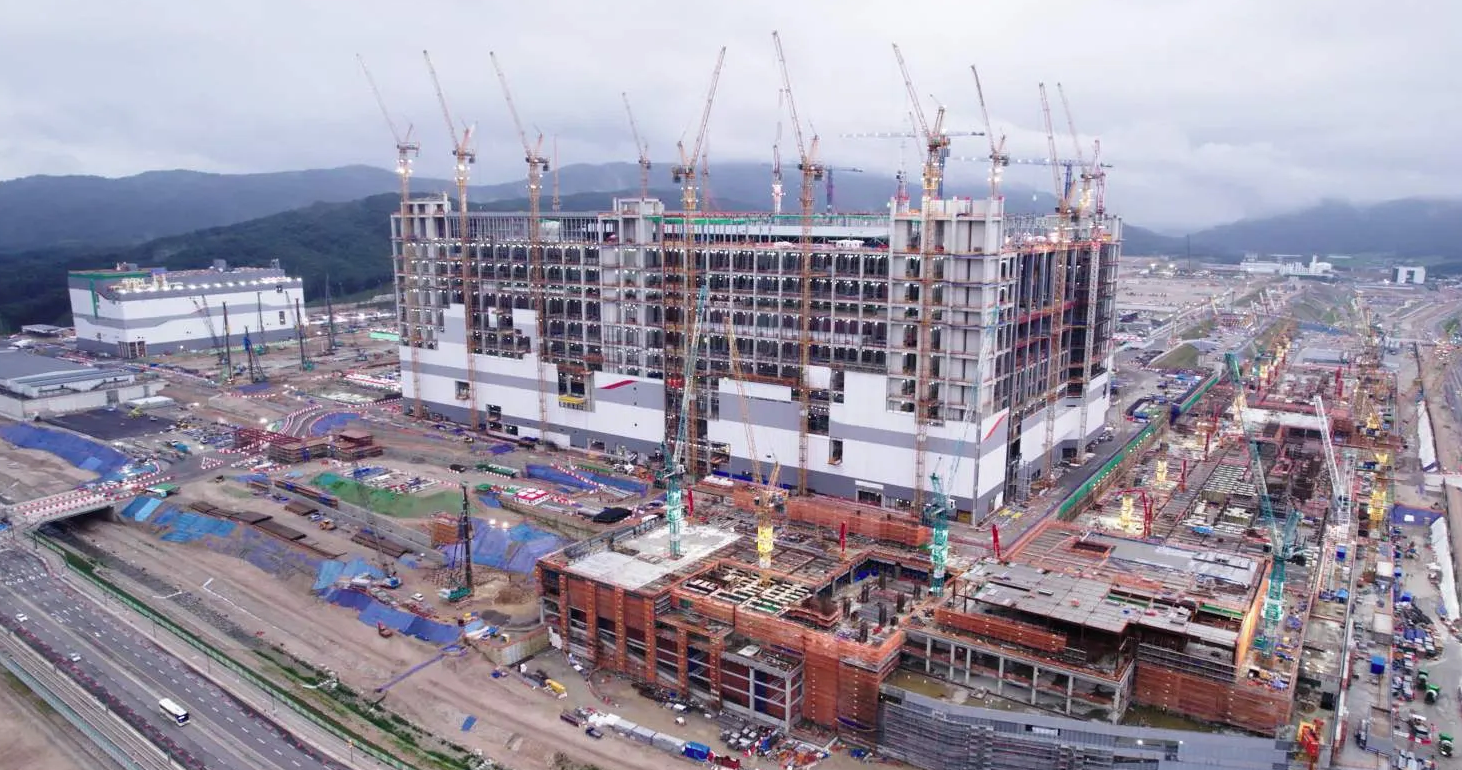
The sprawling construction site stretching across the landscape isn’t a new airport.
It isn’t a military base, although it will be guarded like one. And it’s not one of the world’s largest shopping malls.
At first glance, it almost looks like someone is building an entirely new city.
In many ways, they are.
What you’re looking at is SK Hynix’s Yongin AI semiconductor cluster under construction just south of Seoul, South Korea. When completed, it’ll look like this:
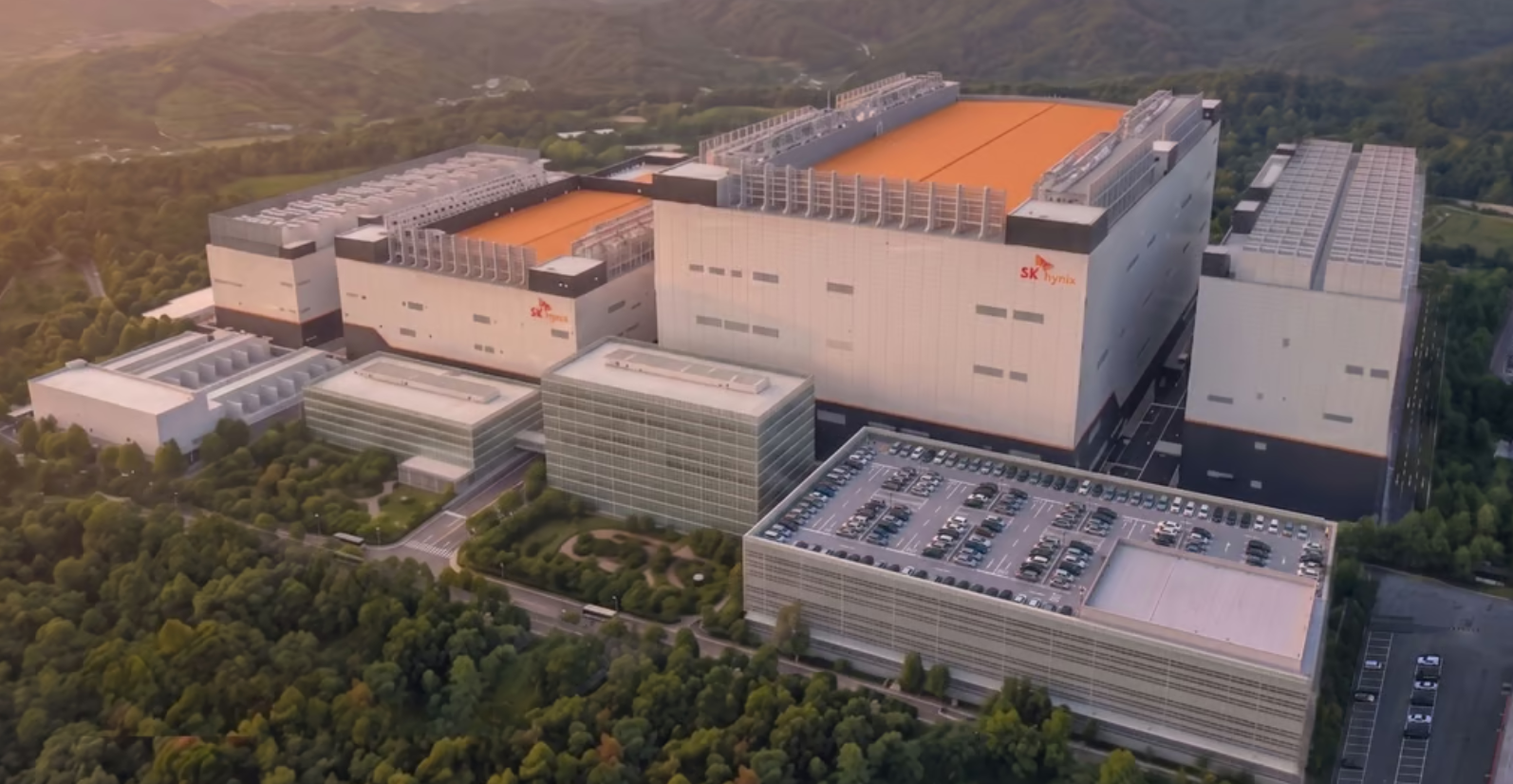
The Sk Hynix’s industrial campus will span more than 4.15 million square meters — roughly 1,026 acres, or 1.6 square miles. That’s the equivalent of 800 American football fields, larger than New York City’s Central Park, nearly twice the size of the Pentagon campus, and large enough that one executive overseeing the project remarked it could accommodate an entirely new town. The development will eventually house four next-generation semiconductor fabrication plants, advanced research facilities, utility infrastructure, and an ecosystem of more than 50 supplier companies.
Now ask yourself a simple question…
Does that look like a factory?
Or does it look like a nation building the industrial foundation of its future?
Because that’s exactly what’s happening.
South Korea isn’t constructing another electronics plant. It’s investing on a scale rarely seen outside of wartime industrial mobilization. SK Hynix’s long-term plan — measured in the hundreds of billions of dollars — is centered on one objective: manufacturing the advanced memory chips that sit at the heart of artificial intelligence. These high-bandwidth memory chips are becoming as essential to modern AI systems as oil once was to the automobile or steel to the railroad.
Think about that for a moment.
One of the world’s most technologically advanced nations has concluded that the defining economic opportunity of the next generation isn’t another smartphone or another social media platform.
It’s the plumbing to support all of that and more.
I’m talking about memory. And semiconductors. And electricity.
It’s artificial intelligence.
And while many Americans continue debating whether AI should move forward, much of the rest of the world has already answered that question.
They’re building. And they’re building big and they’re building it fast. And whoever gets to the top of the mountain first, will have the advantage of the high ground!
“It’s like a war,” said Chey Tae-won, chairman of SK Group, the controlling owner of SK Hynix, in an interview in Seoul. “Everybody wants to buy the memory chips. Without that, they cannot produce their AI computing and AI chips.”
That’s the story I want you to understand.
America doesn’t get to vote on whether artificial intelligence happens.
That decision has already been made.
The only remaining question is this…
Who builds it?
History offers a remarkably consistent answer.
The Industrial Revolution wasn’t won by the countries that merely admired steam engines.
It was won by the countries that built the factories.
The automobile age wasn’t dominated by those who talked about transportation.
It belonged to the nations that built steel mills, highways, refineries, and assembly lines.
The internet didn’t emerge because someone created a website.
It emerged because someone laid fiber-optic cable, built semiconductor fabs, constructed server farms, and financed data centers.
Artificial intelligence is proving no different.
The real race isn’t over chatbots. It’s over the physical foundation that makes intelligence possible.
You see, artificial intelligence isn’t floating somewhere in “the cloud.”
The cloud lives in buildings. Very large buildings.
Buildings filled with memory chips, advanced processors, cooling systems, transformers, fiber-optic networks, backup power systems, and enough electricity to power entire cities.
Before you manufacture intelligence, you first have to manufacture the chips.
This is literally the lifeline, from conception to birth: Before you manufacture the chips, you need fabrication plants. Before you build fabrication plants, you need electricity. And before you generate electricity, you need copper, uranium, natural gas, rare earth elements, silver, transformers, turbines, and transmission lines.
In other words, before you control your future, you first have to control the natural resources required to build it.
That explains why countries around the world are scrambling to secure critical minerals, strengthen semiconductor supply chains, expand electrical generation, and accelerate industrial construction.
South Korea understands it. Taiwan understands it.
And China definitely understands it.
Increasingly, the United States understands it as well.
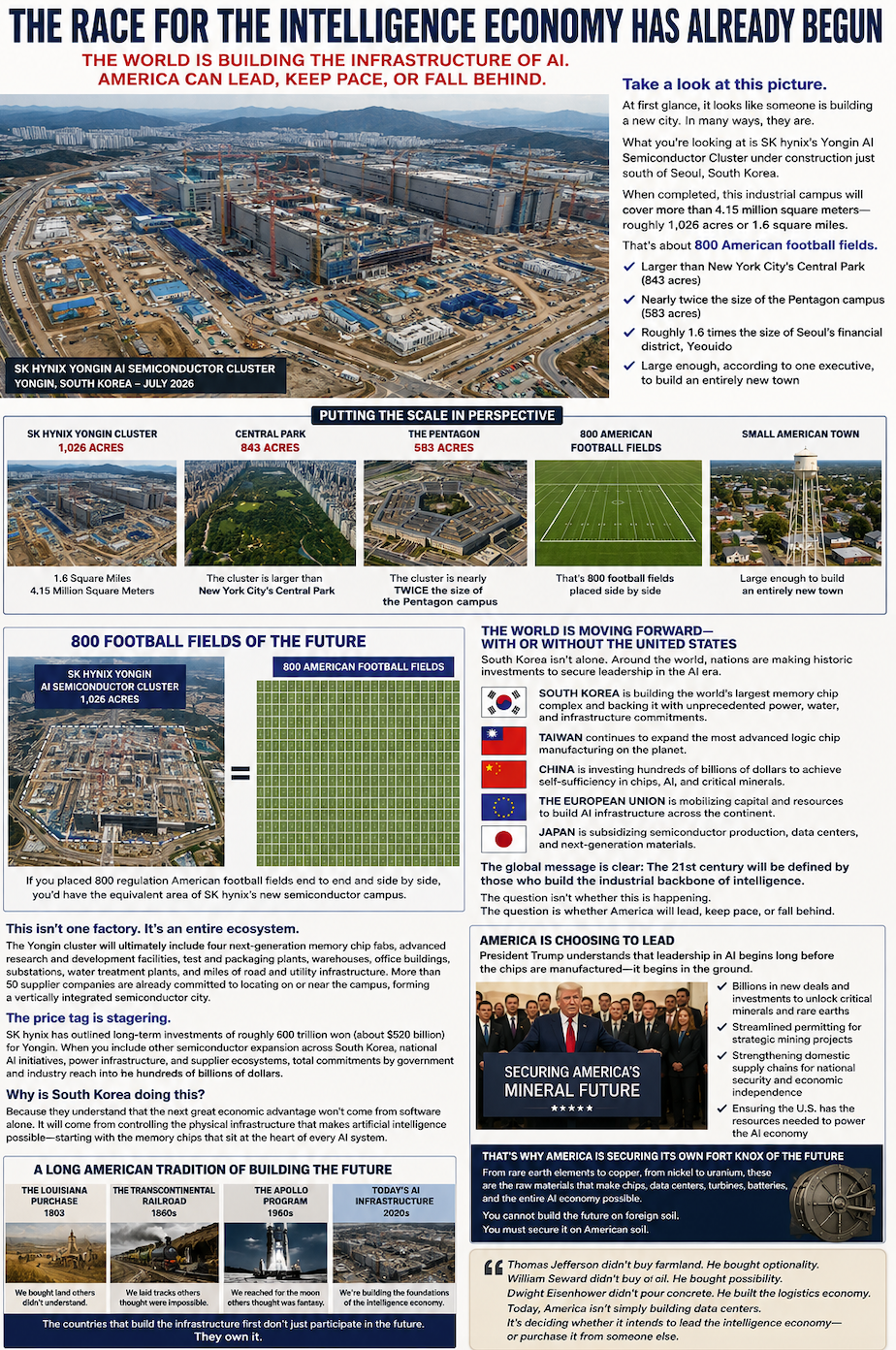
Recent U.S. initiatives aimed at strengthening domestic mining, expanding access to critical minerals, and accelerating strategic resource development reflect a growing recognition that leadership in artificial intelligence begins long before the first line of software is written. It begins in the ground — with the raw materials required to manufacture chips, build data centers, expand the electric grid, and support advanced manufacturing.
Efforts to strengthen domestic mineral production and secure strategic resources reflect a broader objective: reducing dependence on overseas supply chains for technologies increasingly viewed as essential to economic competitiveness and national security.
That, in my view, is one of the biggest stories unfolding today.
Artificial intelligence isn’t simply launching a software revolution.
It’s launching an industrial revolution.
Power plants
Transmission corridors
Semiconductor fabrication facilities
Memory manufacturing
Cooling technologies
Water infrastructure
Mining projects
Advanced manufacturing
Every one of these industries now sits at the center of the AI economy.
If you’ve been following my series on America’s greatest investments everyone hated, you’ve already seen this pattern play out again and again.
The Louisiana Purchase wasn’t simply about buying land.
It secured the territory upon which America’s future would be built.
California wasn’t valuable because of what it was in 1848.
It became valuable because of what it made possible.
Alaska wasn’t purchased for its oil.
Nobody even knew the oil was there.
The Erie Canal wasn’t about digging a ditch.
The transcontinental railroad wasn’t about laying steel.
The Interstate Highway System wasn’t about pouring concrete.
Each investment created a platform upon which entirely new industries emerged.
Artificial intelligence belongs in that lineage.
The critics see enormous construction costs. I see the next platform.
The critics see giant data centers. I see the factories where the intelligence economy is being manufactured.
The critics see rising electricity demand. I see one of the largest energy and infrastructure build-outs in generations.
And that’s why I believe this moment matters so much.
The rest of the world isn’t waiting for America to make up its mind.
They’re investing, building, and competing.
The United States has three choices.
We can fall behind.
We can merely keep pace.
Or we can lead.
History suggests only one of those choices creates lasting prosperity.
My New World Assets investment advisory follows this emerging and powerful trend. And we’ve been making a fortune trading the mining stocks at the center of this revolution. NWA exists because identifying these great industrial transitions before they become obvious has always been one of the most powerful ways to build long-term wealth.
As governments and companies race to secure domestic supplies of critical minerals, semiconductors, energy infrastructure, and advanced manufacturing capacity, I believe some of the most compelling opportunities won’t necessarily be found in software alone — they’ll be found in the companies supplying the materials, equipment, and infrastructure that make the intelligence economy possible.
The countries that build the infrastructure first won’t simply participate in the future.
They’ll define it.
And the investors who recognize that pattern before everyone else just might do the same.
Get to the good, green grass first…
The Prophet of Profit,

Brian Hicks
 Check us out on YouTube!
Brian is a founding member and President of Angel Publishing. He writes about general investment strategies for Wealth Daily and Energy and Capital. Brian is the managing editor and investment director of R.I.C.H Report (Retired Independent Carefree Healthy), New World Assets and Extreme Opportunities. For more on Brian, take a look at his editor’s page.
The Best Free Investment You'll Ever Make
We never spam! View our Privacy Policy
After getting your report, you’ll begin receiving the Wealth Daily e-Letter, delivered to your inbox daily.
Angel Publishing Investor Club Discord - Chat Now
Brian Hicks Premium
Introductory

Advanced


