The Strange Case of Falling Gold in a Rising War

Last weekend, the world woke up to one of the most dramatic geopolitical escalations in decades.
The United States and Israel launched coordinated strikes against targets inside Iran, killing several high-level military and political leaders, including Supreme Leader Ali Khamenei.
Since then, the situation has only intensified…
Iran has retaliated across the region, launching attacks through allied militias and threatening key shipping routes that move energy supplies around the world.
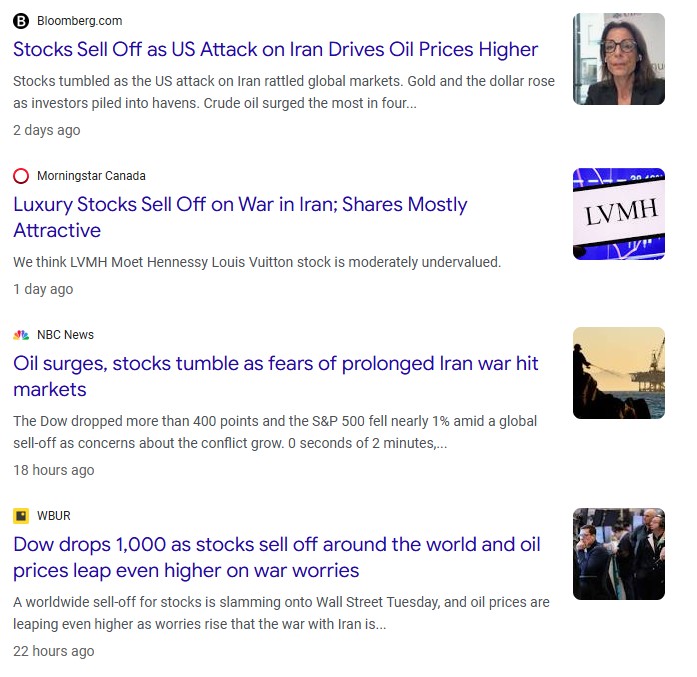
Markets reacted immediately…
War Breaks Out… and Gold Drops?
Oil prices surged as traders began pricing in the risk of disruption in the Strait of Hormuz, the narrow waterway responsible for roughly 20% of the world’s seaborne oil shipments.
Defense stocks rallied. Global equities wobbled…
And precious metals — at least initially — did exactly what investors expected…
Gold spiked higher. Silver followed in magnificent fashion.
But then something strange happened…
By late Monday morning, the rally had stalled. Soon after, both metals began drifting lower.
For many retail investors, that seemed completely backwards. After all, gold is supposed to rise during war. Silver is supposed to rally when global instability increases.
So why is gold falling right now?
The answer lies in another asset that quietly stepped onto center stage this week…
The U.S. dollar.
When Fear Hits Markets, the Dollar Often Wins
Most investors understand gold’s reputation as a safe-haven asset. For thousands of years, people have turned to gold during times of political chaos, war, and economic uncertainty.
But gold isn’t the only place investors run when things get scary.
The U.S. dollar often serves the same purpose.
And over the past several days, global capital has been stampeding into the dollar.
As the conflict escalated, stock markets began selling off. Investors reduced exposure to risk assets. Even bond markets saw turbulence as traders scrambled to reposition portfolios.
In moments like this, the world tends to do the same thing it has done for decades: Buy dollars.
Why?
The Best Free Investment You’ll Ever Make
Join Wealth Daily today for FREE. We”ll keep you on top of all the hottest investment ideas before they hit Wall Street. Become a member today, and get our latest free report: “A Maverick’s Guide to Gold: 3 Gold Stocks Set to Disrupt the Market”
It contains full details on something incredibly important that’s unfolding and affecting how gold is classified as an investment..
After getting your report, you’ll begin receiving the Wealth Daily e-Letter, delivered to your inbox daily.
Because the U.S. dollar remains the backbone of the global financial system.
It’s the world’s reserve currency. It’s the unit used to settle international trade. It’s the liquidity pool that financial institutions trust when everything else becomes uncertain.
So, when global fear spikes, demand for dollars rises right alongside demand for gold.
This week, however, the dollar’s move has been especially powerful.
And that strength has had an unintended consequence for precious metals.
The Dollar’s Hidden Influence on Commodities
Gold, silver, oil, copper, and most other commodities share one important trait…
They’re priced in U.S. dollars.
That might seem like a simple accounting detail, but it has enormous implications for market behavior.
When the dollar strengthens, commodities often struggle.
Here’s why…
If the dollar rises in value, it means each dollar buys more “stuff.” And that includes commodities like gold and silver.
So when the dollar strengthens rapidly, as it has this week, it can temporarily push commodity prices lower, even when underlying demand remains strong.
Think of it this way…
Imagine gold costs $5,000 per ounce when the dollar is relatively weak (which is probably not too tough considering that’s where we were a little over a month ago).
If the dollar suddenly becomes stronger, global buyers can purchase the same ounce of gold with fewer dollars.
The metal itself hasn’t changed. The demand hasn’t necessarily changed either.
But the currency used to price it has.
And that currency shift can temporarily mute or even reverse commodity rallies.
That’s exactly what appears to be happening right now…
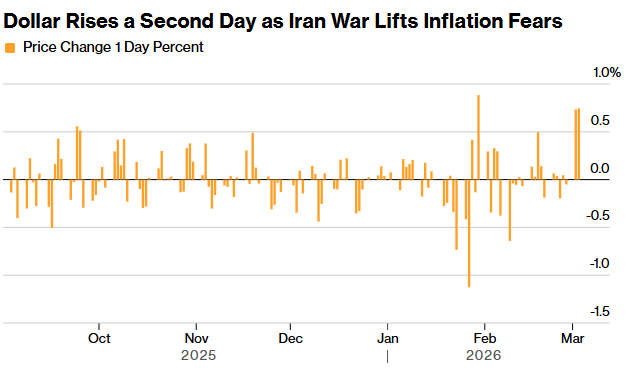
The surge in the dollar has been strong enough to offset the normal “flight to safety” bid that gold typically receives during geopolitical crises.
But history suggests that this kind of imbalance rarely lasts long.
Energy Crises Have Always Been Rocket Fuel for Gold
To understand why this recent weakness may prove temporary, we need to look back at history.
One of the most powerful gold bull markets in modern times began during the energy crisis of the 1970s.
At the start of that decade, gold was still emerging from decades of price controls under the Bretton Woods system.
When those controls finally collapsed, gold began a massive upward move.
Then came the oil shocks…
In 1973, OPEC embargoed oil exports to the United States and other Western nations.
Energy prices exploded. Inflation surged. Economic growth slowed.
Gold responded by entering one of the most explosive rallies in history.
Between 1971 and 1980, gold rose from roughly $35 per ounce to over $800.
And the driver wasn’t just inflation. It was energy, too…
Energy crises destabilize economies. They disrupt trade. They ignite inflation and weaken confidence in financial systems.
And when those forces collide, gold tends to shine.
Today’s situation isn’t identical to the 1970s — but the parallels are impossible to ignore.
If tensions around Iran threaten global oil supply, the resulting energy shock could have massive ripple effects across the global economy.
And historically, that environment has been very good for gold.
Even During War, Gold Sometimes Pauses First
There’s another historical example that sheds light on what we’re seeing today.
During the early years of the Iraq War in the 2000s, gold didn’t immediately explode higher.
In fact, it went through several periods of consolidation and pullbacks even as the conflict intensified.
But over time, the trend became unmistakable.
Gold rose from roughly $300 per ounce in the early 2000s to nearly $1,900 by 2011.
Geopolitical instability didn’t produce a straight-line rally.
But it created the conditions that fueled one of the strongest bull markets in decades.
That’s an important reminder for investors today.
Markets rarely move in perfect, logical lines. And short-term reactions can often appear confusing, even contradictory.
But the larger macro forces tend to play out over months and years — not days.
And right now many of those forces still favor higher precious metals prices.
The Real Story May Just Be Beginning
What we’re witnessing this week may not be the end of gold’s rally.
It may simply be the end of the first chapter.
The immediate shock of war pushed investors toward dollars and liquidity. That’s normal.
But as the conflict evolves, attention will likely shift toward its economic consequences.
Energy supply disruptions…
Higher oil prices…
Inflationary pressure…
Government spending tied to military operations.
All of these forces historically support precious metals.
If the situation in the Middle East continues to escalate or if energy markets experience prolonged disruption, the investment narrative could shift quickly.
Instead of focusing on liquidity and the dollar, markets may begin focusing on inflation, resource scarcity, and geopolitical fragmentation.
And those are exactly the kinds of environments where gold tends to thrive.
A Window of Opportunity for Investors
For investors watching this unfold, the recent pullback in gold and silver may feel frustrating.
But it may also represent something else…
An opportunity.
Markets often create their best entry points when uncertainty clouds the narrative.
Right now many retail investors are scratching their heads, wondering why gold isn’t soaring higher in the middle of a geopolitical crisis.
But seasoned investors understand that markets rarely move in straight lines.
Short-term currency movements can temporarily distort price signals.
Over time, however, fundamentals usually win.
If this conflict continues to pressure global energy markets and if inflationary forces reemerge as a result, the current weakness in precious metals could look very different in hindsight.
It may end up being remembered not as the beginning of a downturn…
But as one of the last chances to buy before the next leg of the precious metals bull market begins.
And history suggests that when energy shocks collide with geopolitical instability, that next leg can be a powerful one.
For patient investors willing to look beyond the daily noise, this moment may not be a warning sign.
It may be an invitation.
To your wealth,

Jason Williams
 @TheReal_JayDubs
 Angel Research on Youtube
After graduating Cum Laude in finance and economics, Jason designed and analyzed complex projects for the U.S. Army. He made the jump to the private sector as an investment banking analyst at Morgan Stanley, where he eventually led his own team responsible for billions of dollars in daily trading. Jason left Wall Street to found his own investment office and now shares the strategies he used and the network he built with you. Jason is the founder of Main Street Ventures, a pre-IPO investment newsletter; the founder of Future Giants, a nano cap investing service; and authors The Wealth Advisory income stock newsletter. He is also the managing editor of Wealth Daily. To learn more about Jason, click here.
Want to hear more from Jason? Sign up to receive emails directly from him ranging from market commentaries to opportunities that he has his eye on.
The Best Free Investment You'll Ever Make
We never spam! View our Privacy Policy
After getting your report, you’ll begin receiving the Wealth Daily e-Letter, delivered to your inbox daily.
Angel Publishing Investor Club Discord - Chat Now
Jason Williams Premium
Introductory

Advanced


