Buy the Golden Dip

Something strange happened in the precious metals market last week.
Gold maintained its trading near historic highs above $5,000 an ounce.
Yet many gold and silver mining stocks — from junior explorers to the world’s largest producers — suddenly dropped.
Take a look:
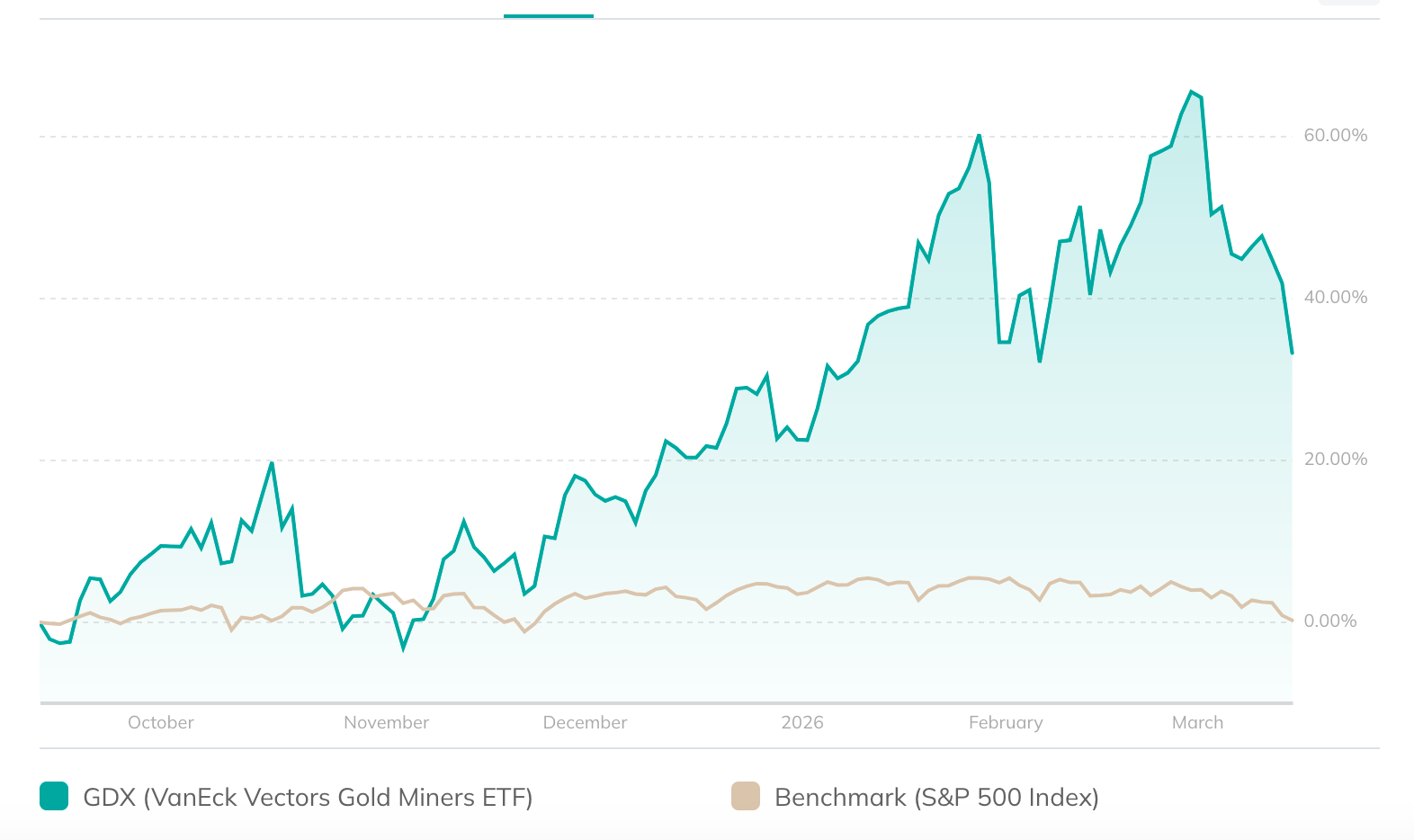
To casual investors, this looks like a contradiction.
If gold is soaring… shouldn’t the companies that mine gold also be soaring?
But seasoned precious metals investors know something most newcomers don’t…
This pattern has happened repeatedly in every major gold bull market.
And almost every time it happens…
It turns into one of the best buy-the-dip opportunities of the cycle.
The Best Free Investment You’ll Ever Make
Join Gold World today for FREE. Get the latest insight on gold, silver, and precious metals delivered straight to your inbox. When you become a member today, you’ll get our latest free report: “The Dawn of NatGold.” Don’t Delay!
After getting your report, you’ll begin receiving the Gold World e-Letter, delivered to your inbox daily.
Chart: Gold Itself Is Still in a Powerful Uptrend
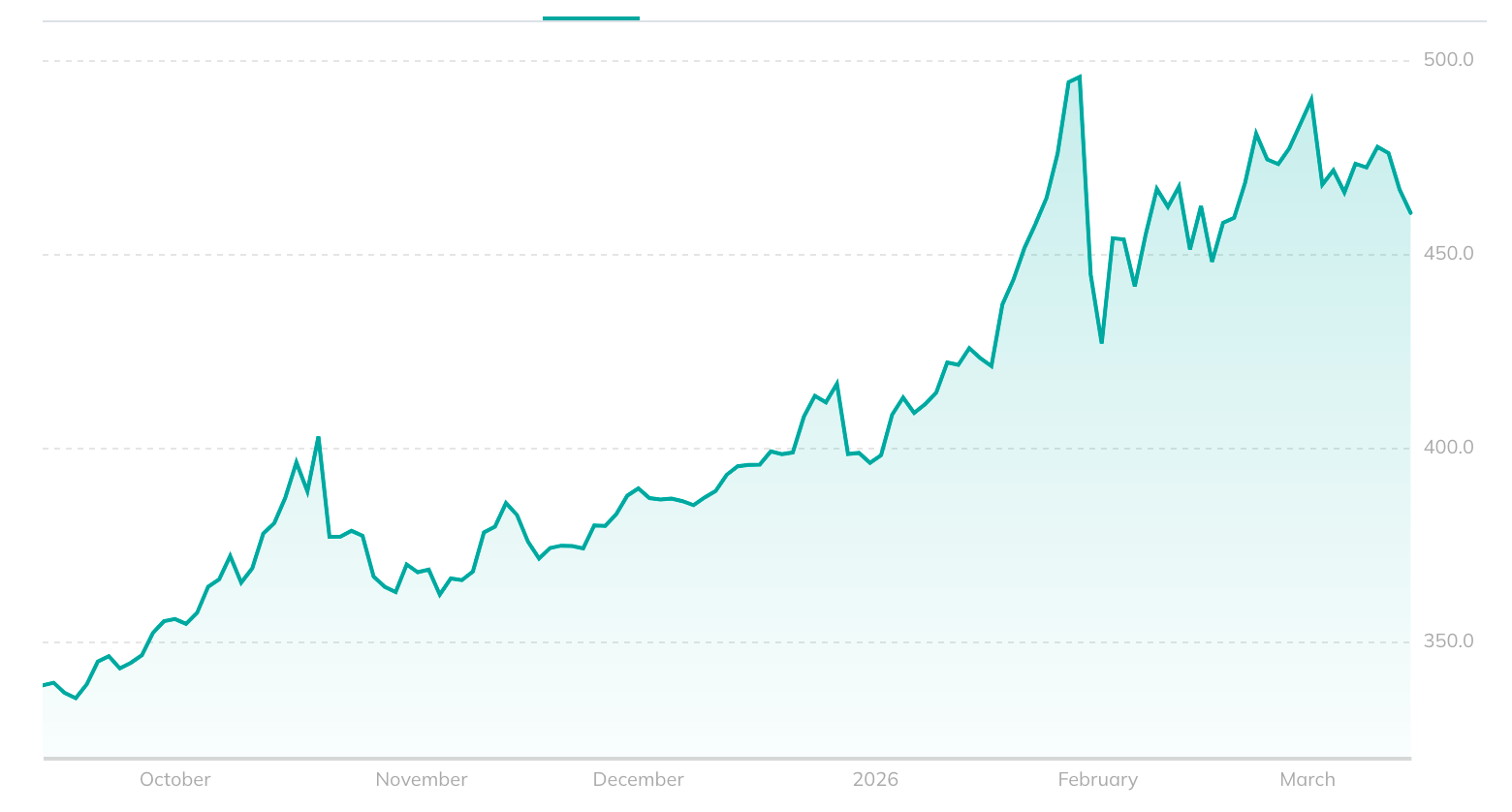
The chart above shows the SPDR Gold Shares ETF (GLD) — one of the most widely used proxies for the price of physical gold.
Despite short-term volatility, the trend is unmistakable.
Gold has been in a powerful upward trajectory, reflecting the growing global demand for hard assets amid geopolitical tensions, monetary expansion, and financial instability.
But the key insight investors must understand is this…
Gold often rises first. Mining stocks follow later.
The Golden Paradox: Why Miners Sometimes Fall While Gold Rises
Gold miners are not simply proxies for the price of gold.
They are businesses.
That means their stocks are influenced by multiple factors:
- Equity market sentiment
- Operating costs
- Energy prices
- Geopolitical risk
- Investor psychology
When markets suddenly become volatile — like they did recently during the escalating conflict involving Iran — investors often scramble for liquidity.
And when they do, they sell what they can.
Even their winners.
That means mining stocks often experience temporary declines during moments of stress, even as gold itself remains strong.
This phenomenon is so common that veteran commodity investors expect it.
In fact…
It often signals that the next major move higher is approaching.
This is the Gold Fear & Greed Index never left the “greed” side of the pie chart:
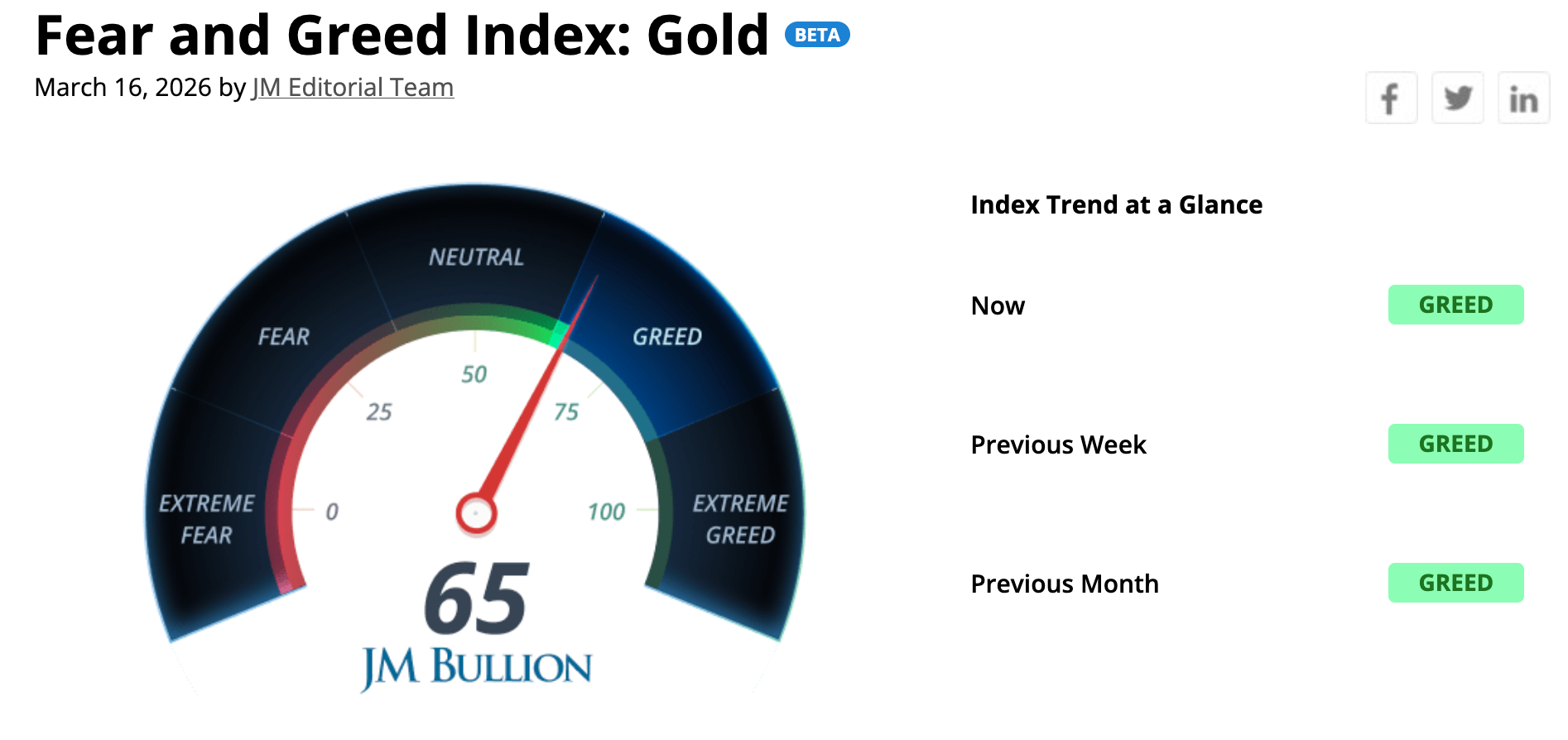
Chart: Gold Mining Stocks During Market Stress
The chart below shows many of the world’s largest gold-producing companies.
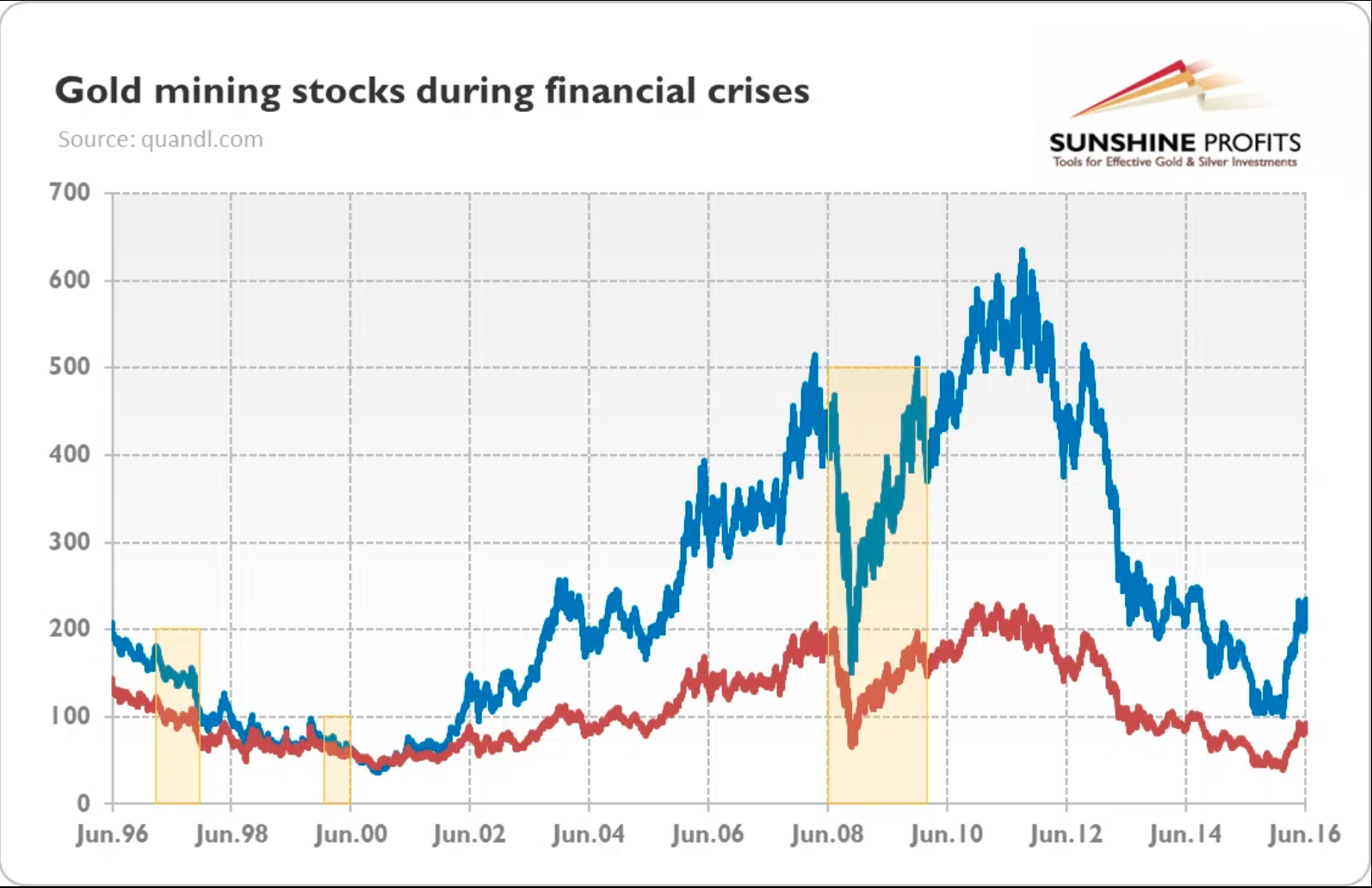
Notice how the sector periodically experiences sharp pullbacks, even during long-term uptrends.
These declines are rarely the end of the bull market.
More often, they are temporary corrections that reset the sector before the next advance.
History Shows These Sell-Offs Are Opportunities
Anyone who has studied previous precious metals cycles recognizes this pattern immediately.
After 9/11
Following the September 11 attacks in 2001, global markets entered a period of extreme uncertainty.
Gold surged as investors rushed into safe-haven assets.
But mining stocks didn’t rise smoothly.
They experienced volatility and pullbacks as investors digested the shock.
Yet that moment ultimately marked the beginning of one of the greatest gold bull markets in modern history.
From 2001 to 2011:
- Gold rose from roughly $270 to nearly $1,900 per ounce
- Mining stocks surged several hundred percent
- Early investors made generational fortunes
Those early dips — which seemed frightening at the time — became extraordinary buying opportunities.
The Iraq War Shock
The same thing happened in 2003.
Gold rallied strongly leading up to the invasion of Iraq.
But when the war actually began, markets became volatile and investors took profits.
Mining stocks corrected.
Yet once the geopolitical implications became clear, gold resumed its climb — eventually reaching historic highs later in the decade.
Again…
The dip became the opportunity.
The COVID Panic
Perhaps the clearest example occurred during the pandemic crash.
In March 2020:
- Global markets collapsed
- Liquidity evaporated
- Investors sold nearly everything
Even gold miners plunged.
Yet within months, the entire sector reversed violently upward.
Gold surged past $2,000 an ounce for the first time in history.
Many mining stocks doubled or tripled from their lows.
- The Gold Miners Index rallied 93% from mid-March to early August 2020, reflecting gold’s run-up. But these gains moderated later in 2020.
- Barrick Gold shares doubled from March–July before sliding back to end 2020 up 25%.
Once again, the pattern repeated:
The panic was temporary. The bull market wasn’t.
Enter the MoneyQuake
The reason I believe this pullback will ultimately prove to be a buying opportunity is simple.
The forces driving gold higher are not temporary.
They are structural.
What I’ve been calling the MoneyQuake.
A massive global financial shift driven by several powerful forces colliding simultaneously.
1. Exploding Global Debt
Governments around the world are drowning in debt.
The only politically acceptable solution is monetary expansion.
History shows that when currencies are diluted…
Hard assets rise.
2. Geopolitical Fragmentation
The stable global order that dominated the 1990s and early 2000s is fracturing.
Instead we now see:
- Regional wars
- Trade conflicts
- Sanctions
- Currency rivalries
Each of these forces increases demand for gold.
3. Central Bank Accumulation
Central banks are buying gold at the fastest pace in modern history.
Why?
Because they are preparing for a world where the dollar is no longer the only reserve currency.
That structural demand alone places a powerful floor under the gold market.
The Supply Crunch
At the same time demand is exploding…
Supply is tightening. Large gold discoveries have become increasingly rare. Permitting timelines are longer. Exploration budgets collapsed during the previous bear market.
The result is a world where new gold supply struggles to keep up with demand.
And that makes existing deposits — and the companies that control them — increasingly valuable.
The Psychology of Buying the Dip
The hardest part of investing is not understanding the fundamentals…
It’s managing the psychology.
Buying when everyone else is excited is easy. Buying when markets pull back?
That’s uncomfortable.
But historically, the biggest fortunes are made during those uncomfortable moments.
When:
- Headlines are confusing
- Volatility spikes
- Investors hesitate
That’s when the smartest money quietly accumulates positions. Because they understand the difference between short-term noise and long-term trends.
The Bottom Line Is Still Paved in Gold
The sell-off we saw in mining stocks last week is not unusual.
In fact, it’s almost predictable.
Every major gold bull market includes moments like this:
- The post-9/11 volatility
- The Iraq war correction
- The COVID panic
Each looked frightening in real time. Each became a historic buying opportunity. And today’s pullback could very well join that list. Literally.
Because the MoneyQuake — the massive shift in the global monetary system — is still unfolding.
The geopolitical tensions. The exploding debt. The central bank gold buying. These forces are not going away.
If anything…
They are accelerating.
Which means investors willing to buy this dip today may one day look back on this moment as the early innings of one of the greatest precious metals bull markets ever.
Get to the good, green grass first…
The Prophet of Profit,

Brian Hicks
 Check us out on YouTube!
Brian is a founding member and President of Angel Publishing. He writes about general investment strategies for Wealth Daily and Energy and Capital. Brian is the managing editor and investment director of R.I.C.H Report (Retired Independent Carefree Healthy), New World Assets and Extreme Opportunities. For more on Brian, take a look at his editor’s page.
The Best Free Investment You'll Ever Make
We never spam! View our Privacy Policy
After getting your report, you’ll begin receiving the Wealth Daily e-Letter, delivered to your inbox daily.
Angel Publishing Investor Club Discord - Chat Now
Brian Hicks Premium
Introductory

Advanced


